Menu

LINGUISTICS

Linguistics & NLP Visualizations

From word frequency distributions and syntax trees to POS tagging heatmaps and corpus analysis - create publication-ready linguistics figures with AI-generated Python code.

or browse all example datasets

Essential Linguistics Visualizations

Linguistic data spans frequency counts, syntactic structures, embedding spaces, and temporal sentiment flows. Each requires specialized plotting techniques with proper annotations and statistical overlays for computational linguistics research.

Word Frequency Plots

Zipf's law rank-frequency distributions with power-law fitting and deviation analysis

POS Tag Heatmaps

Bigram transition probability matrices for part-of-speech tag sequences in corpora

Dependency Parse Trees

Syntactic dependency arcs with labeled relations, head-modifier links, and tree depth

Word Embeddings (t-SNE)

2D/3D projections of word vectors showing semantic clusters and analogies

Sentiment Timelines

Rolling sentiment polarity over document sections, chapters, or conversation turns

Phoneme Spectrograms

Time-frequency spectral representations of speech with formant tracking overlays

Why Linguists Use Plotivy

Corpus Analysis

Frequency distributions, collocations, concordances, and n-gram statistics from any text corpus.

NLP Pipelines

Tokenization, POS tagging, NER visualization, and dependency parse rendering from spaCy or NLTK output.

Publication Formats

Export to SVG/PDF sized for Computational Linguistics, TACL, or ACL column widths with correct fonts.

Interactive Exploration

Zoom, filter, and highlight linguistic patterns - explore word embeddings, concordance lines, and more.

Word Frequency Distribution with Zipf's Law

Log-log rank-frequency plot comparing an observed corpus to the ideal Zipf curve. Top-ranked words are annotated and a deviation zone highlights where the corpus diverges from the power law.

Live Code Editor
Code EditorPython
Loading editor...
Live Preview

Preparing preview

Running once automatically on first load

Learn by Experimenting

This is a safe playground for learning! Try changing:

  • • Colors: Modify color values to see different palettes
  • • Numbers: Adjust sizes, positions, or data ranges
  • • Labels: Update titles, axis names, or legends

Edit the code, run it, then open the full data visualization tool to continue with your own dataset.

Try with your data

POS Bigram Transition Heatmap

Part-of-speech bigram transition probabilities displayed as a heatmap. Shows how likely each POS tag is to follow another, revealing syntactic patterns such as DET-NOUN and ADJ-NOUN chains.

Live Code Editor
Code EditorPython
Loading editor...
Live Preview

Preparing preview

Running once automatically on first load

Learn by Experimenting

This is a safe playground for learning! Try changing:

  • • Colors: Modify color values to see different palettes
  • • Numbers: Adjust sizes, positions, or data ranges
  • • Labels: Update titles, axis names, or legends

Edit the code, run it, then open the full data visualization tool to continue with your own dataset.

Chart gallery

Explore Linguistics Chart Types

Interactive examples with ready-to-run code

Browse all chart types →
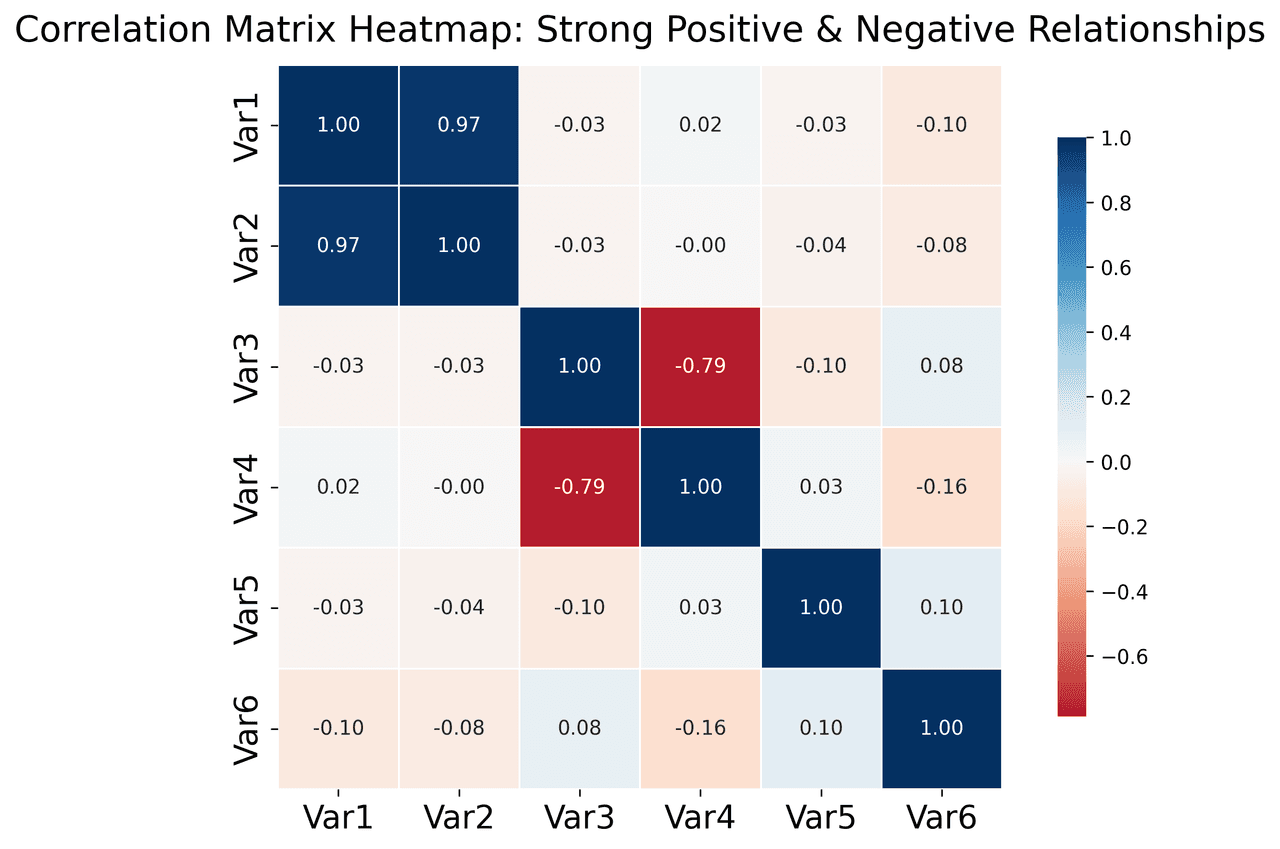
Correlation heatmap with diverging color scale and coefficient annotations
Statistical•seaborn, matplotlib
From the chart gallery•Correlation analysis between variables

Heatmap

Represents data values as colors in a two-dimensional matrix format.

Sample code / prompt

import matplotlib.pyplot as plt
import seaborn as sns
import pandas as pd
import numpy as np

# Create correlation matrix for financial metrics
metrics = ['Revenue', 'Profit', 'Expenses', 'ROI', 'Customers', 'AOV', 'Marketing', 'Employees']
correlation_data = np.array([
    [1.00, 0.85, -0.45, 0.72, 0.88, 0.65, 0.72, 0.55],
    [0.85, 1.00, -0.78, 0.92, 0.75, 0.58, 0.63, 0.48],
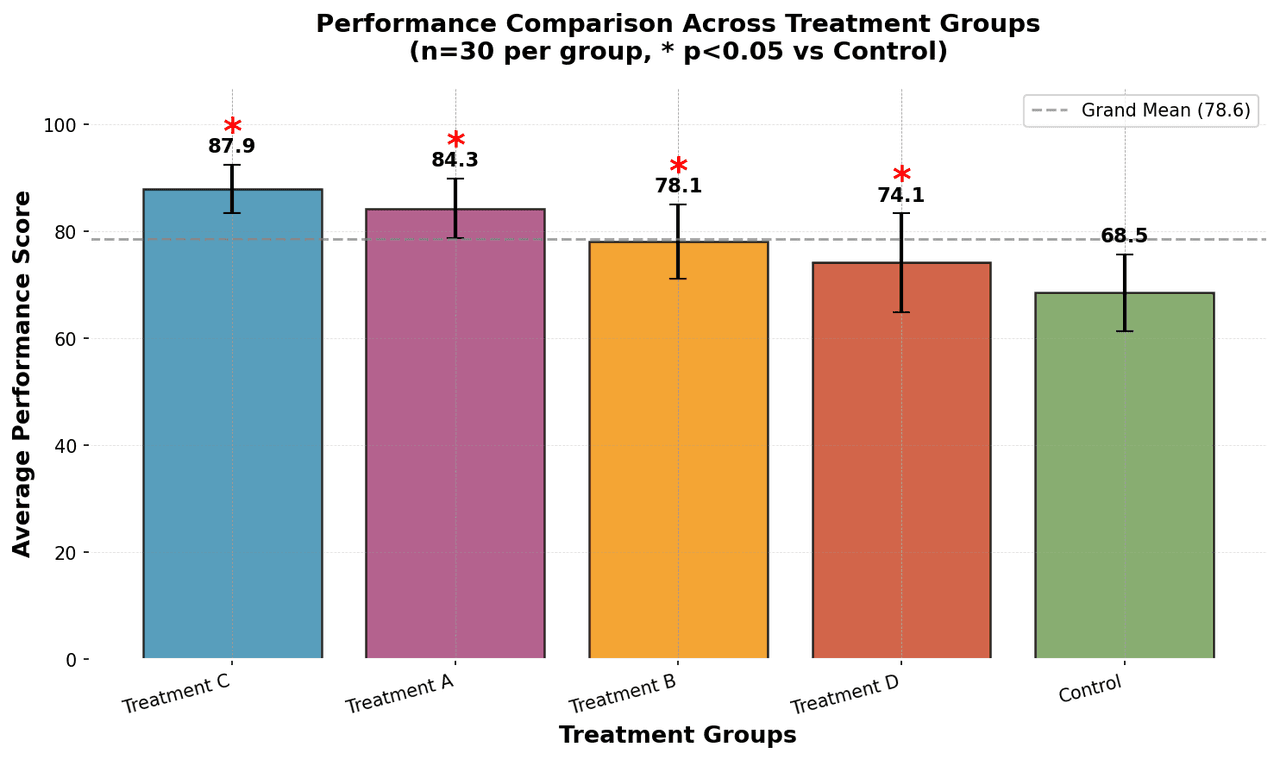
Bar chart comparing average scores across 5 groups with error bars
Comparison•matplotlib, seaborn
From the chart gallery•Comparing performance across categories

Bar Chart

Compares categorical data using rectangular bars with heights proportional to values.

Sample code / prompt

import numpy as np
import pandas as pd
import matplotlib.pyplot as plt
import seaborn as sns
from scipy import stats

# Generate performance scores for 5 treatment groups
np.random.seed(42)
groups = ['Control', 'Treatment A', 'Treatment B', 'Treatment C', 'Treatment D']
n_samples = 30
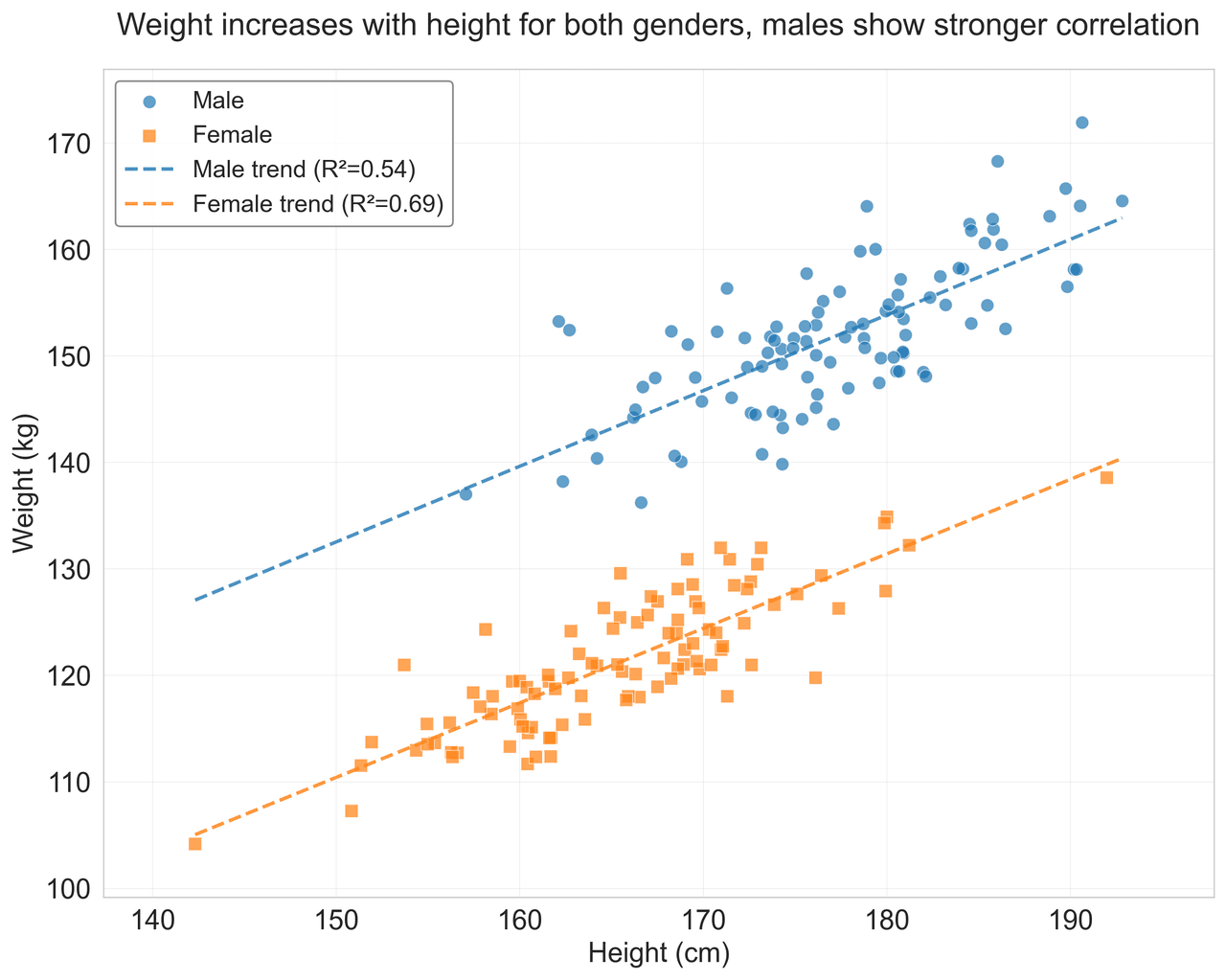
Scatter plot of height vs weight colored by gender with regression line
Statistical•matplotlib, seaborn
From the chart gallery•Correlation analysis between metrics

Scatterplot

Displays values for two variables as points on a Cartesian coordinate system.

Sample code / prompt

import matplotlib.pyplot as plt
import numpy as np
from scipy import stats
import pandas as pd

# Generate sample data
np.random.seed(42)
n_samples = 200
height = np.random.normal(170, 8, n_samples)
weight = height * 0.6 + np.random.normal(0, 8, n_samples) - 50
Box and whisker plot comparing gene expression across 4 genotypes with significance brackets
Distribution•seaborn, matplotlib
From the chart gallery•Comparing experimental groups in scientific research

Box and Whisker Plot

Displays data distribution using quartiles, median, and outliers in a standardized format.

Sample code / prompt

import numpy as np
import pandas as pd
import matplotlib.pyplot as plt
import seaborn as sns
from scipy import stats

# Generate gene expression data for 4 genotypes
np.random.seed(42)
genotypes = ['WT', 'KO1', 'KO2', 'Mutant']
n_per_group = 20
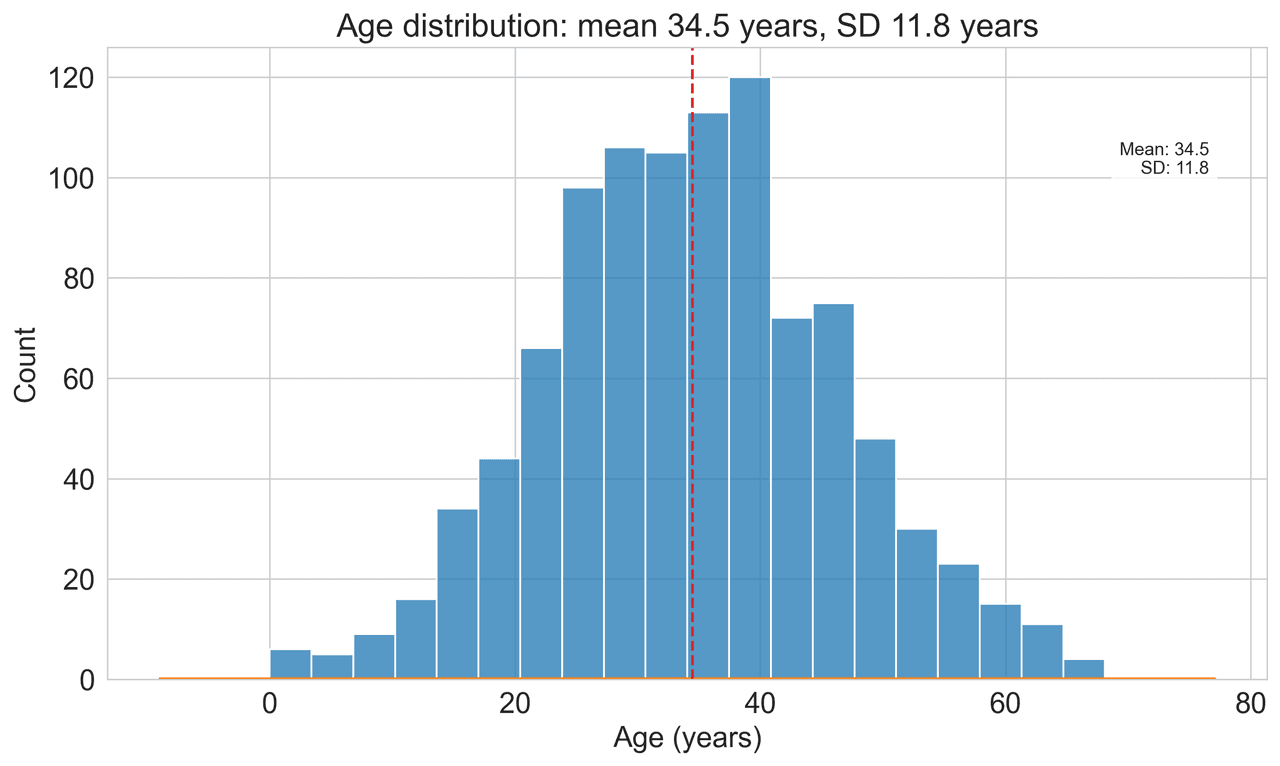
Histogram showing age distribution with 20 bins and KDE overlay
Distribution•matplotlib, seaborn
From the chart gallery•Analyzing age demographics

Histogram

Displays the distribution of numerical data by grouping values into bins.

Sample code / prompt

import matplotlib.pyplot as plt
import numpy as np
from scipy.stats import gaussian_kde, skewnorm

# Generate age data with slight right skew
np.random.seed(42)
ages = skewnorm.rvs(a=2, loc=42, scale=15, size=500)
ages = np.clip(ages, 18, 80)  # Clip to realistic range

fig, ax = plt.subplots(figsize=(12, 7))

Ready to Visualize Your Linguistic Data?

Upload your corpus CSV, describe the plot you need, and get publication-ready figures with full Python code in seconds.

Start Free - No Sign-Up