Menu

MACHINE LEARNING

Machine Learning Visualizations

From model evaluation curves and confusion matrices to dimensionality reduction projections and feature importance rankings - create publication-ready ML figures with AI-generated Python code.

or browse all example datasets

Essential ML Visualizations

Machine learning workflows produce rich diagnostic data - from training metrics and evaluation curves to embedding spaces and hyperparameter landscapes. Each requires specialized plotting techniques with proper annotation and statistical context.

ROC / PR Curves

Receiver operating characteristic and precision-recall curves with AUC and optimal thresholds

Confusion Matrices

Annotated heatmaps with normalized frequencies, precision, recall, and F1 per class

Learning Curves

Training vs validation loss over epochs with early stopping markers and convergence analysis

Feature Importance

SHAP values, permutation importance, and Gini coefficients with confidence intervals

t-SNE / UMAP Projections

High-dimensional embeddings reduced to 2D with cluster coloring and density contours

Hyperparameter Heatmaps

Grid search results as heatmaps showing metric performance across parameter combinations

Why ML Engineers Use Plotivy

Model Evaluation

ROC, precision-recall, calibration, and lift curves generated automatically from prediction data.

Experiment Tracking

Compare training runs, visualize hyperparameter sweeps, and track metric evolution across experiments.

Publication Formats

Export to SVG/PDF sized for NeurIPS, ICML, or JMLR column widths with correct DPI and fonts.

Reproducible Pipelines

Version your visualization code alongside models - every figure is backed by full Python source.

ROC Curves with AUC Comparison

Four classifiers benchmarked on binary classification. Each ROC curve includes confidence bands and optimal threshold markers (Youden's J statistic). Hover over the code to customize models.

Live Code Editor
Code EditorPython
Loading editor...
Live Preview

Preparing preview

Running once automatically on first load

Learn by Experimenting

This is a safe playground for learning! Try changing:

  • • Colors: Modify color values to see different palettes
  • • Numbers: Adjust sizes, positions, or data ranges
  • • Labels: Update titles, axis names, or legends

Edit the code, run it, then open the full data visualization tool to continue with your own dataset.

Confusion Matrix Heatmap

Multi-class confusion matrix for an image classifier. Normalized frequencies with raw counts, per-class precision, recall, and F1 scores displayed as marginal annotations.

Live Code Editor
Code EditorPython
Loading editor...
Live Preview

Preparing preview

Running once automatically on first load

Learn by Experimenting

This is a safe playground for learning! Try changing:

  • • Colors: Modify color values to see different palettes
  • • Numbers: Adjust sizes, positions, or data ranges
  • • Labels: Update titles, axis names, or legends

Edit the code, run it, then open the full data visualization tool to continue with your own dataset.

Chart gallery

Explore ML Chart Types

Interactive examples with ready-to-run code

Browse all chart types →
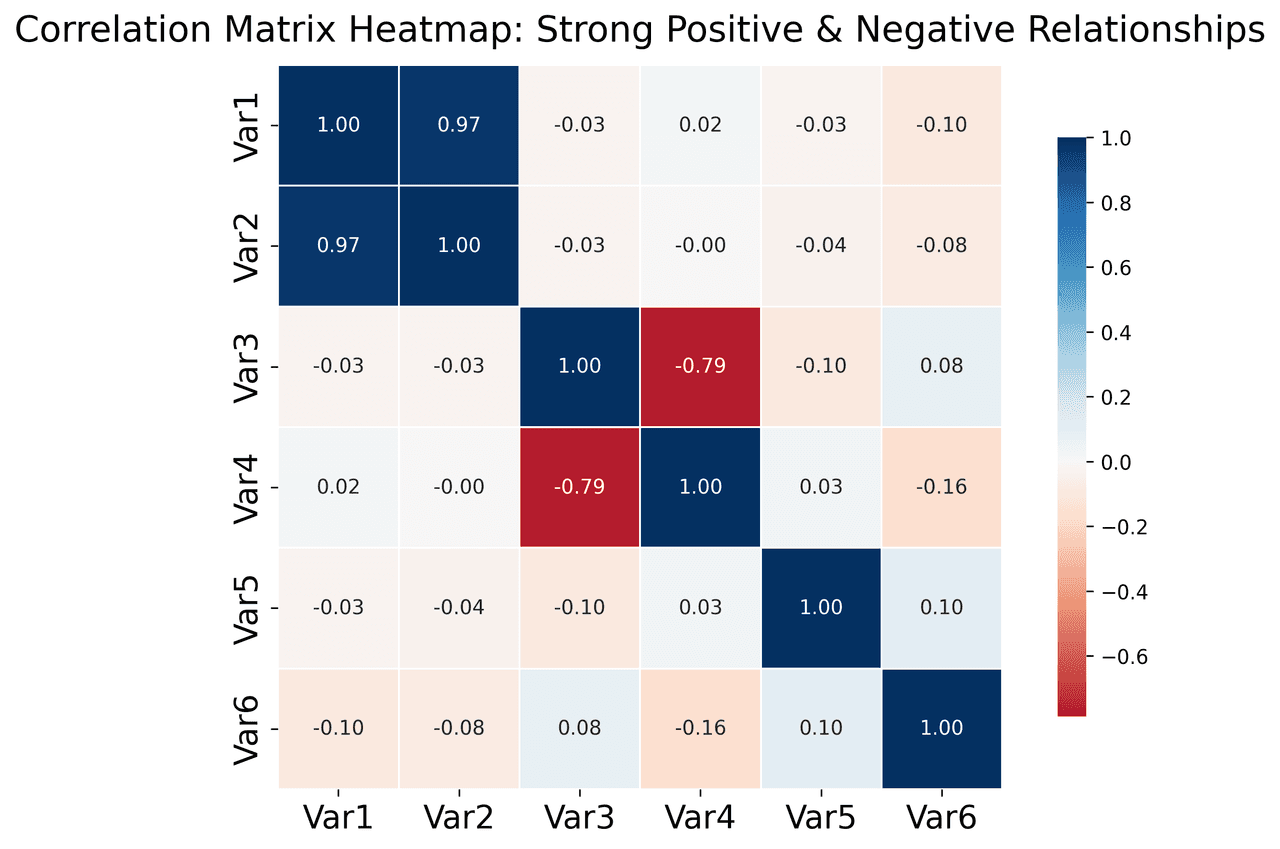
Correlation heatmap with diverging color scale and coefficient annotations
Statistical•seaborn, matplotlib
From the chart gallery•Correlation analysis between variables

Heatmap

Represents data values as colors in a two-dimensional matrix format.

Sample code / prompt

import matplotlib.pyplot as plt
import seaborn as sns
import pandas as pd
import numpy as np

# Create correlation matrix for financial metrics
metrics = ['Revenue', 'Profit', 'Expenses', 'ROI', 'Customers', 'AOV', 'Marketing', 'Employees']
correlation_data = np.array([
    [1.00, 0.85, -0.45, 0.72, 0.88, 0.65, 0.72, 0.55],
    [0.85, 1.00, -0.78, 0.92, 0.75, 0.58, 0.63, 0.48],
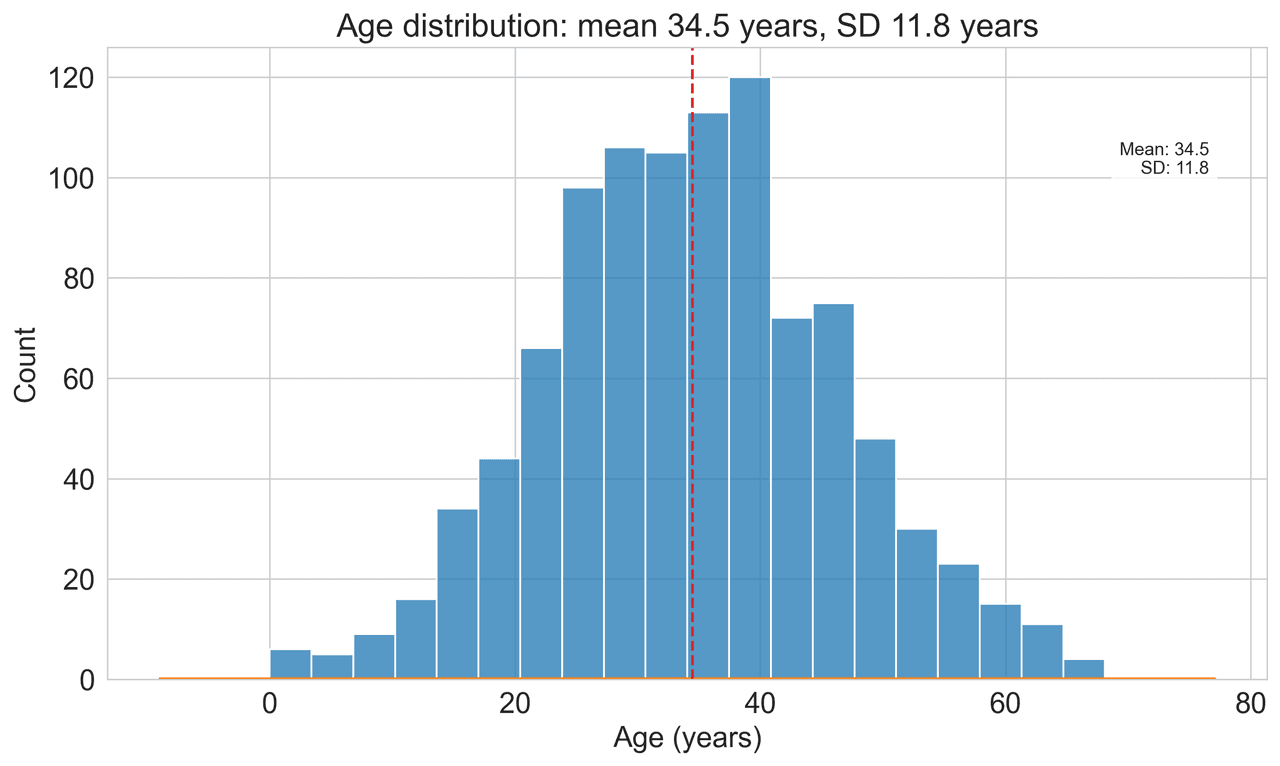
Histogram showing age distribution with 20 bins and KDE overlay
Distribution•matplotlib, seaborn
From the chart gallery•Analyzing age demographics

Histogram

Displays the distribution of numerical data by grouping values into bins.

Sample code / prompt

import matplotlib.pyplot as plt
import numpy as np
from scipy.stats import gaussian_kde, skewnorm

# Generate age data with slight right skew
np.random.seed(42)
ages = skewnorm.rvs(a=2, loc=42, scale=15, size=500)
ages = np.clip(ages, 18, 80)  # Clip to realistic range

fig, ax = plt.subplots(figsize=(12, 7))

Ready to Visualize Your ML Results?

Upload your CSV, describe the plot you need, and get publication-ready figures with full Python code in seconds.

Start Free - No Sign-Up