Loading Plotivy
Preparing your workspace and data.
Loading Plotivy
Preparing your workspace and data.
Refer a Friend
Share your link — earn +15 permanent plots for every friend who joins.
Sign in to get your referral linkAnalytical Techniques Encyclopedia
24 in-depth guides for the analytical methods used most in scientific research. Each technique page includes worked Python examples, publication-ready figures, and a live code editor you can run in your browser.
Start with the most requested analysis workflows from spectroscopy, statistics, and clinical research.
Prominence, distance, and width parameters with practical peak detection examples.
Window size tuning and how to fix window_length must be odd errors.
Nonparametric two-group comparison with scipy.stats.mannwhitneyu and effect size.
lifelines tutorial with confidence intervals and log-rank comparisons.
Technique selection
Start from the scientific question, then choose the method. A curve-fitting guide is useful when you need model parameters, a statistics guide is useful when you need a defensible comparison, and a spectroscopy guide is useful when raw instrument signals need preprocessing before plotting.
Use when your result depends on estimating parameters from experimental data.
Linear regression, Gaussian fitting, Lorentzian fitting, exponential decay
Use when the figure needs p-values, confidence intervals, or group comparisons.
T-test, ANOVA, Mann-Whitney, ROC curves, Kaplan-Meier
Use when raw instrument output needs smoothing, baseline correction, or peak fitting.
Peak detection, Savitzky-Golay smoothing, PCA, calibration curves
Jump directly to the collection most relevant to your field and instrument.
T-tests, curve fitting, enzyme kinetics, and omics data visualization.
Peak fitting, baseline correction, and spectral analysis for Raman, FTIR, and UV-Vis.
Hypothesis tests, p-value annotation, PCA, and ROC analysis with matplotlib.
From linear regression to nonlinear models using scipy.optimize.curve_fit.
24 guides, each with complete Python code, a live code editor, and a publication-ready figure.
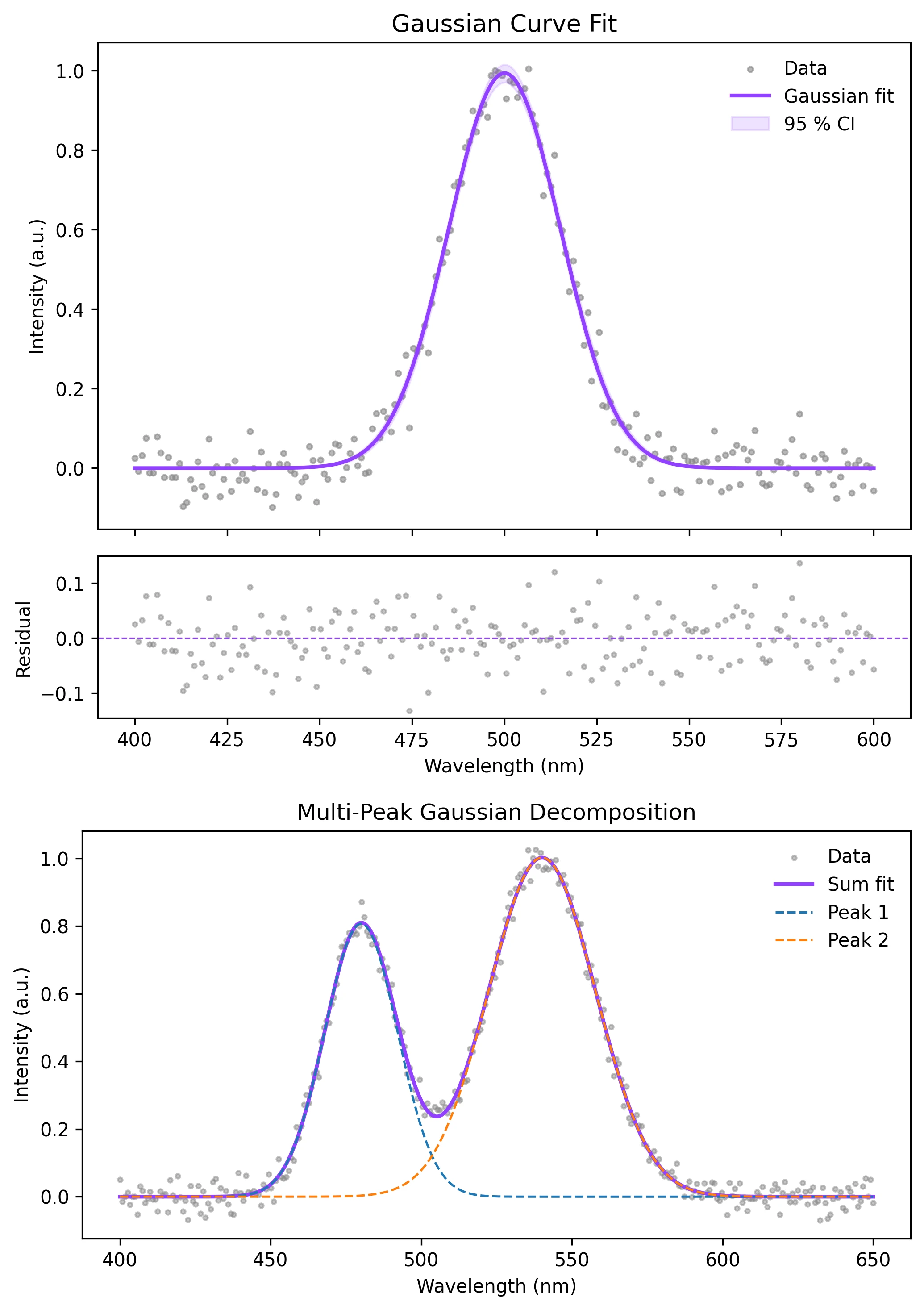
Fit Gaussian peaks to spectroscopy, chromatography, or any bell-shaped data using scipy.optimize.curve_fit. Extract peak center, amplitude, and width with uncertainties.
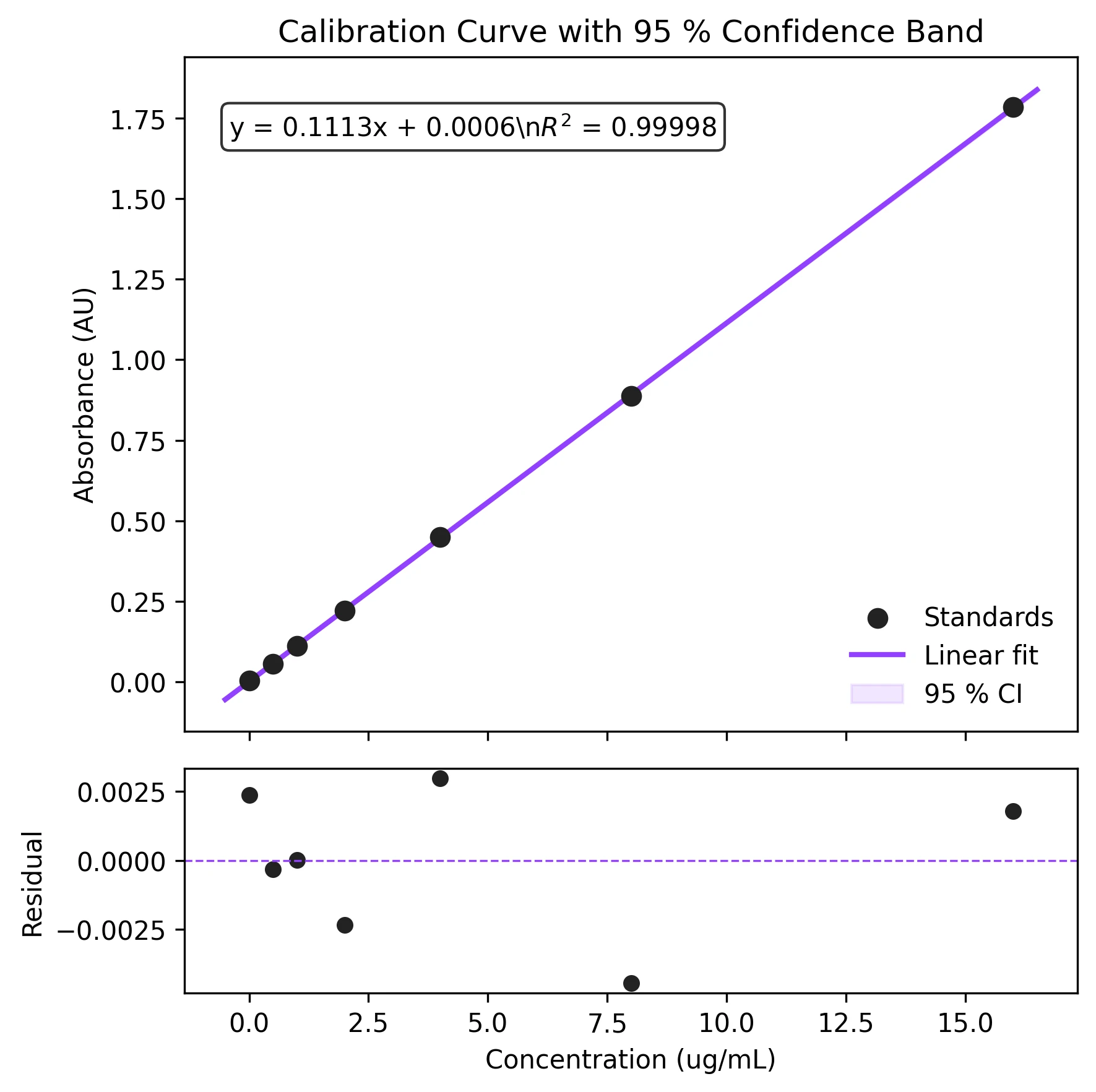
Build calibration curves and standard curves with linear regression. Includes confidence interval bands, R-squared annotation, and residual diagnostics.
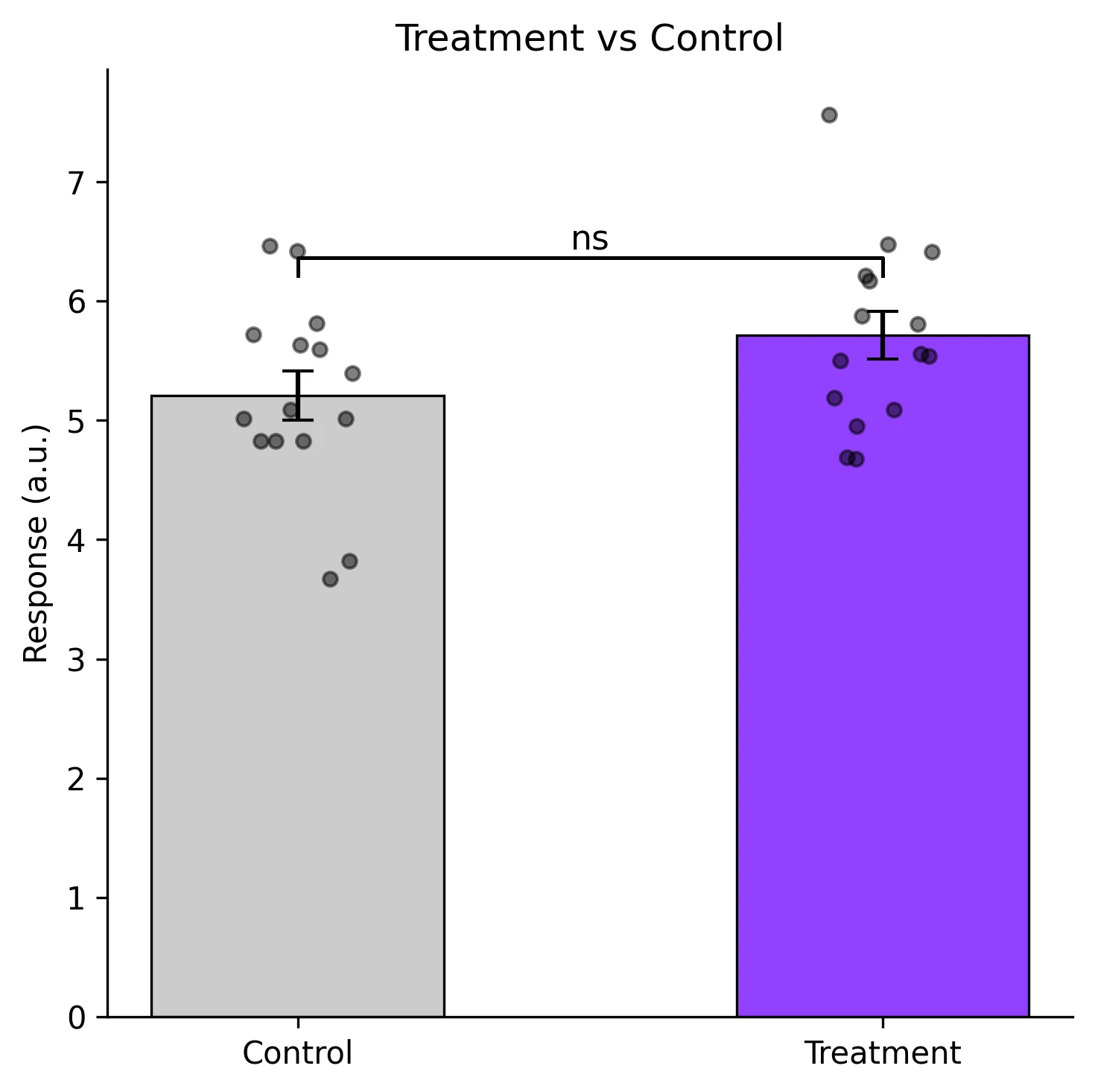
Add significance brackets and p-value stars to bar charts. Covers independent, paired, and Welch t-tests with complete matplotlib annotation code.
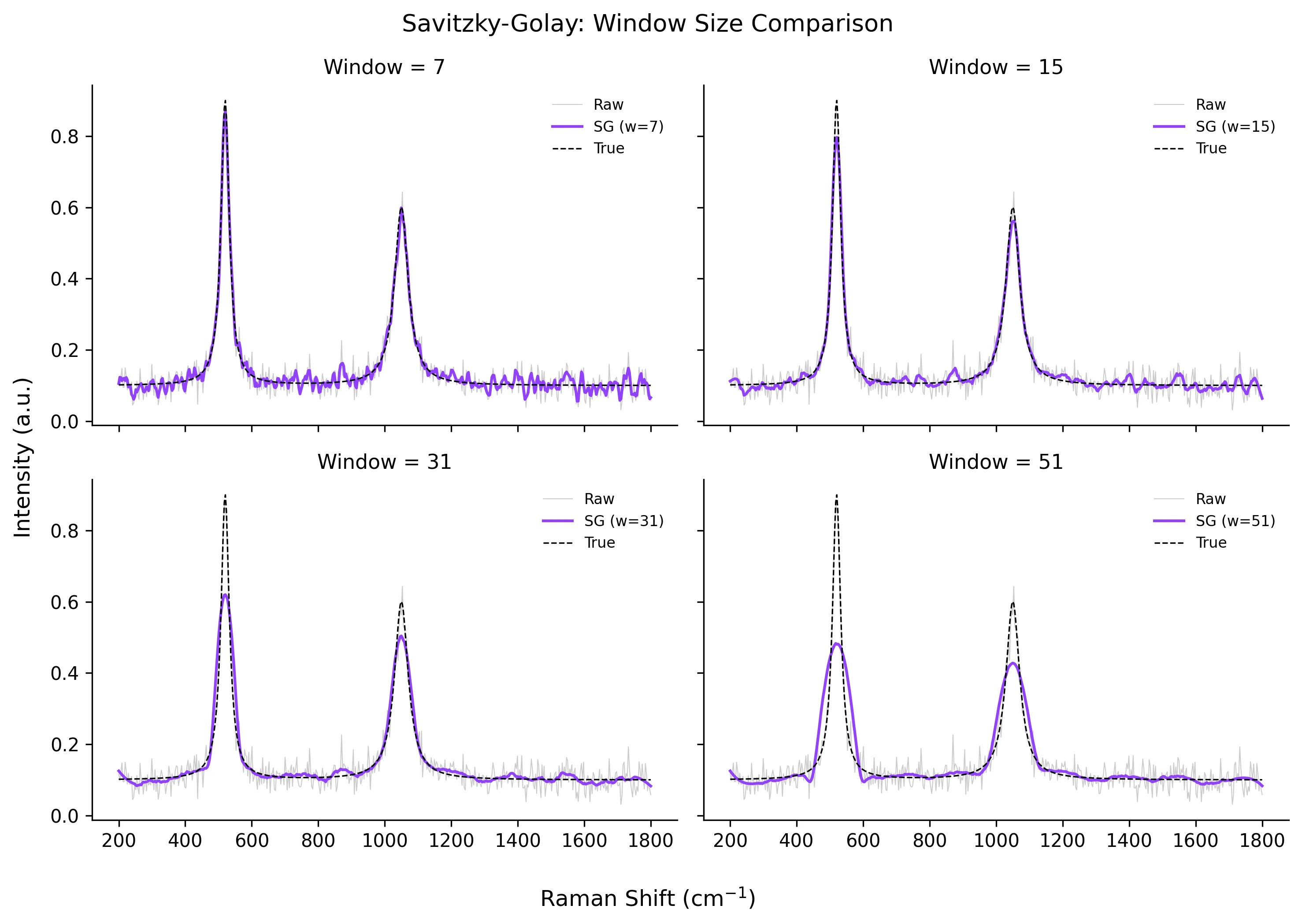
Smooth spectroscopy and chromatography data while preserving peak shapes. Includes parameter selection guide for window length and polynomial order.
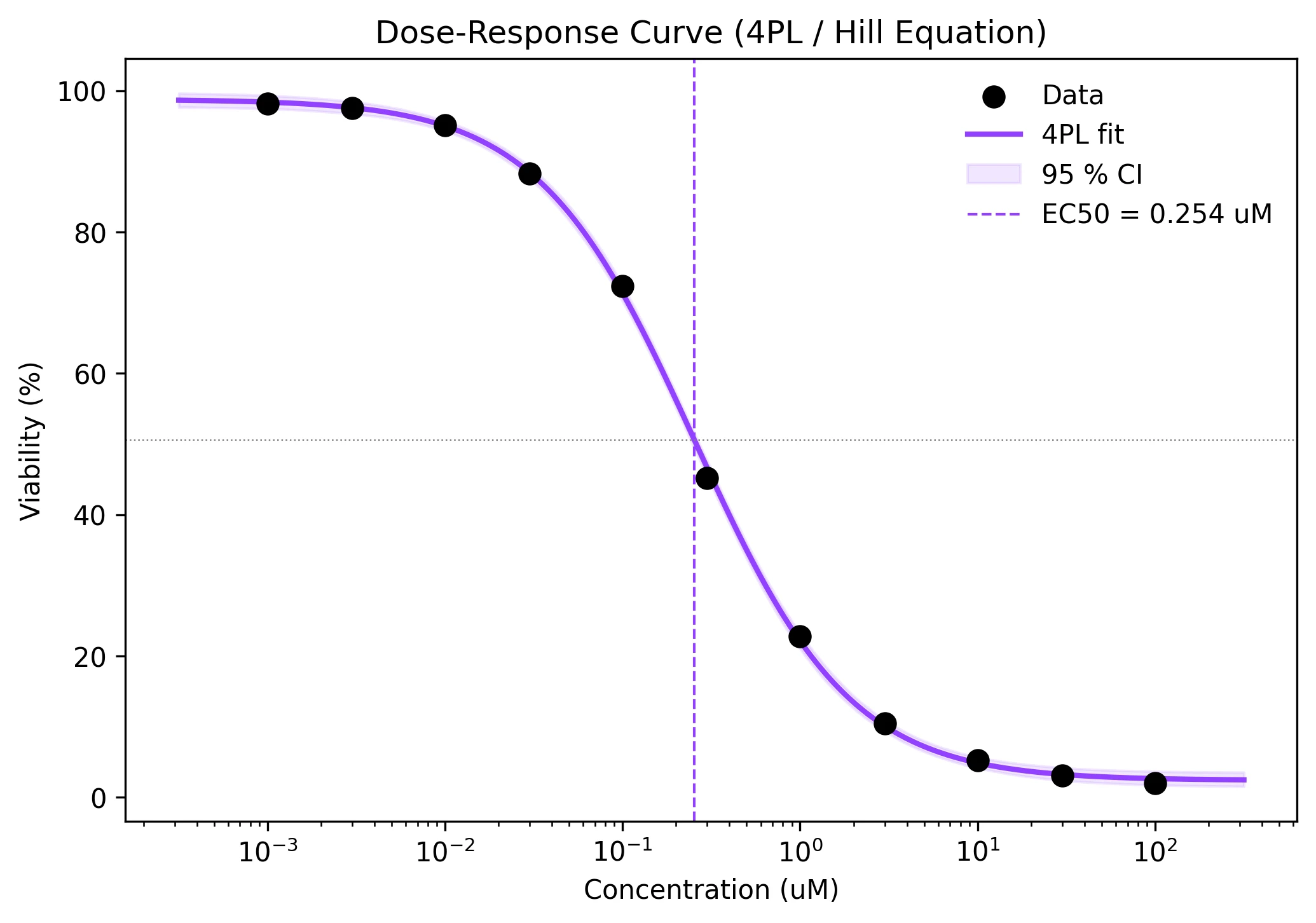
Fit dose-response data using the Hill equation and 4PL model. Extract EC50/IC50 with confidence intervals and produce publication-ready sigmoidal curves.
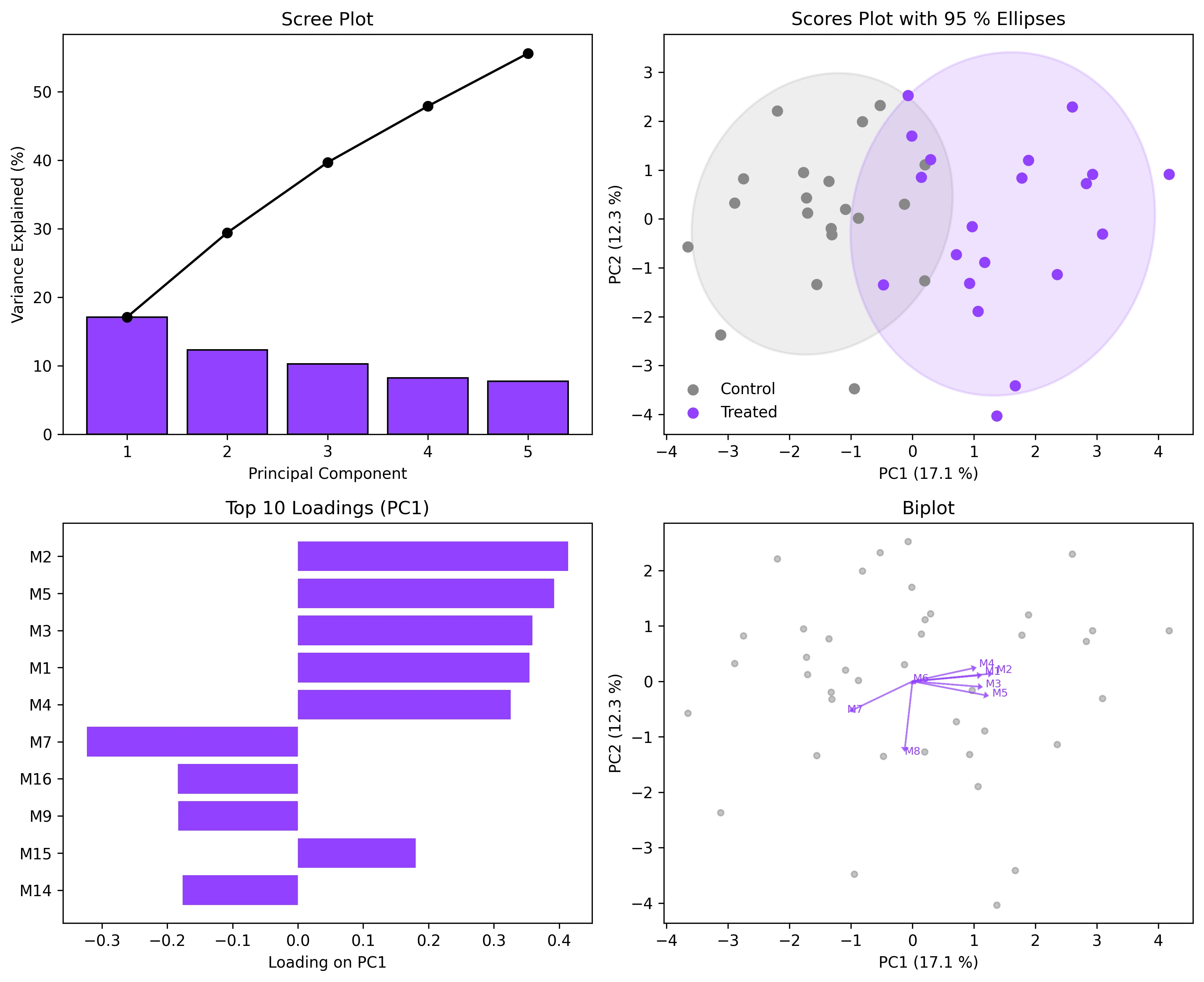
Create scree plots, scores plots with confidence ellipses, loadings plots, and biplots for PCA results. Covers interpretation for omics and environmental data.
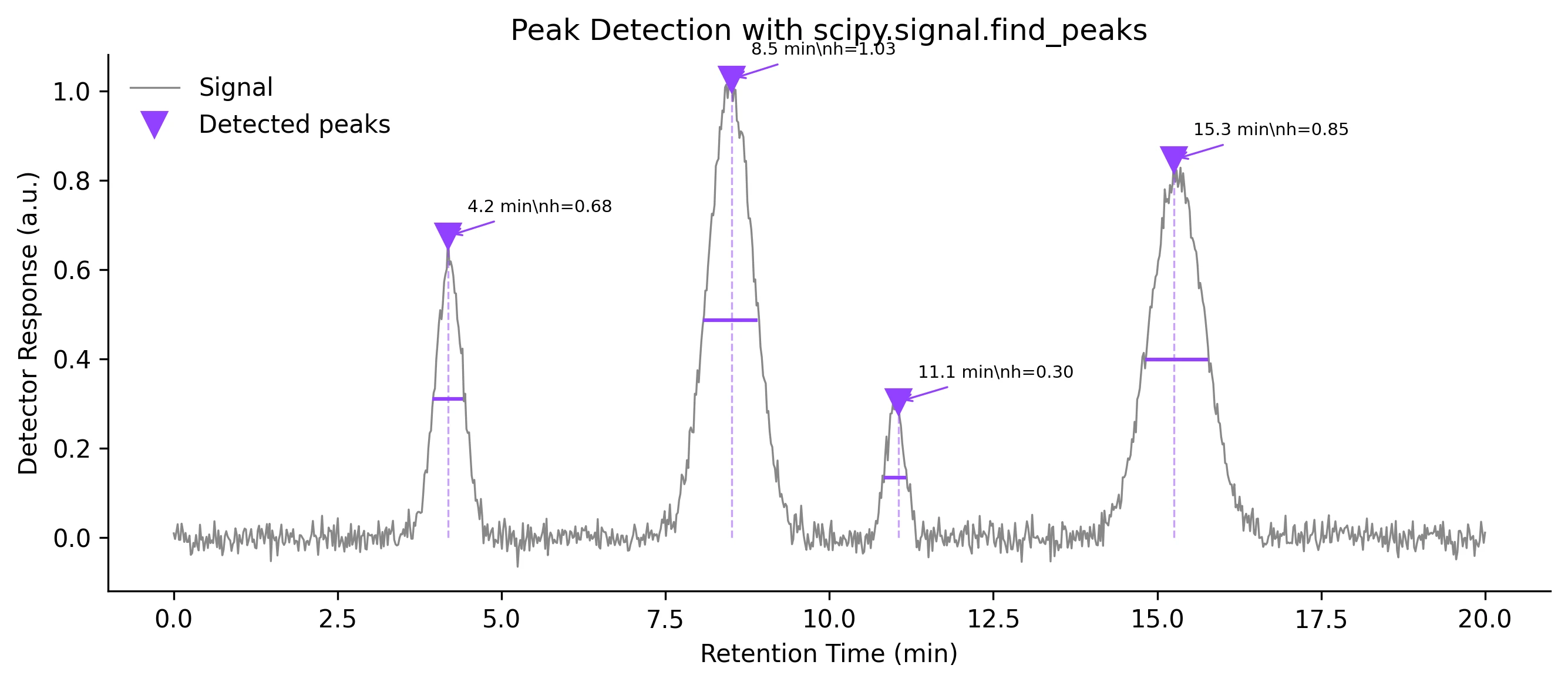
Detect peaks in experimental data using scipy.signal.find_peaks. Covers prominence, height, threshold parameters with visualizations and peak area integration.
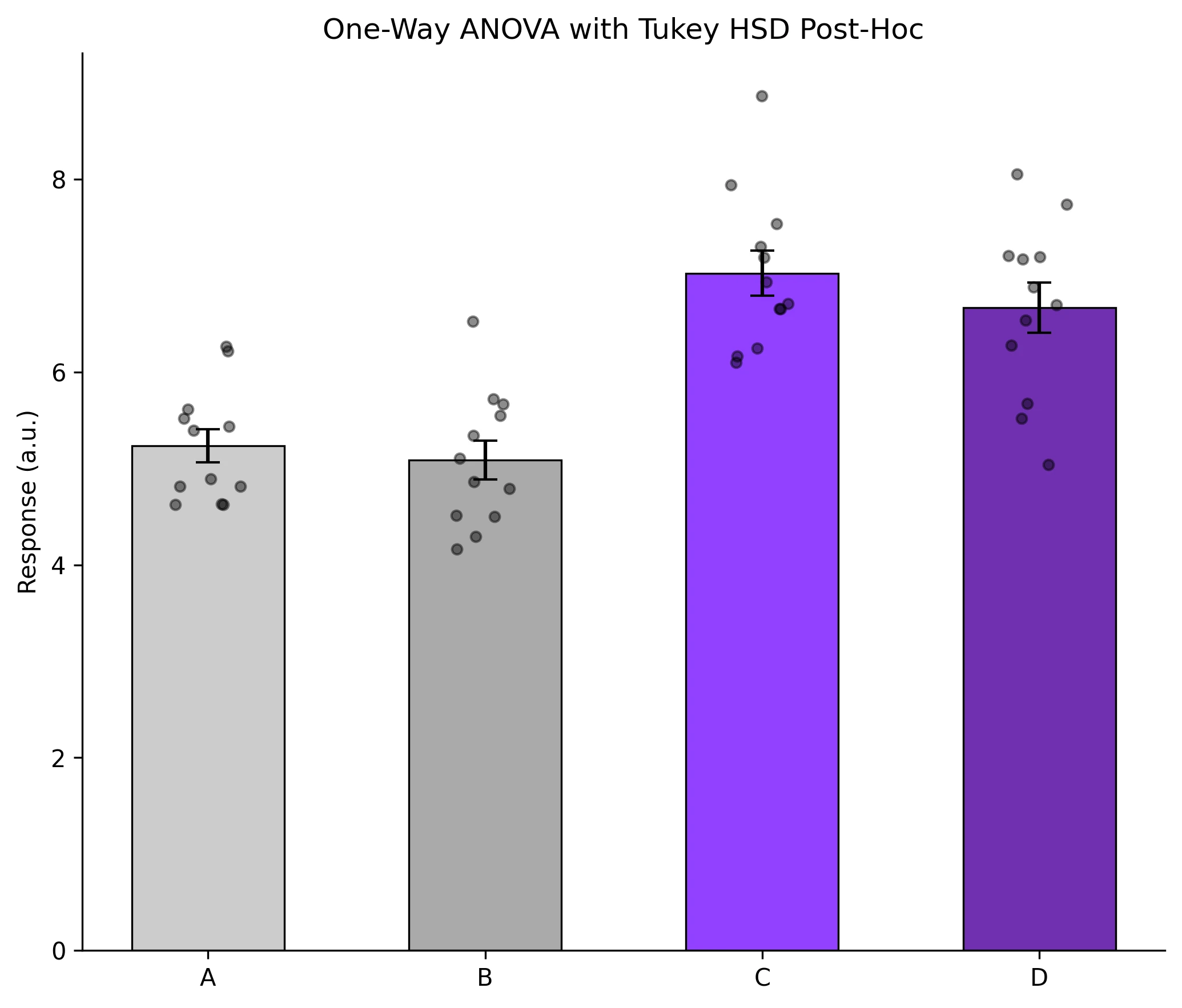
Run one-way ANOVA with Tukey HSD post-hoc and add significance brackets to grouped bar charts. Includes non-parametric Kruskal-Wallis with Dunn test alternative.
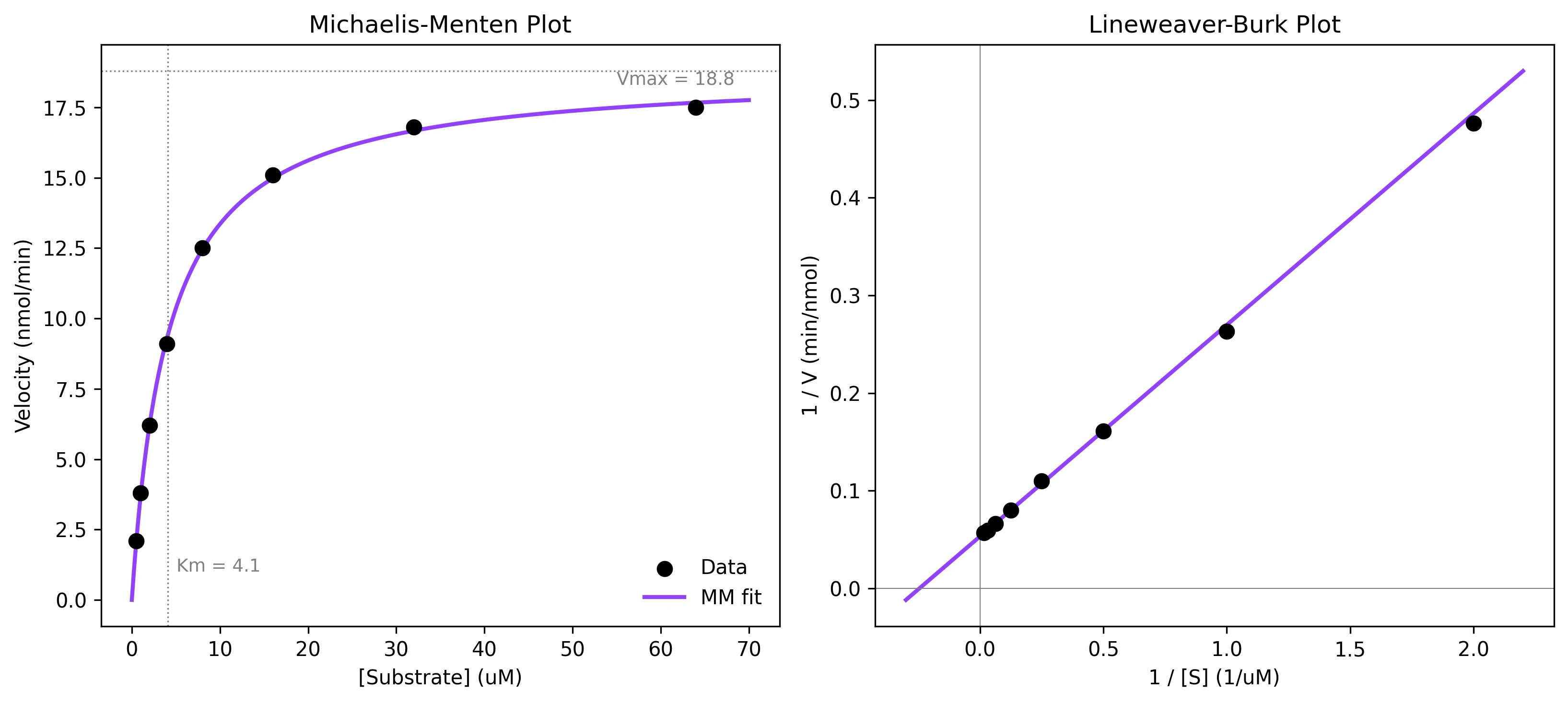
Fit Michaelis-Menten enzyme kinetics data to extract Km and Vmax with uncertainties. Includes Lineweaver-Burk plots and Hill equation extension.
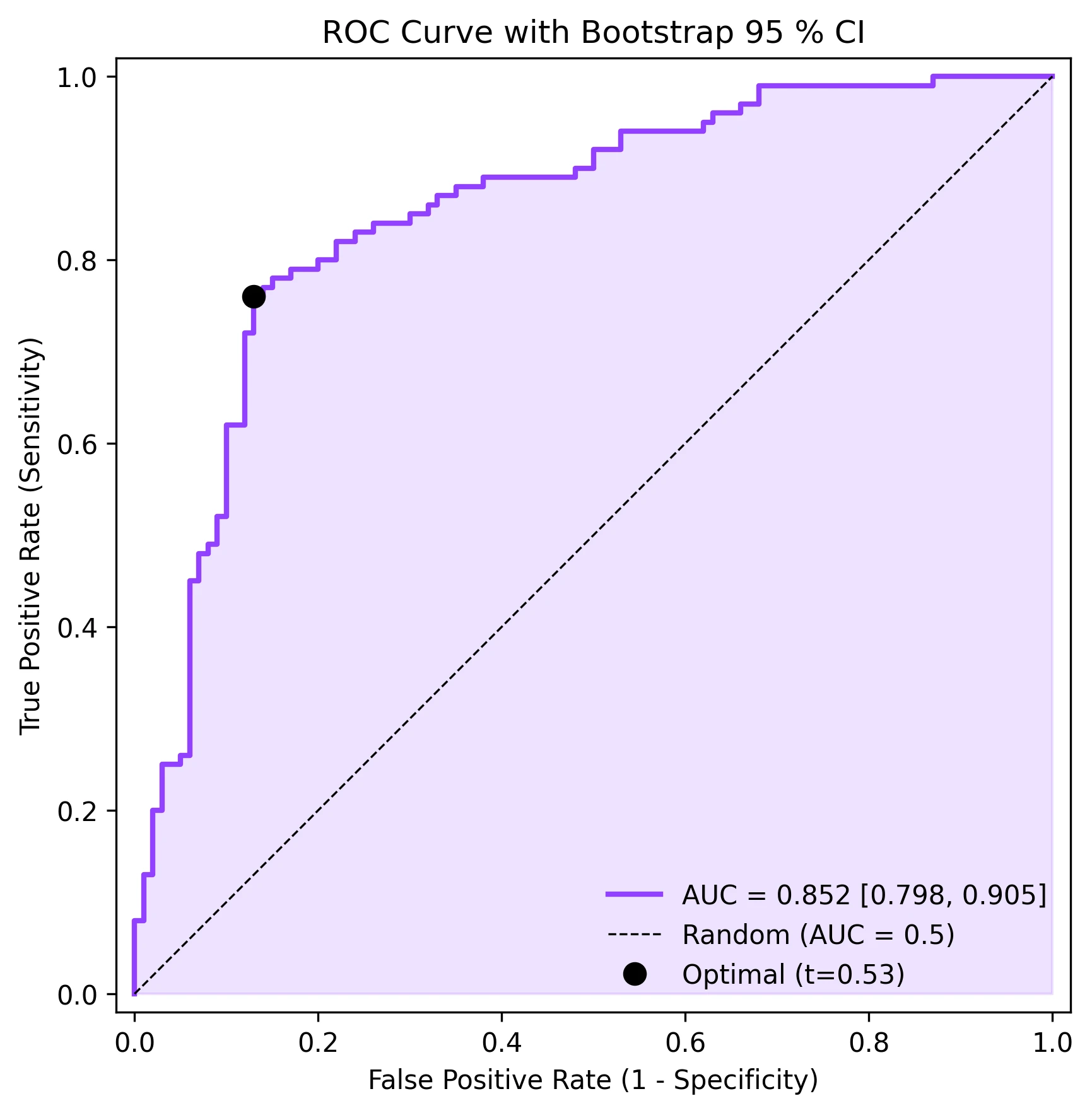
Generate ROC curves with AUC, bootstrap confidence intervals, optimal threshold identification, and multi-class or multi-classifier comparison plots.
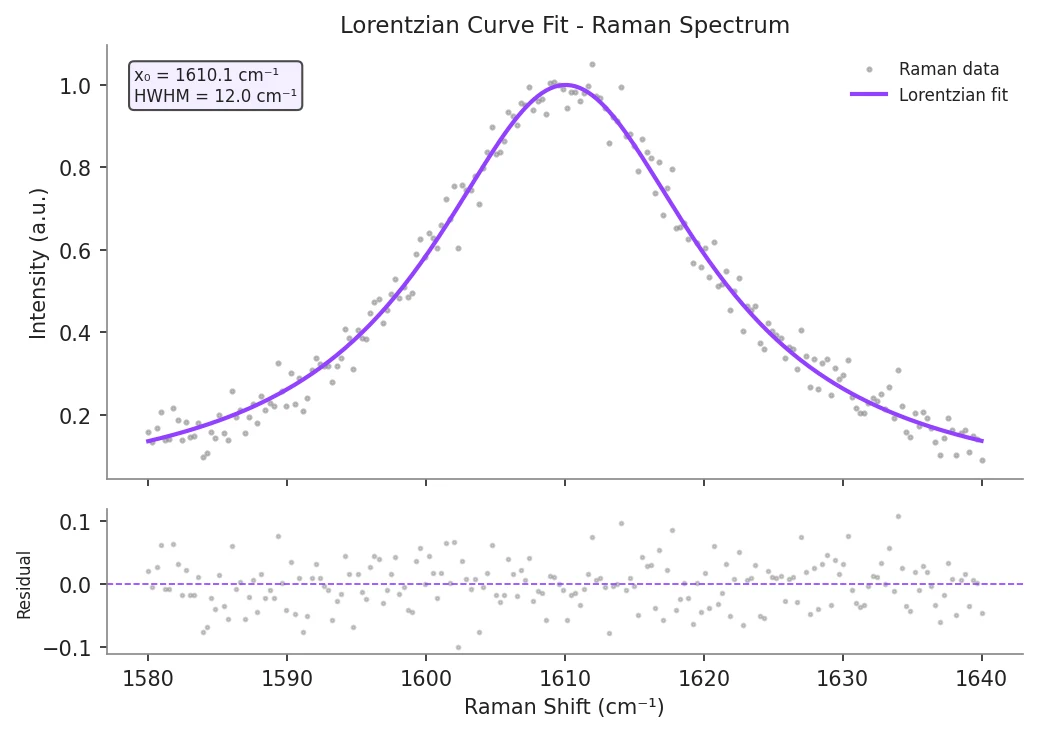
Fit Lorentzian (Cauchy) profiles to spectroscopy data with heavier tails than Gaussian peaks, common in NMR and Raman broadening.
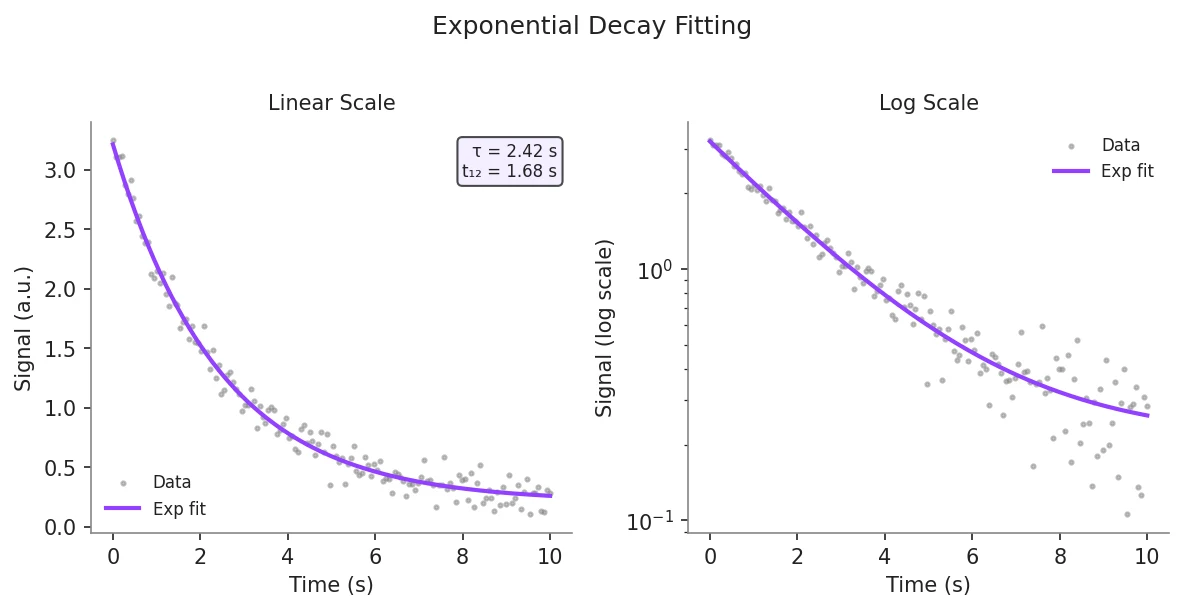
Fit single and double exponential decay models to extract rate constants, half-lives, and time constants from fluorescence, pharmacokinetics, or radioactive decay data.
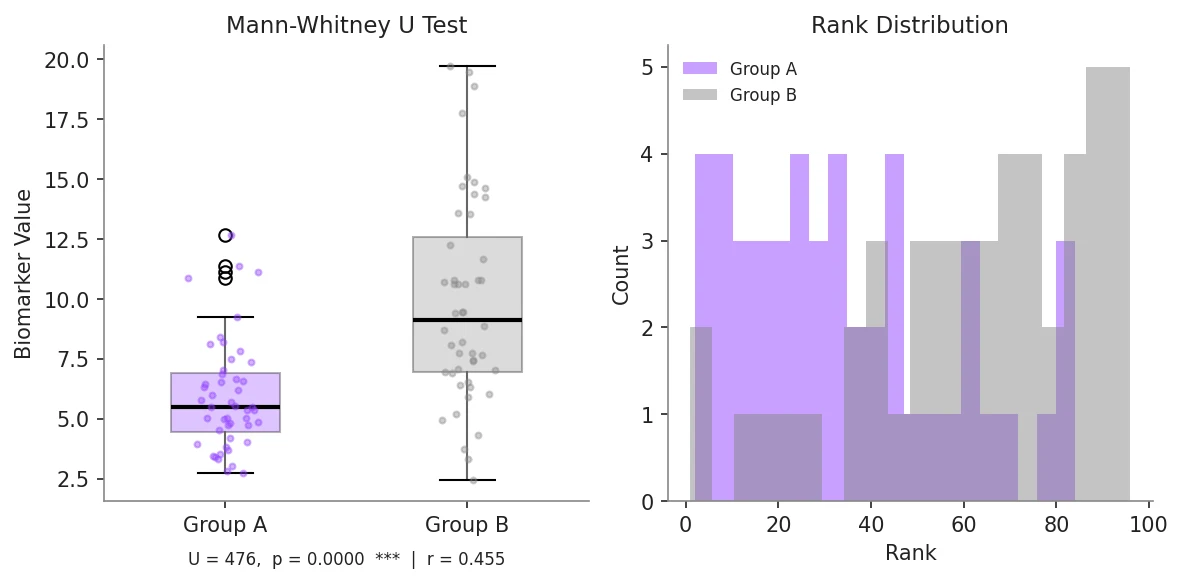
Non-parametric alternative to the independent t-test for comparing two groups when data is not normally distributed, using rank-based methods.
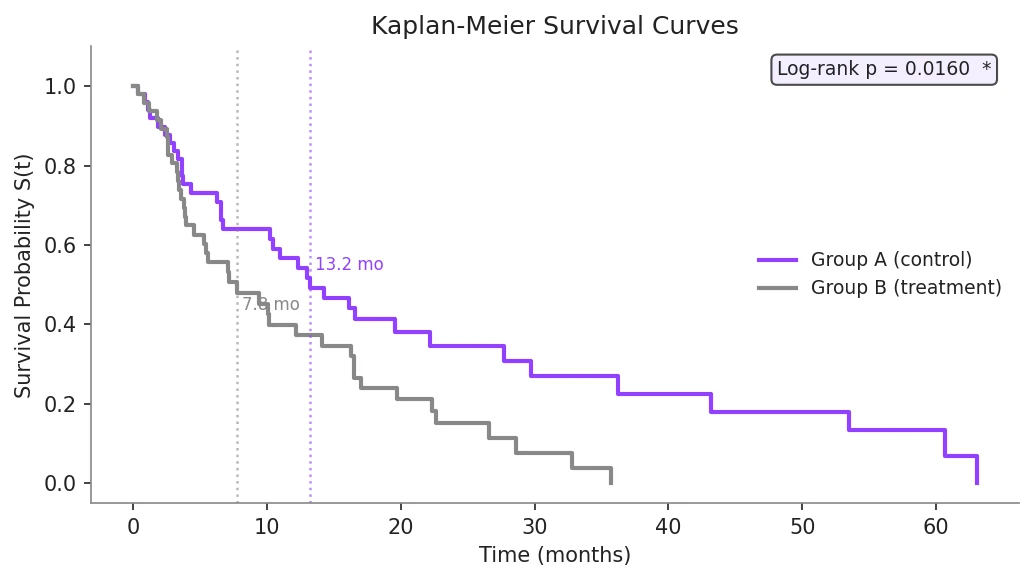
Estimate survival functions from censored time-to-event data with confidence intervals and log-rank tests for group comparison.
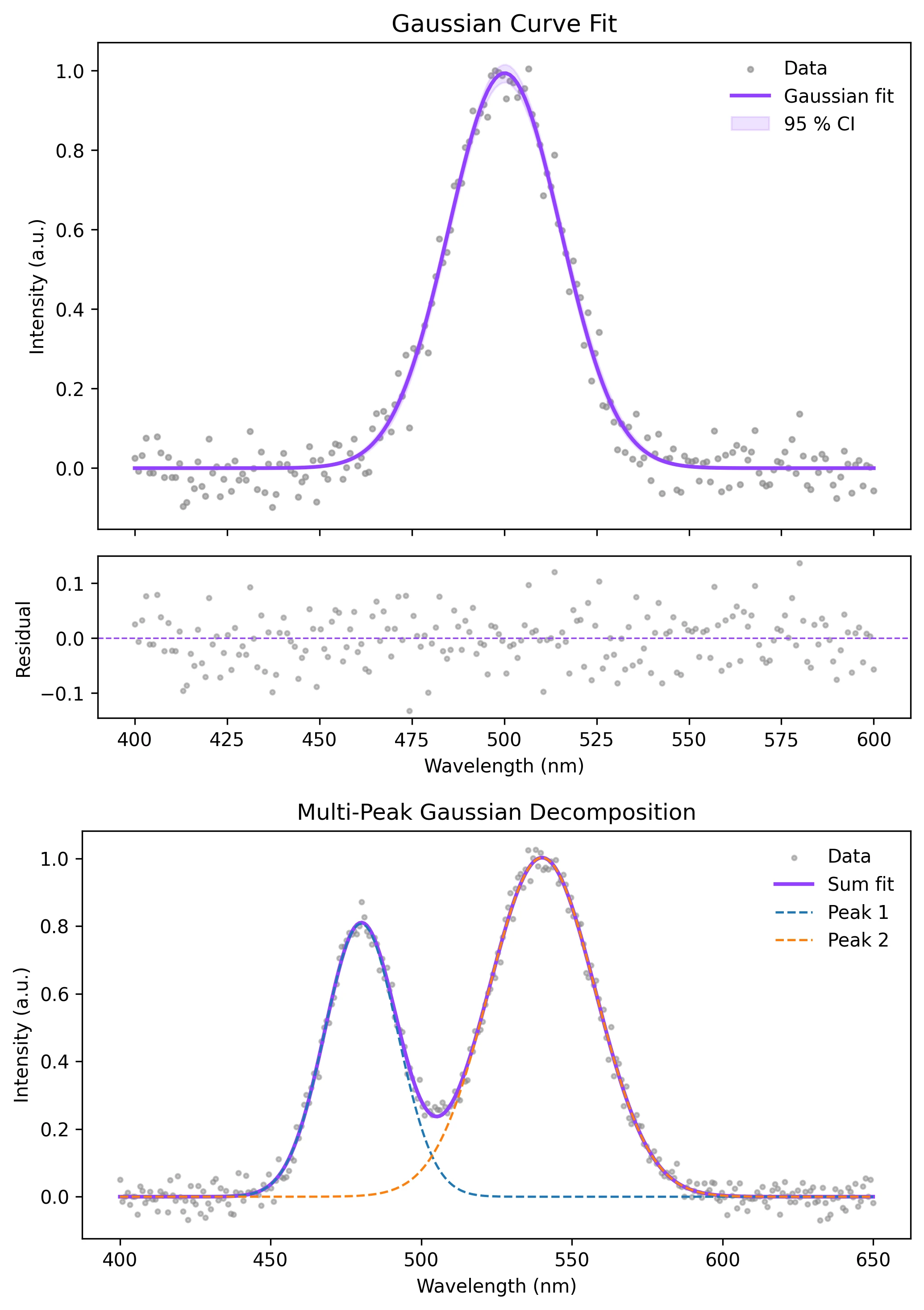
Fit 4-parameter logistic curves for assay standard curves, ELISA data, and dose-response experiments with EC50 or IC50 reporting.
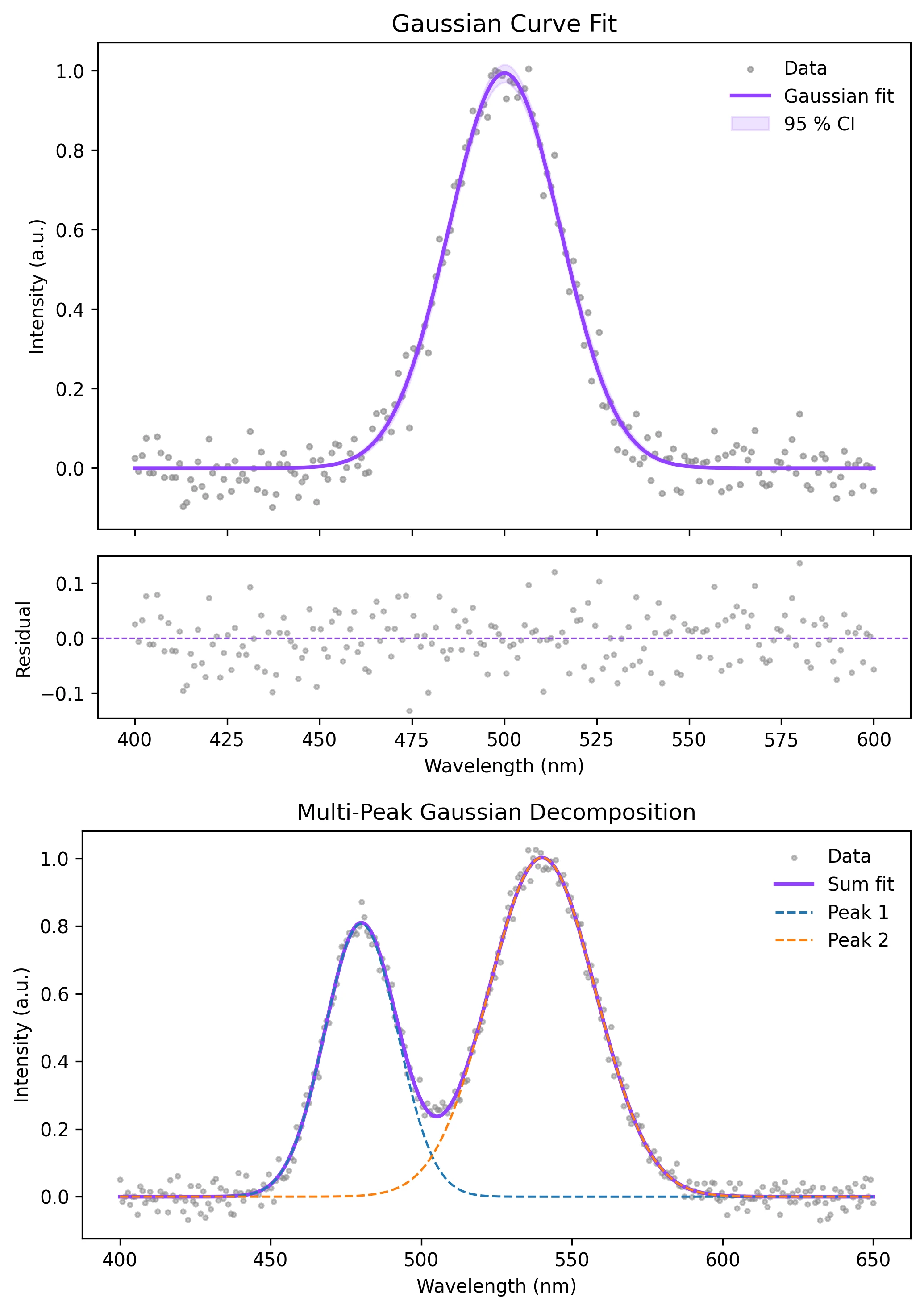
Compare paired measurements with a nonparametric test when the differences are not normally distributed.
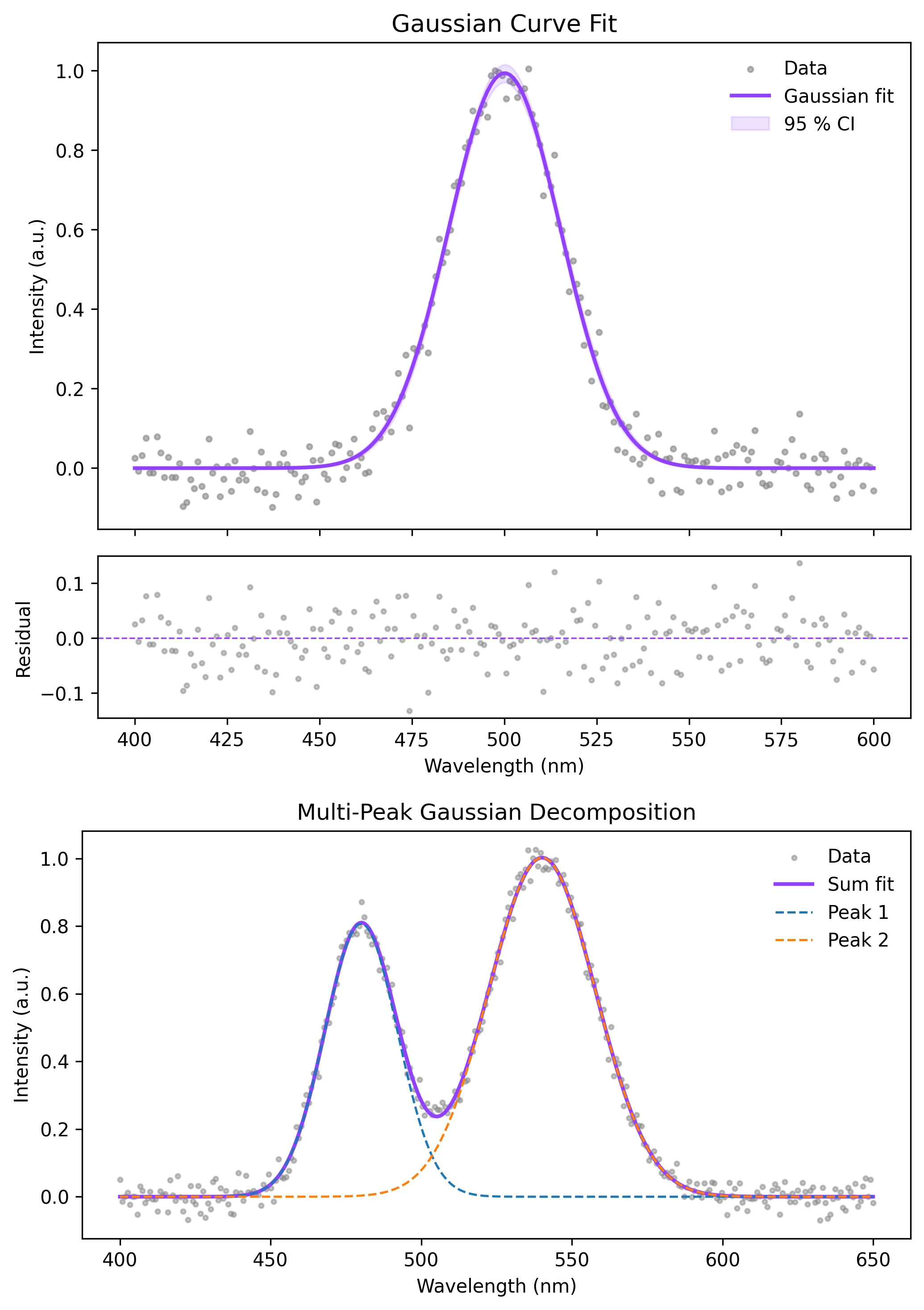
Analyze periodic signals in the frequency domain with FFT amplitude spectra, power spectra, and harmonic identification.
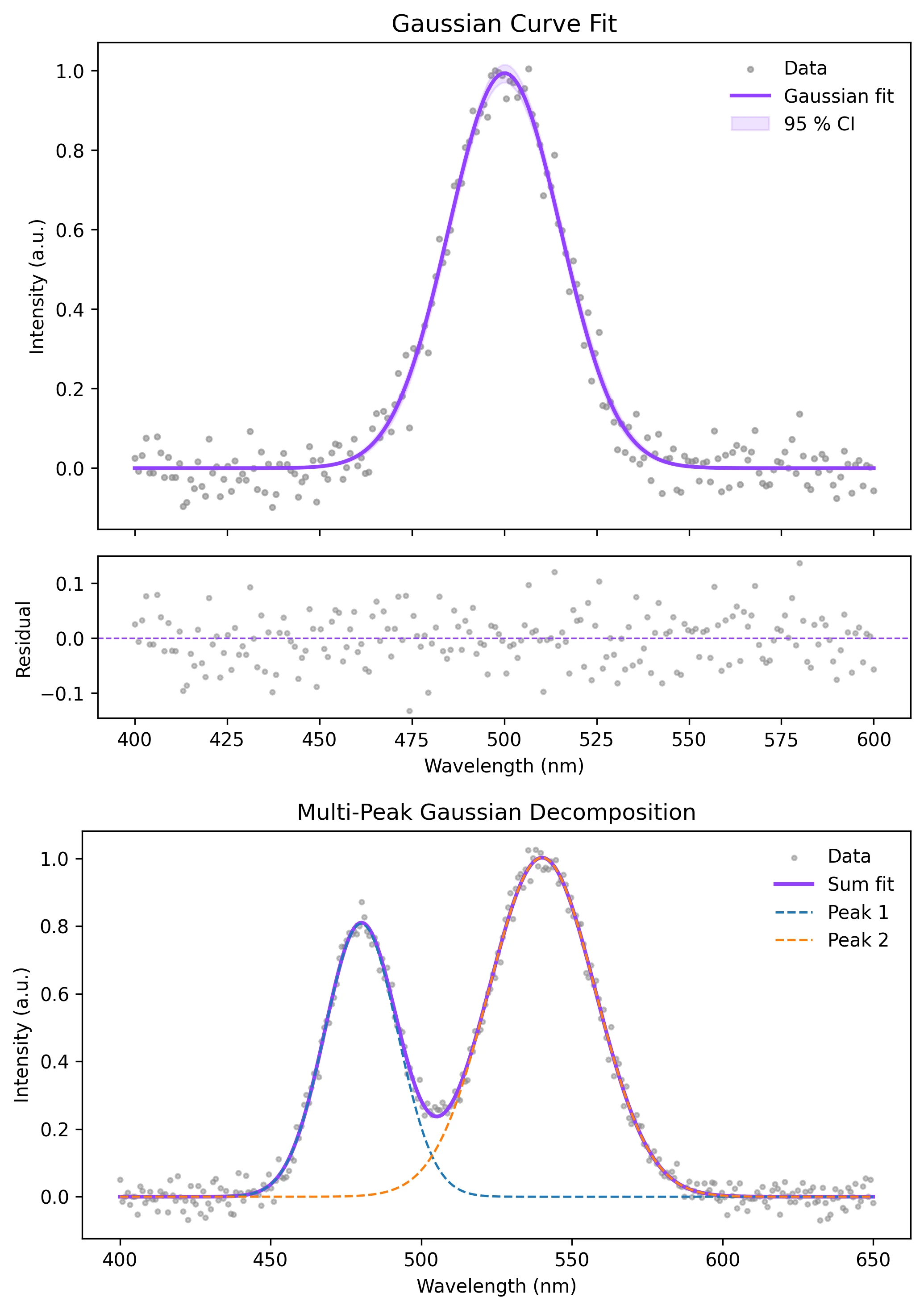
Remove noise from time-series and spectroscopy data with wavelet thresholding while preserving spikes, edges, and transient structure.
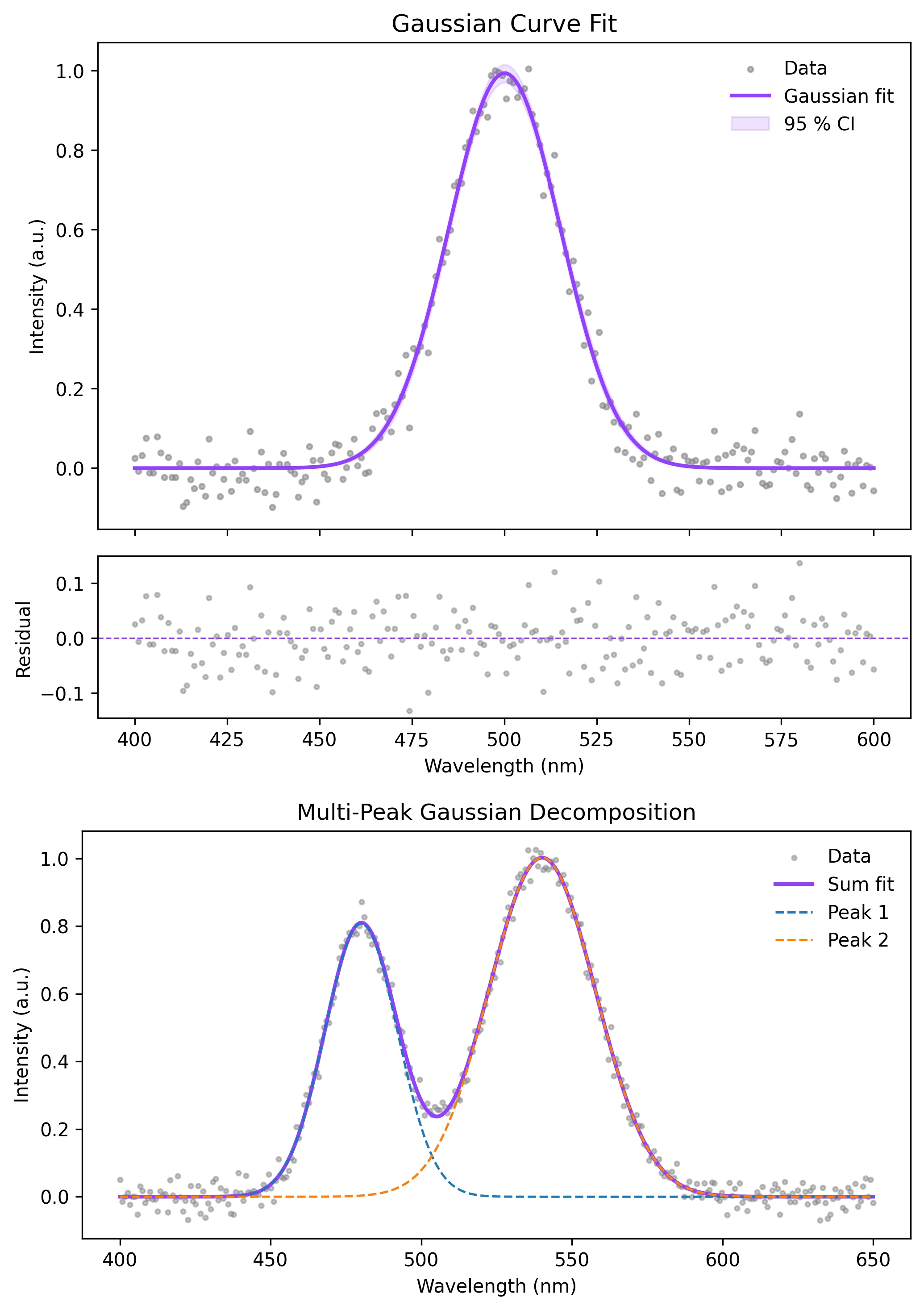
Remove baseline drift from spectroscopy and chromatography traces before peak analysis or quantitative fitting.
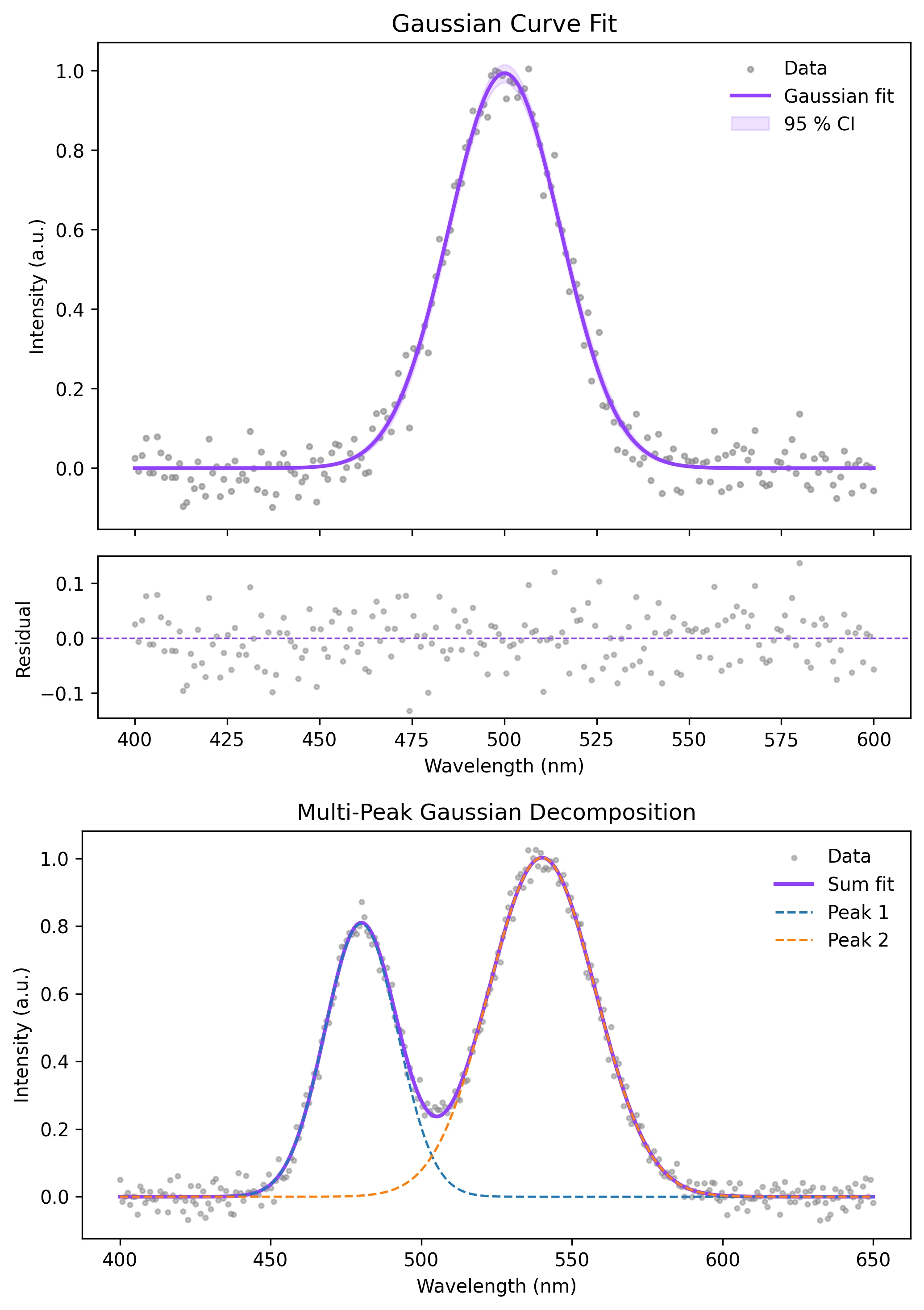
Assess agreement between two measurement methods with bias, limits of agreement, and proportional bias diagnostics.
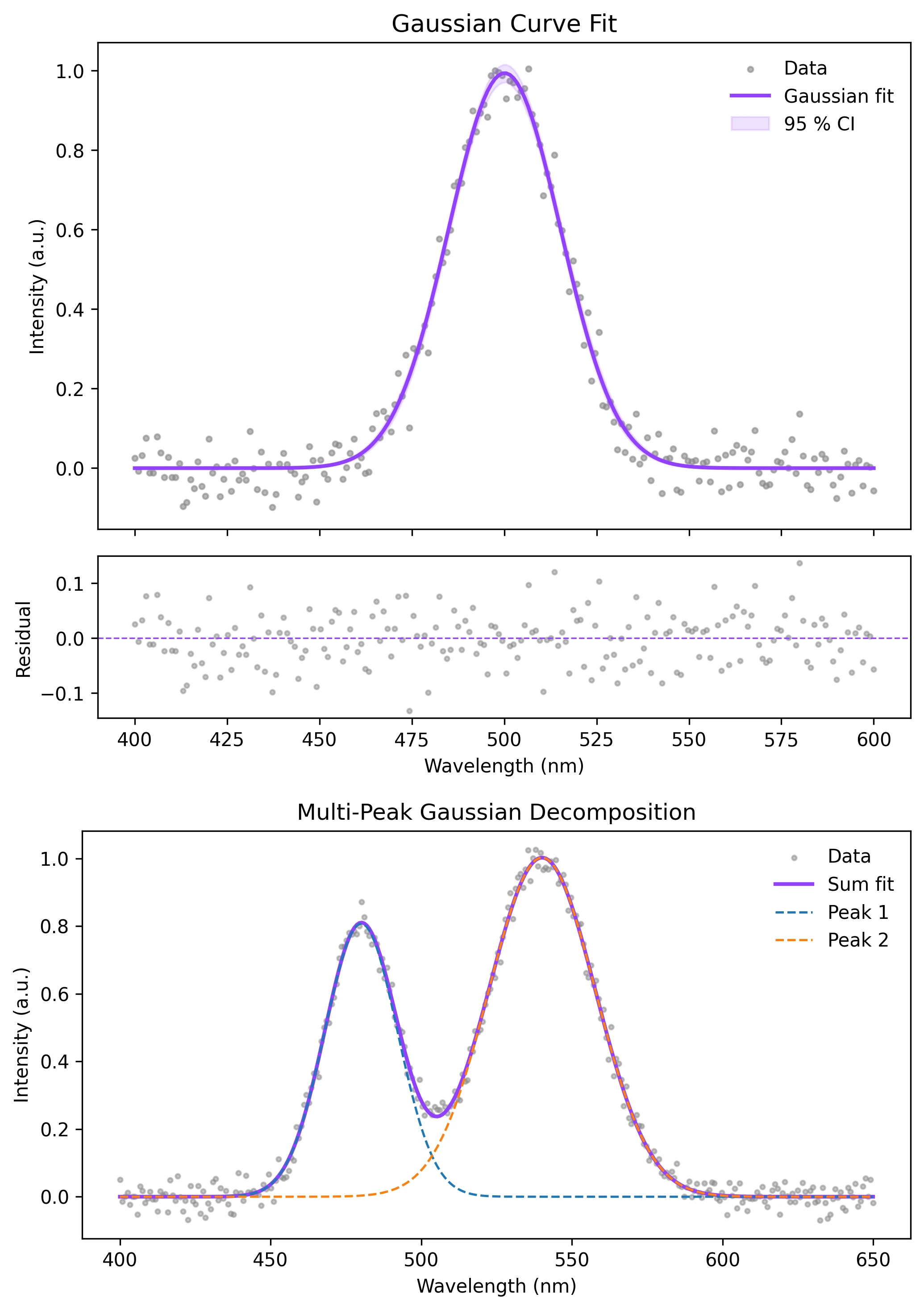
Visualize repeated-measures and clustered data with mixed-effects models, fixed effects, random intercepts, and confidence bands.
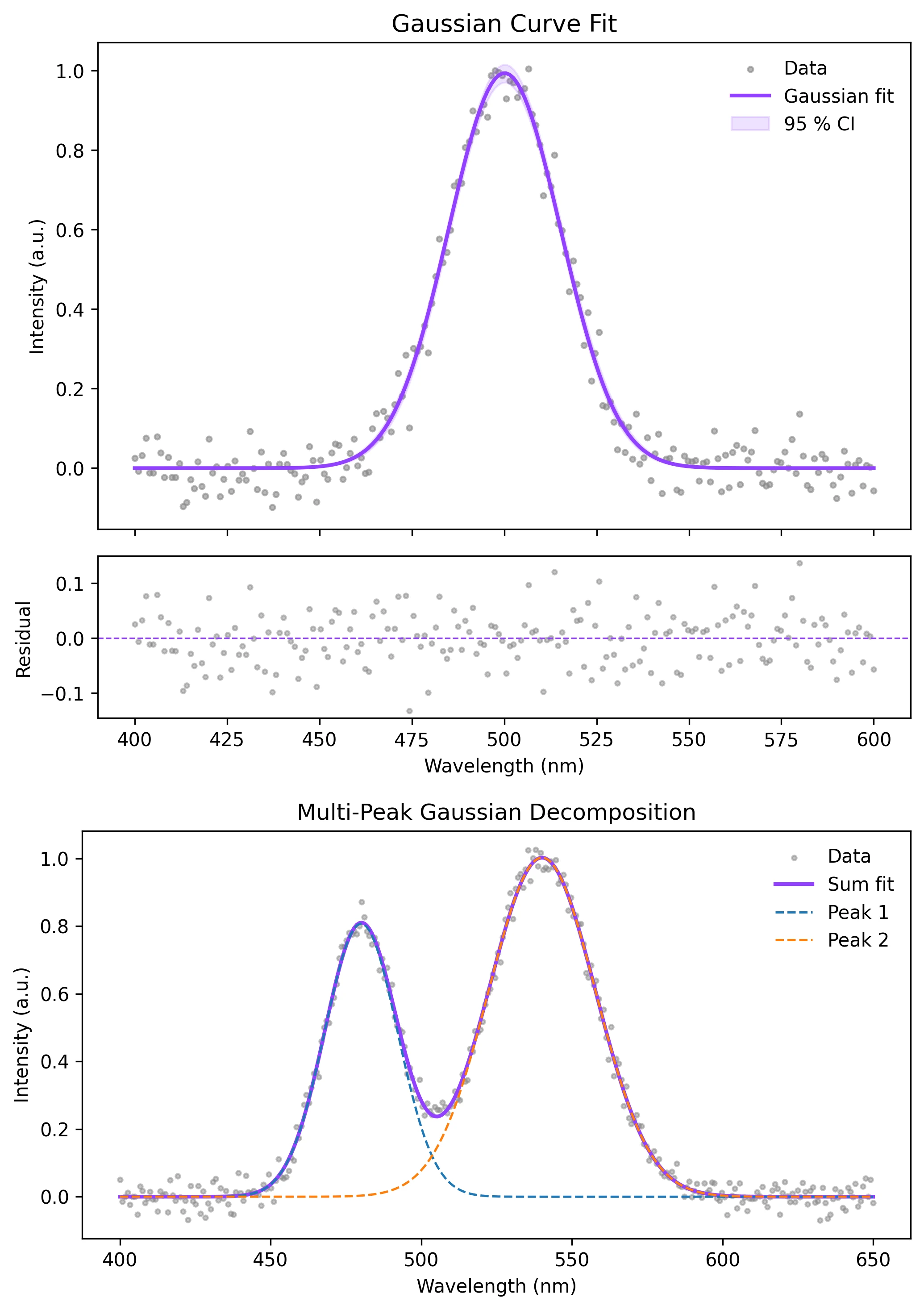
Cluster rows and columns to reveal structure in gene expression, similarity matrices, and other multivariate datasets.
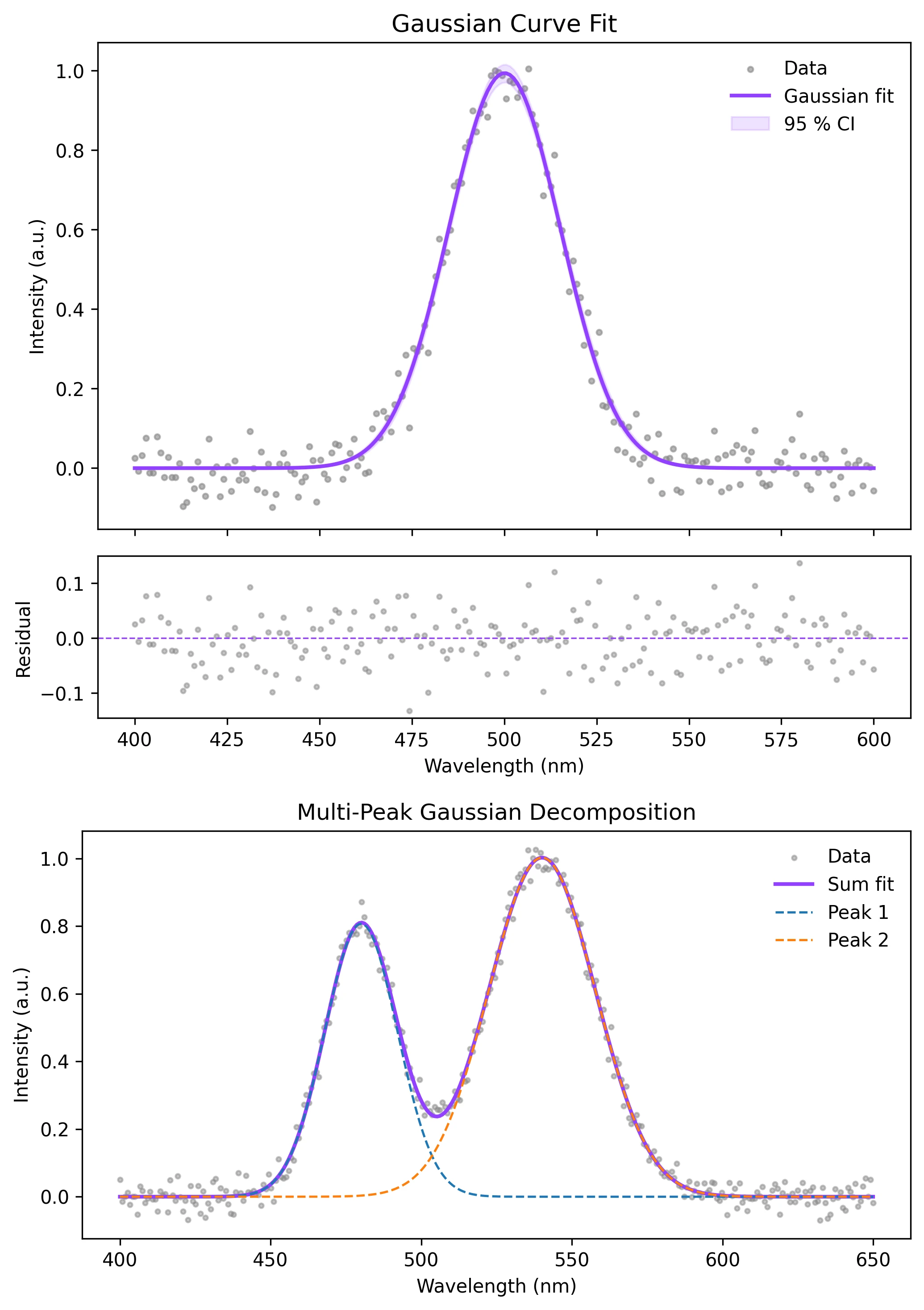
Visualize relationships between variables with annotated Pearson or Spearman correlation heatmaps.
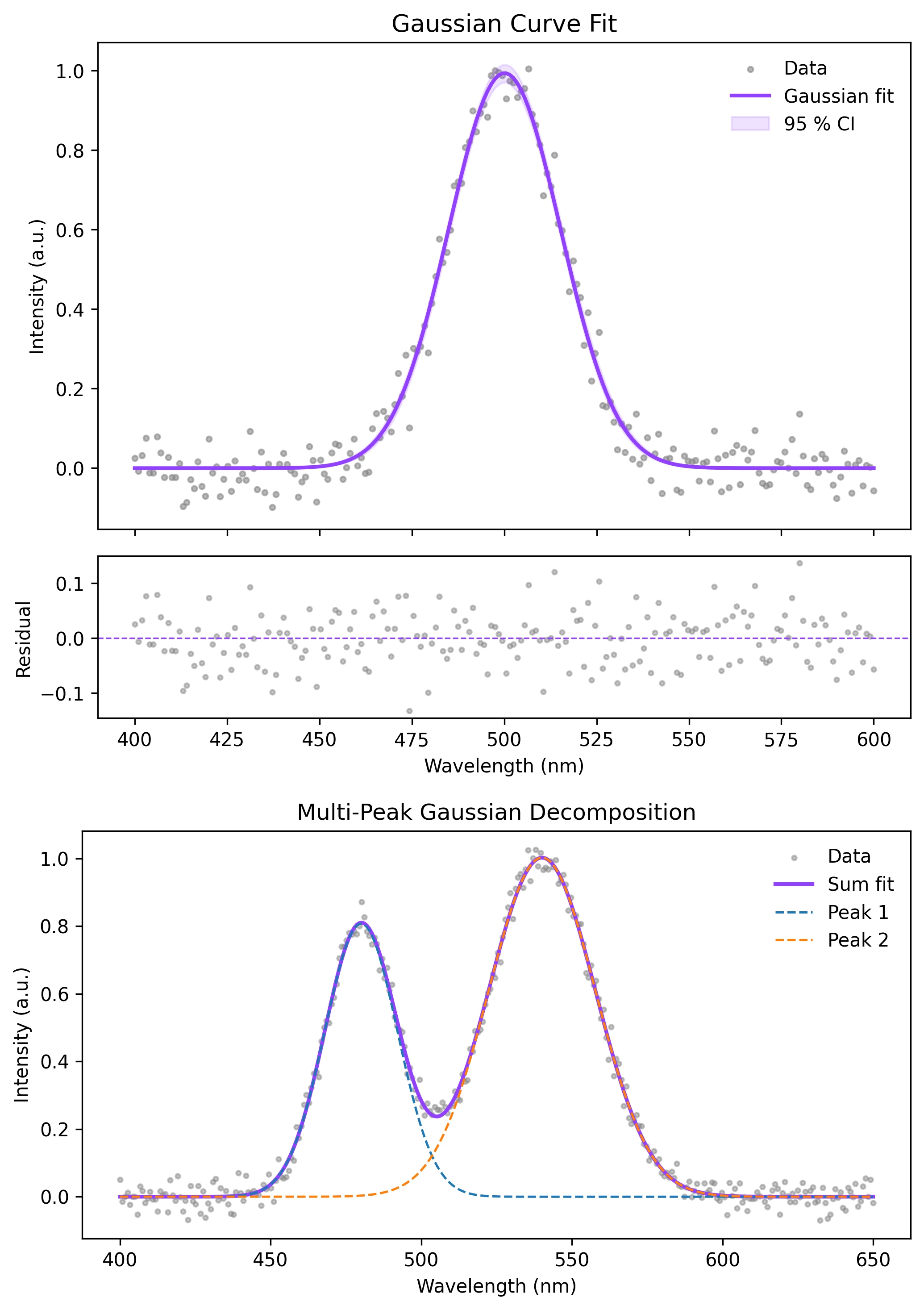
Compare Kaplan-Meier survival curves between groups with log-rank testing, censor marks, and risk-aware interpretation.
Every guide in this encyclopedia follows the same structure so you always know where to find what you need.
Run the visualization code directly in your browser. Edit parameters and see the updated plot instantly - no local Python setup required.
Copy-ready scipy, numpy, and matplotlib code with real sample data. Includes implementation code and visualization code separately.
The underlying equation and parameter descriptions, plus guidance on when to use (and when not to use) each technique.
The mistakes that trip up most researchers, with exact error messages, root causes, and step-by-step fixes.
Upload your dataset and Plotivy's AI applies the right technique, generates the code, and produces a publication-ready figure - no Python setup required.