Menu

WORKFLOW MASTERCLASS

From Exploration to Explanation

One tool for the entire research lifecycle. Discover insights with exploratory plots, then polish them into storytelling figures for your paper.

Two Modes, One Tool

Exploratory

For You. Quick, comprehensive, and messy on purpose. The goal is to understand the data, find patterns, and spot anomalies.

  • Speed over aesthetics
  • Multiple views (pairplots, histograms)
  • Statistical summaries and correlations

Explanatory

For Others. Clean, focused, and intuitive. The goal is to communicate a specific insight without distraction.

  • Clarity over detail
  • One focused chart per insight
  • Title = the takeaway message

Step 1: Explore Your Data

A pairplot showing all numeric features colored by species. This scatter matrix immediately reveals clustering, correlations, and potential outliers - the starting point of every analysis.

Live Code Editor
Code EditorPython
Loading editor...
Live Preview

Preparing preview

Running once automatically on first load

Learn by Experimenting

This is a safe playground for learning! Try changing:

  • • Colors: Modify color values to see different palettes
  • • Numbers: Adjust sizes, positions, or data ranges
  • • Labels: Update titles, axis names, or legends

Edit the code, run it, then open the full data visualization tool to continue with your own dataset.

Key observations from this plot

  • Gentoo (blue) forms a clearly separated cluster in Body Mass vs Flipper Length
  • Bill Length distributions show overlap between Chinstrap and Gentoo
  • Bill Depth separates Gentoo from the other two species

The Transformation

Once you discover something interesting in your exploratory analysis, refine it into a focused figure for your audience.

AspectExploratoryExplanatory
AudienceYourself / your labReviewers / readers / public
TitleDescriptive ("Pairplot of features")Insight-driven ("Gentoo are larger")
SubplotsMany (show everything)One (show the point)
ColorsAll groups equally visibleHighlight key group, gray the rest
AnnotationsNone / auto-generatedHand-placed arrows, labels
Polish levelRough is fineJournal-ready typography

Step 2: Explain Your Finding

The same data, but now focused on one insight: Gentoo penguins form a distinct cluster with higher body mass and longer flippers. Non-essential species are grayed out; the title states the conclusion directly.

Live Code Editor
Code EditorPython
Loading editor...
Live Preview

Preparing preview

Running once automatically on first load

Learn by Experimenting

This is a safe playground for learning! Try changing:

  • • Colors: Modify color values to see different palettes
  • • Numbers: Adjust sizes, positions, or data ranges
  • • Labels: Update titles, axis names, or legends

Edit the code, run it, then open the full data visualization tool to continue with your own dataset.

What makes this explanatory?

  • Title states the conclusion, not the method
  • Non-relevant data is visually suppressed (light gray)
  • Annotation arrow guides the reader to the key cluster
  • Minimal chart junk - no grid, no top/right spines

Why Plotivy Supports Both Workflows

Quick EDA Prompts

"Show me a pairplot of all numeric columns colored by Species" - instant multi-panel exploration.

Presentation Polish

"Highlight only Gentoo in teal, gray out others, remove gridlines" - refine any chart iteratively.

Code Continuity

Start with an exploratory script, then modify it into an explanatory one. No switching tools.

Style Presets

Apply Nature, Science, or ACS journal styles to convert any rough plot into a submission-ready figure.

Chart gallery

Explore More Chart Types

Interactive examples with ready-to-run code

Browse all chart types →
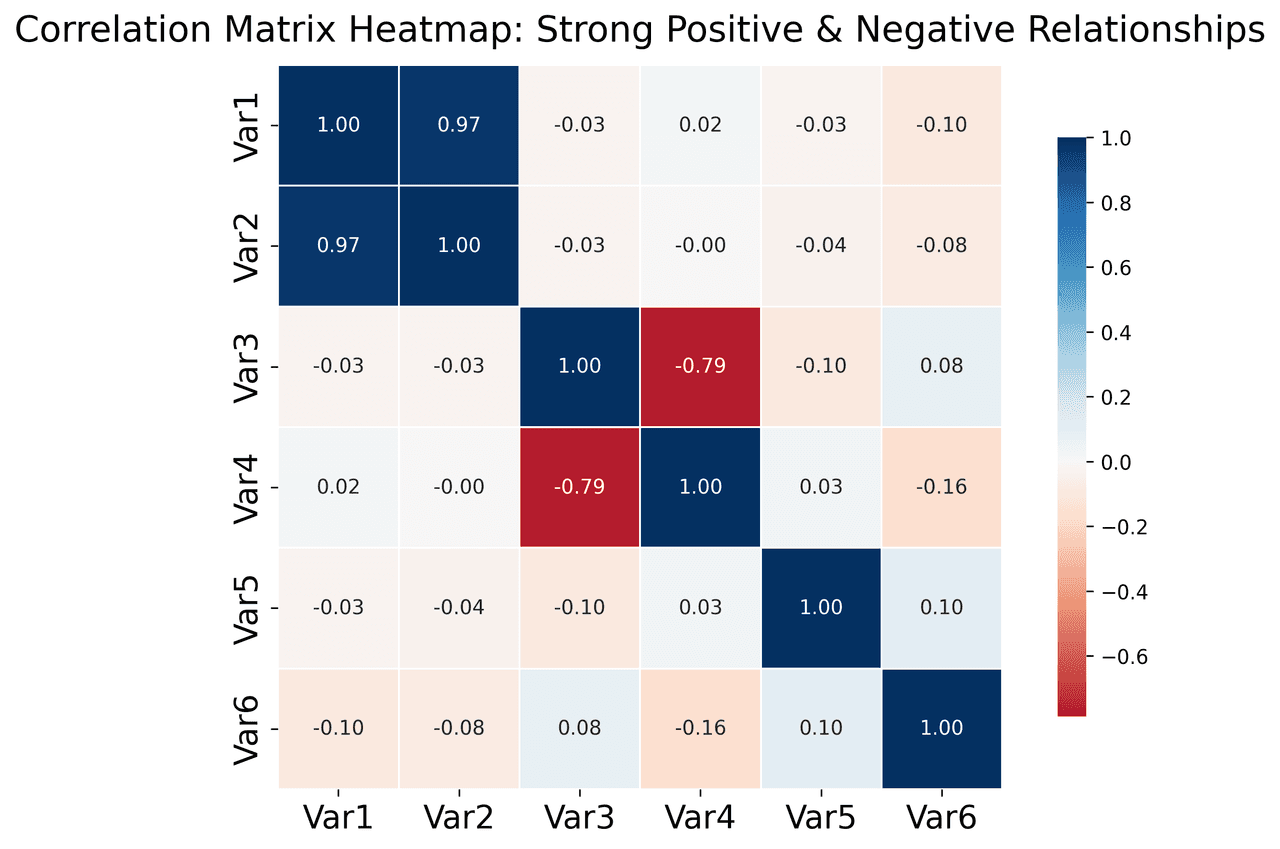
Correlation heatmap with diverging color scale and coefficient annotations
Statistical•seaborn, matplotlib
From the chart gallery•Correlation analysis between variables

Heatmap

Represents data values as colors in a two-dimensional matrix format.

Sample code / prompt

import matplotlib.pyplot as plt
import seaborn as sns
import pandas as pd
import numpy as np

# Create correlation matrix for financial metrics
metrics = ['Revenue', 'Profit', 'Expenses', 'ROI', 'Customers', 'AOV', 'Marketing', 'Employees']
correlation_data = np.array([
    [1.00, 0.85, -0.45, 0.72, 0.88, 0.65, 0.72, 0.55],
    [0.85, 1.00, -0.78, 0.92, 0.75, 0.58, 0.63, 0.48],
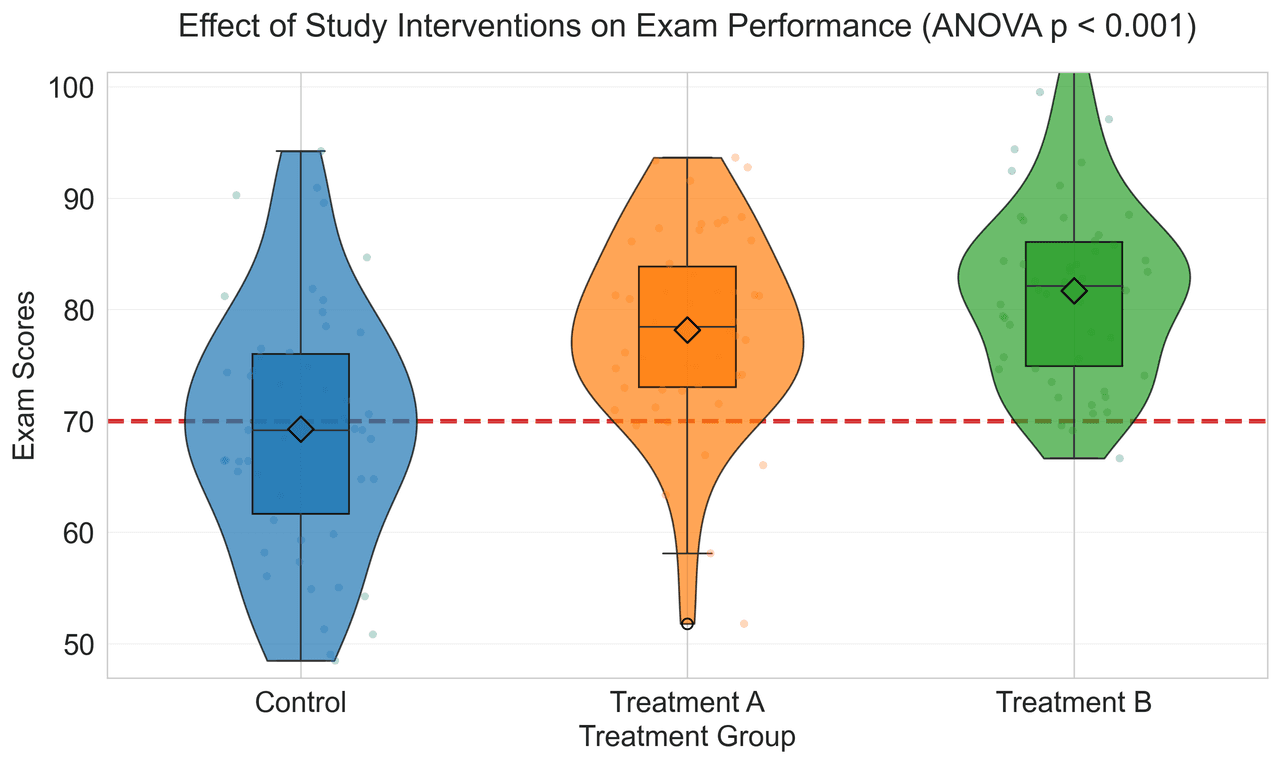
Violin plot comparing score distributions across 3 groups with inner box plots
Distribution•seaborn, matplotlib
From the chart gallery•Comparing treatment effects across groups

Violin Plot

Combines box plots with kernel density to show distribution shape across groups.

Sample code / prompt

import matplotlib.pyplot as plt
import seaborn as sns
import pandas as pd
import numpy as np
from scipy.stats import f_oneway

# Generate exam score data for 3 groups
np.random.seed(42)
control = np.random.normal(72, 12, 50)
treatment_a = np.random.normal(78, 10, 50)

Explore First, Then Explain

Upload your data, run quick exploratory plots, then refine the most interesting finding into a publication-ready figure - all in under five minutes.

Start Free - No Sign-Up