Menu

OPTICS & SPECTROSCOPY

Photonics Visualizations

Laser spectra, Raman analysis, photonic bandgaps, and optical transmission - create publication-ready photonics figures with AI-generated Python code.

Essential Photonics Visualizations

Photonics research spans laser characterization, spectroscopic analysis, waveguide design, and thin-film optics. Effective visualization requires precise peak fitting, spectral decomposition, and band-structure rendering.

Laser Spectra

Emission lines with Lorentzian fits, gain envelopes, and mode spacing

Raman Spectroscopy

D, G, 2D band identification with I(D)/I(G) ratios

Photonic Bandgaps

Dispersion relations and band structure plots for photonic crystals

Transmission/Absorption

UV-Vis-NIR spectra with Beer-Lambert analysis

Waveguide Modes

TE/TM mode profiles and effective index calculations

Thin-Film Interference

Reflectance spectra with Fabry-Perot fringe analysis

Laser Multi-Mode Emission Spectrum

He-Ne laser output near 632.8 nm showing six longitudinal modes with Lorentzian profiles. Includes gain envelope, lasing threshold, and free spectral range (FSR) annotation.

Live Code Editor
Code EditorPython
Loading editor...
Live Preview

Preparing preview

Running once automatically on first load

Learn by Experimenting

This is a safe playground for learning! Try changing:

  • • Colors: Modify color values to see different palettes
  • • Numbers: Adjust sizes, positions, or data ranges
  • • Labels: Update titles, axis names, or legends

Edit the code, run it, then open the full data visualization tool to continue with your own dataset.

Try with your data

Raman Spectroscopy: Carbon Allotropes

Comparative Raman spectra of graphene, multi-walled carbon nanotubes (MWCNT), and amorphous carbon. D, G, and 2D bands are labeled with I(D)/I(G) ratio analysis for each material.

Live Code Editor
Code EditorPython
Loading editor...
Live Preview

Preparing preview

Running once automatically on first load

Learn by Experimenting

This is a safe playground for learning! Try changing:

  • • Colors: Modify color values to see different palettes
  • • Numbers: Adjust sizes, positions, or data ranges
  • • Labels: Update titles, axis names, or legends

Edit the code, run it, then open the full data visualization tool to continue with your own dataset.

Spectral Analysis Key Concepts

Peak Fitting

  • Lorentzian - natural line shape for lifetime-broadened transitions
  • Gaussian - Doppler-broadened or instrument-limited peaks
  • Voigt - convolution of both, used for accurate deconvolution
  • Pseudo-Voigt - linear combination approximation, faster fitting

Raman Band Ratios

  • I(D)/I(G) - disorder/defect density in sp2 carbons
  • I(2D)/I(G) - layer count: >1 = monolayer, ~1 = bilayer
  • FWHM(G) - graphitization degree indicator
  • 2D shift - strain and doping detection in graphene

Why Photonics Researchers Use Plotivy

Spectral Decomposition

Automatic peak detection, multi-peak fitting, and residual analysis with Lorentzian/Gaussian/Voigt profiles.

Band Structure

Photonic crystal dispersion relations, bandgap visualization, and density-of-states calculations.

Laser Characterization

Mode analysis, FSR calculation, linewidth extraction, and power vs current (L-I) curves.

Multi-Panel Figures

Combine emission + decomposition, Raman comparison + ratios, or transmission + absorption in one figure.

Chart gallery

Explore Optical Chart Types

Interactive examples with ready-to-run code

Browse all chart types →
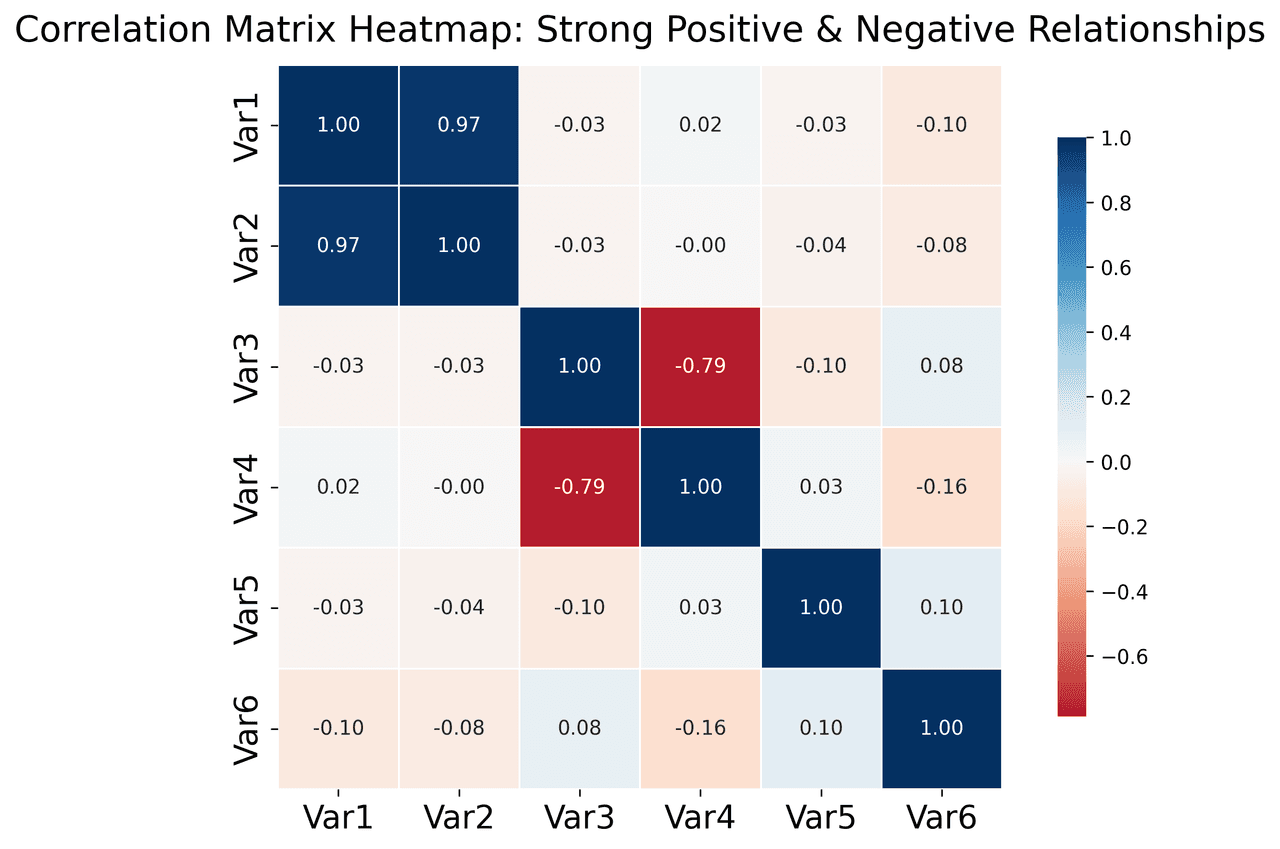
Correlation heatmap with diverging color scale and coefficient annotations
Statistical•seaborn, matplotlib
From the chart gallery•Correlation analysis between variables

Heatmap

Represents data values as colors in a two-dimensional matrix format.

Sample code / prompt

import matplotlib.pyplot as plt
import seaborn as sns
import pandas as pd
import numpy as np

# Create correlation matrix for financial metrics
metrics = ['Revenue', 'Profit', 'Expenses', 'ROI', 'Customers', 'AOV', 'Marketing', 'Employees']
correlation_data = np.array([
    [1.00, 0.85, -0.45, 0.72, 0.88, 0.65, 0.72, 0.55],
    [0.85, 1.00, -0.78, 0.92, 0.75, 0.58, 0.63, 0.48],

Ready to Visualize Your Optical Data?

Upload laser spectra, Raman data, photonic bandgap calculations, or UV-Vis measurements. Plotivy fits peaks, labels bands, and creates publication-ready figures automatically.

Start Free - No Sign-Up