Menu

ENGINEERING & MATERIALS

Materials Science Visualizations

Stress-strain curves, XRD patterns, DSC thermograms, and microstructure analysis - create publication-ready materials science figures with AI-generated Python code.

Essential Materials Visualizations

Materials characterization generates diverse data types - mechanical testing, diffraction, thermal analysis, and microscopy. Each requires domain-specific annotations: yield points, Miller indices, phase transitions, and grain size distributions.

Stress-Strain

Engineering/true curves with yield, UTS, and fracture annotations

XRD Patterns

Diffraction peaks with Miller indices and phase identification

DSC/TGA

Thermograms with glass transition, melting, and decomposition markers

Hardness Maps

Vickers/Rockwell profiles across weld zones and heat-affected areas

Particle Size

SEM-derived size distributions with lognormal fits

Phase Diagrams

Binary/ternary equilibrium diagrams with tie lines and invariant points

Stress-Strain Curves with Property Comparison

Three materials (steel, aluminum, titanium) with annotated yield points, UTS, and fracture. A companion bar chart normalizes key properties for side-by-side comparison.

Live Code Editor
Code EditorPython
Loading editor...
Live Preview

Preparing preview

Running once automatically on first load

Learn by Experimenting

This is a safe playground for learning! Try changing:

  • • Colors: Modify color values to see different palettes
  • • Numbers: Adjust sizes, positions, or data ranges
  • • Labels: Update titles, axis names, or legends

Edit the code, run it, then open the full data visualization tool to continue with your own dataset.

XRD Pattern with Phase Identification

Simulated powder XRD pattern for carbon steel showing two phases: alpha-Fe (BCC iron) and Fe3C (cementite). Peaks are labeled with Miller indices, and a residual plot validates the fit.

Live Code Editor
Code EditorPython
Loading editor...
Live Preview

Preparing preview

Running once automatically on first load

Learn by Experimenting

This is a safe playground for learning! Try changing:

  • • Colors: Modify color values to see different palettes
  • • Numbers: Adjust sizes, positions, or data ranges
  • • Labels: Update titles, axis names, or legends

Edit the code, run it, then open the full data visualization tool to continue with your own dataset.

Why Materials Scientists Use Plotivy

Mechanical Testing

Automatic yield point detection (0.2% offset), UTS, elongation, and toughness calculations.

Diffraction Analysis

Peak fitting, d-spacing calculations, and automated Miller index labeling from crystal structure data.

Thermal Analysis

DSC peak integration, Tg/Tm extraction, and TGA decomposition temperature determination.

Multi-Panel Layouts

Combine stress-strain + property bars, XRD + residuals, or DSC + TGA in publication-ready figures.

Chart gallery

Explore Materials Chart Types

Interactive examples with ready-to-run code

Browse all chart types →
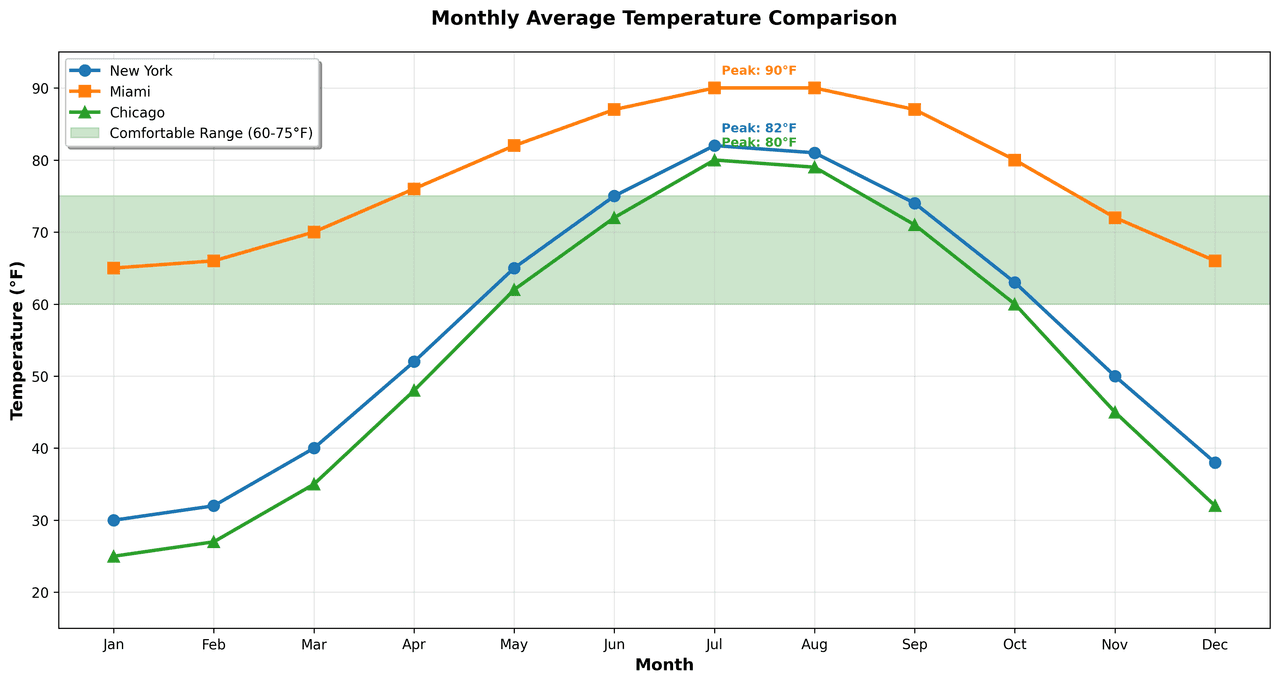
Multi-line graph showing temperature trends for 3 cities over a year
Time Series•matplotlib, seaborn
From the chart gallery•Stock price tracking over time

Line Graph

Displays data points connected by straight line segments to show trends over time.

Sample code / prompt

import matplotlib.pyplot as plt
import numpy as np

# Generate temperature data for 3 major US cities over 12 months
months = ['Jan', 'Feb', 'Mar', 'Apr', 'May', 'Jun', 'Jul', 'Aug', 'Sep', 'Oct', 'Nov', 'Dec']
nyc = [30, 32, 40, 52, 65, 75, 82, 81, 74, 63, 50, 38]
miami = [65, 66, 70, 76, 82, 87, 90, 90, 87, 80, 72, 66]
chicago = [25, 27, 35, 48, 62, 72, 80, 79, 71, 60, 45, 32]

# Create figure with enhanced styling
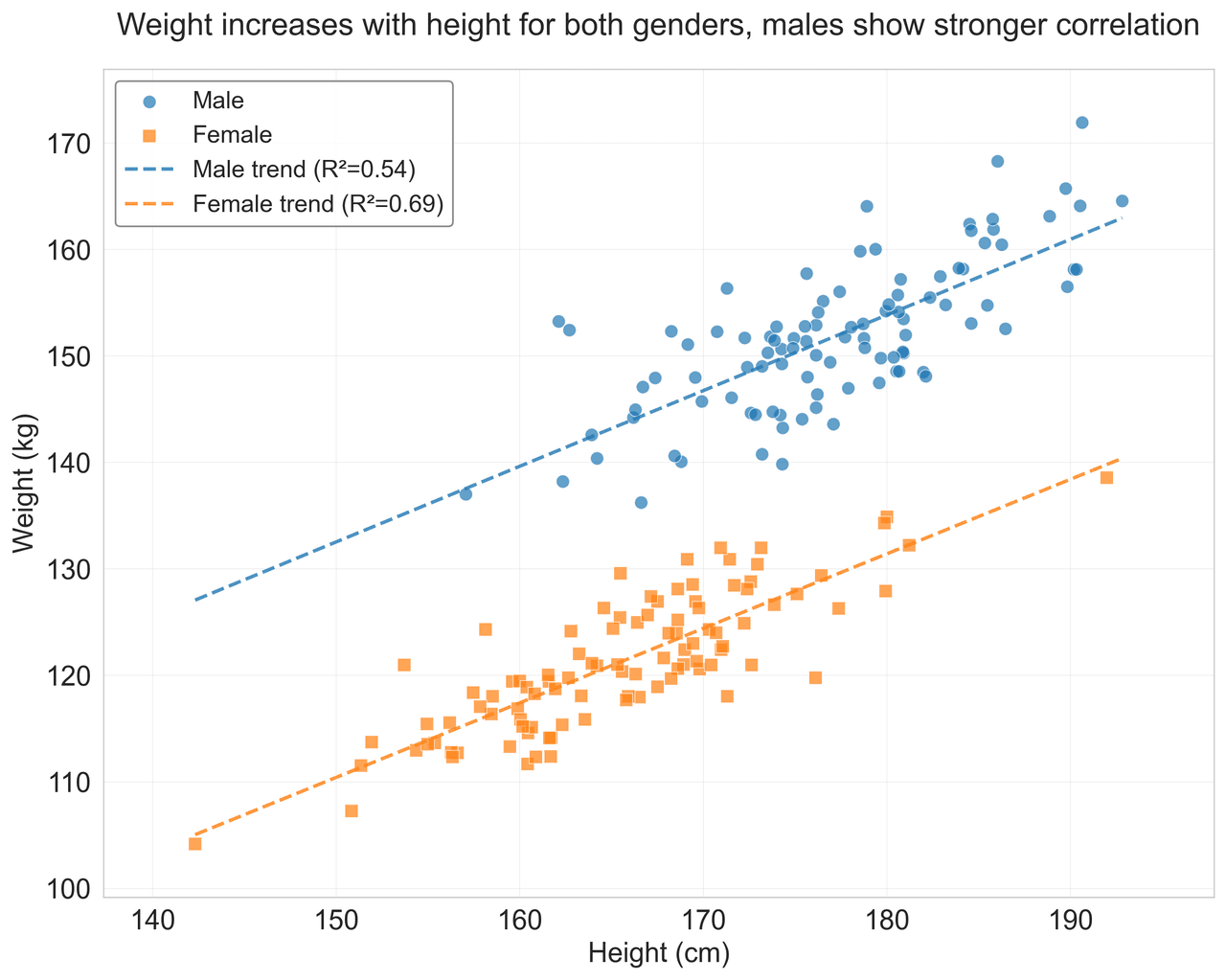
Scatter plot of height vs weight colored by gender with regression line
Statistical•matplotlib, seaborn
From the chart gallery•Correlation analysis between metrics

Scatterplot

Displays values for two variables as points on a Cartesian coordinate system.

Sample code / prompt

import matplotlib.pyplot as plt
import numpy as np
from scipy import stats
import pandas as pd

# Generate sample data
np.random.seed(42)
n_samples = 200
height = np.random.normal(170, 8, n_samples)
weight = height * 0.6 + np.random.normal(0, 8, n_samples) - 50
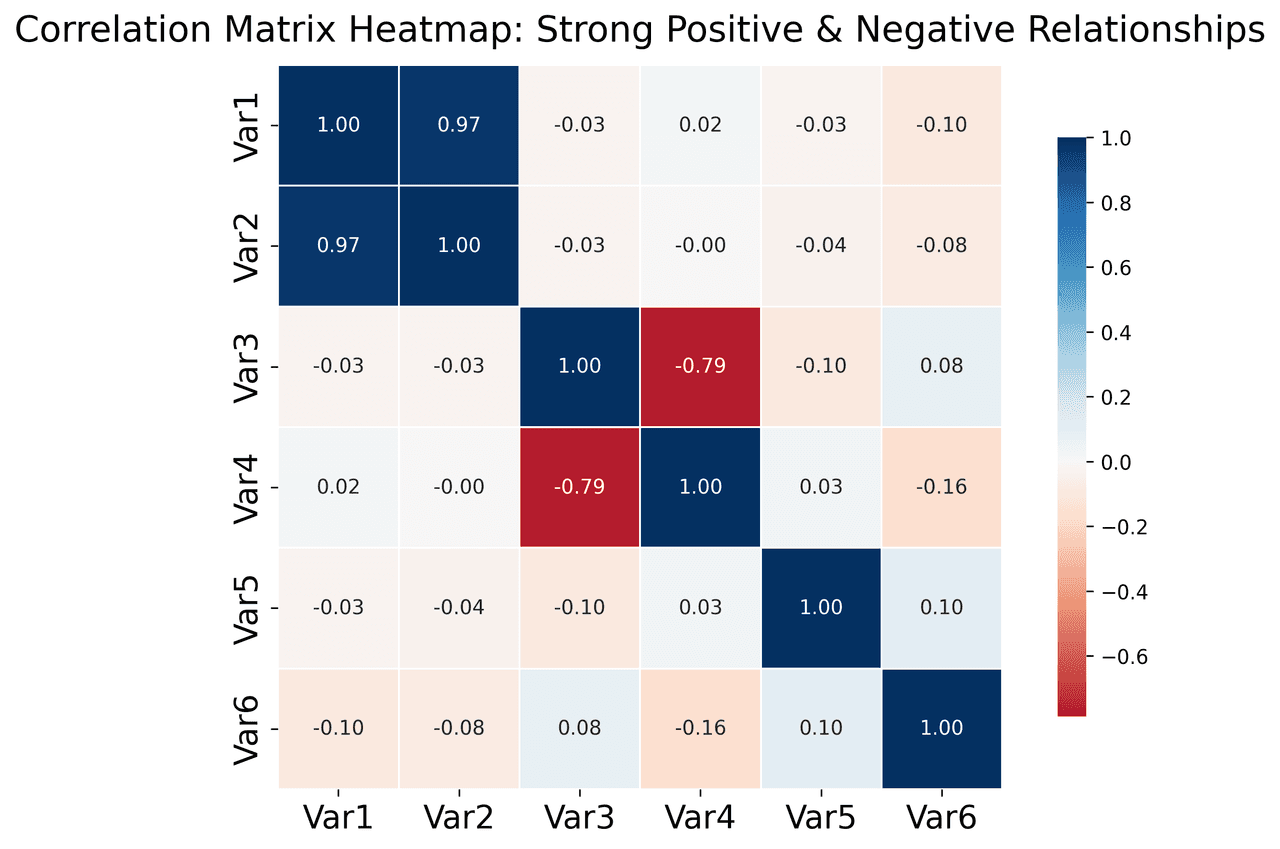
Correlation heatmap with diverging color scale and coefficient annotations
Statistical•seaborn, matplotlib
From the chart gallery•Correlation analysis between variables

Heatmap

Represents data values as colors in a two-dimensional matrix format.

Sample code / prompt

import matplotlib.pyplot as plt
import seaborn as sns
import pandas as pd
import numpy as np

# Create correlation matrix for financial metrics
metrics = ['Revenue', 'Profit', 'Expenses', 'ROI', 'Customers', 'AOV', 'Marketing', 'Employees']
correlation_data = np.array([
    [1.00, 0.85, -0.45, 0.72, 0.88, 0.65, 0.72, 0.55],
    [0.85, 1.00, -0.78, 0.92, 0.75, 0.58, 0.63, 0.48],
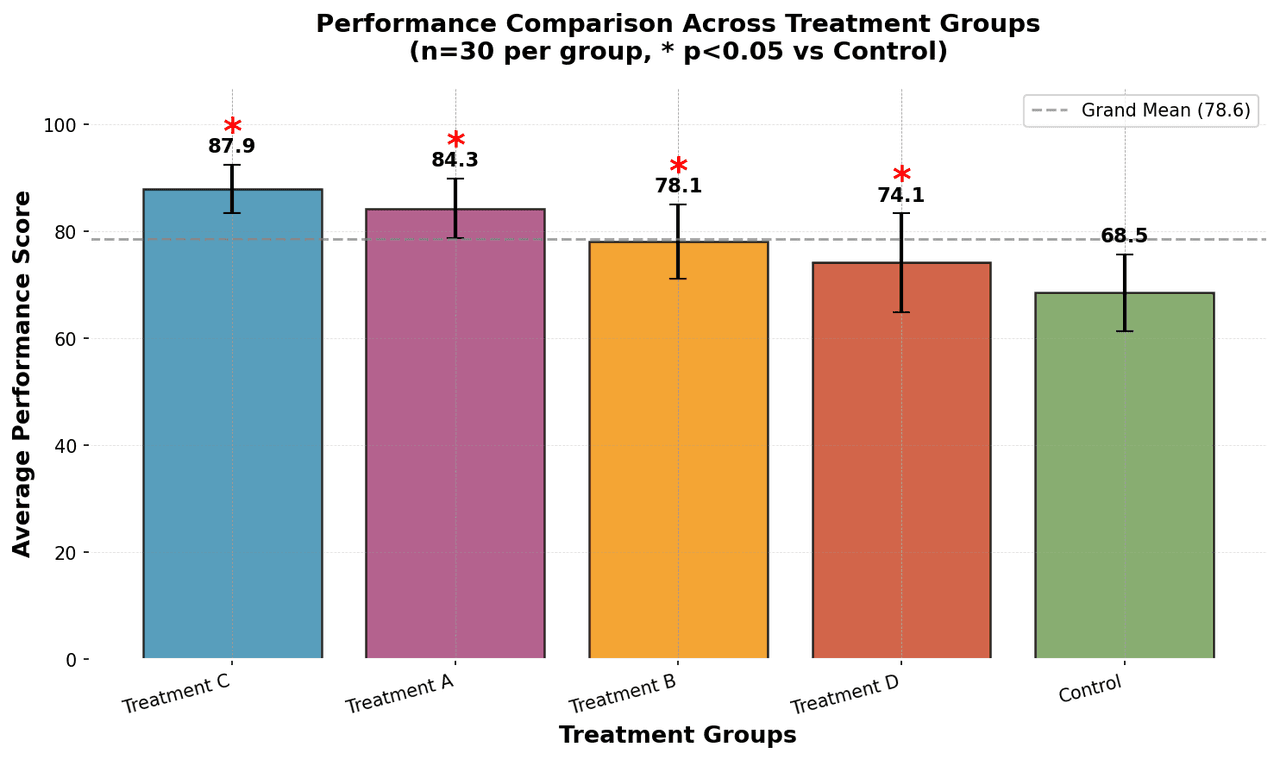
Bar chart comparing average scores across 5 groups with error bars
Comparison•matplotlib, seaborn
From the chart gallery•Comparing performance across categories

Bar Chart

Compares categorical data using rectangular bars with heights proportional to values.

Sample code / prompt

import numpy as np
import pandas as pd
import matplotlib.pyplot as plt
import seaborn as sns
from scipy import stats

# Generate performance scores for 5 treatment groups
np.random.seed(42)
groups = ['Control', 'Treatment A', 'Treatment B', 'Treatment C', 'Treatment D']
n_samples = 30

Ready to Plot Your Materials Data?

Upload stress-strain, XRD, DSC, or SEM data. Plotivy extracts mechanical properties, identifies phases, and creates publication-ready figures automatically.

Start Free - No Sign-Up