Menu

RELIABILITY

Reliability Engineering Visualizations

From Weibull analysis and bathtub curves to survival functions, MTBF tracking, and failure mode analysis - create publication-ready reliability figures with AI-generated Python code.

or browse all example datasets

Essential Reliability Visualizations

Reliability engineering relies on specialized statistical plots to model failure behavior, predict product lifetimes, and prioritize design improvements. Each visualization type serves a distinct purpose in the reliability workflow.

Weibull Probability Plots

Linearized CDF plots for life data with shape/scale parameter estimation and confidence bounds

Bathtub Curves

Hazard rate over product lifetime showing infant mortality, useful life, and wear-out phases

Survival/Reliability Curves

Kaplan-Meier and parametric reliability functions with censored data handling

Failure Rate Trends

Time-series failure rate tracking with rolling averages, control limits, and trend detection

Pareto Charts (Failure Modes)

Ranked failure mode frequency with cumulative percentage for prioritized corrective action

Cumulative Hazard Plots

Nelson-Aalen estimates for non-parametric cumulative hazard with confidence intervals

Why Reliability Engineers Use Plotivy

Life Data Analysis

Weibull, lognormal, and exponential distribution fitting with MLE parameter estimation and goodness-of-fit tests.

Risk Assessment

FMEA visualization, risk priority number heatmaps, and criticality matrices generated from structured data.

Standards Compliance

MIL-HDBK-217, IEC 61709, and JEDEC style plots with proper axis scaling and annotation conventions.

Warranty Analytics

Field return rate projections, warranty cost curves, and cumulative failure tracking from service data.

Weibull Probability Plot

Three failure modes plotted on linearized Weibull axes with MLE fitted lines and confidence bands. The shape parameter (beta) distinguishes wear-out, random, and early-life failure mechanisms.

Live Code Editor
Code EditorPython
Loading editor...
Live Preview

Preparing preview

Running once automatically on first load

Learn by Experimenting

This is a safe playground for learning! Try changing:

  • • Colors: Modify color values to see different palettes
  • • Numbers: Adjust sizes, positions, or data ranges
  • • Labels: Update titles, axis names, or legends

Edit the code, run it, then open the full data visualization tool to continue with your own dataset.

Bathtub Curve - Hazard Rate

The classic bathtub curve showing how hazard rate varies over a product's lifetime. Three distinct phases - infant mortality, useful life, and wear-out - are color-coded with individual component curves overlaid on the combined hazard rate.

Live Code Editor
Code EditorPython
Loading editor...
Live Preview

Preparing preview

Running once automatically on first load

Learn by Experimenting

This is a safe playground for learning! Try changing:

  • • Colors: Modify color values to see different palettes
  • • Numbers: Adjust sizes, positions, or data ranges
  • • Labels: Update titles, axis names, or legends

Edit the code, run it, then open the full data visualization tool to continue with your own dataset.

Chart gallery

Explore Reliability Chart Types

Interactive examples with ready-to-run code

Browse all chart types →
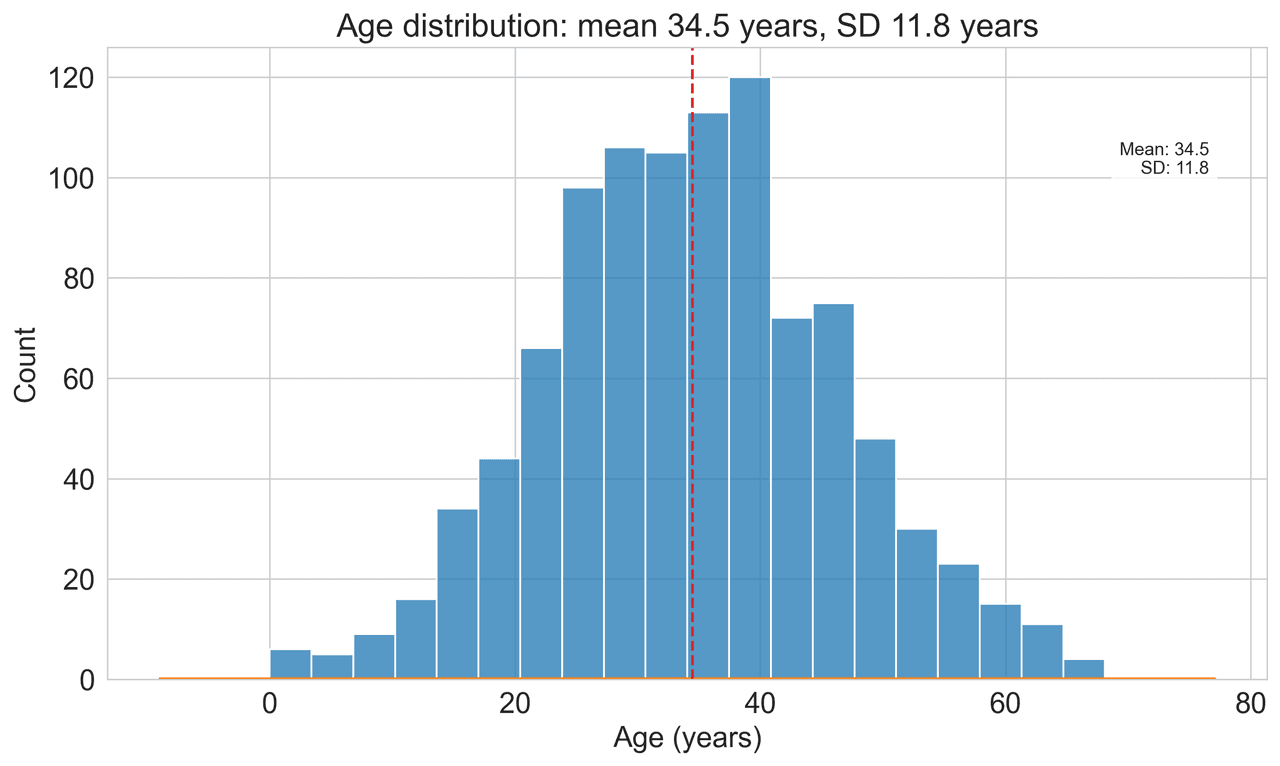
Histogram showing age distribution with 20 bins and KDE overlay
Distribution•matplotlib, seaborn
From the chart gallery•Analyzing age demographics

Histogram

Displays the distribution of numerical data by grouping values into bins.

Sample code / prompt

import matplotlib.pyplot as plt
import numpy as np
from scipy.stats import gaussian_kde, skewnorm

# Generate age data with slight right skew
np.random.seed(42)
ages = skewnorm.rvs(a=2, loc=42, scale=15, size=500)
ages = np.clip(ages, 18, 80)  # Clip to realistic range

fig, ax = plt.subplots(figsize=(12, 7))
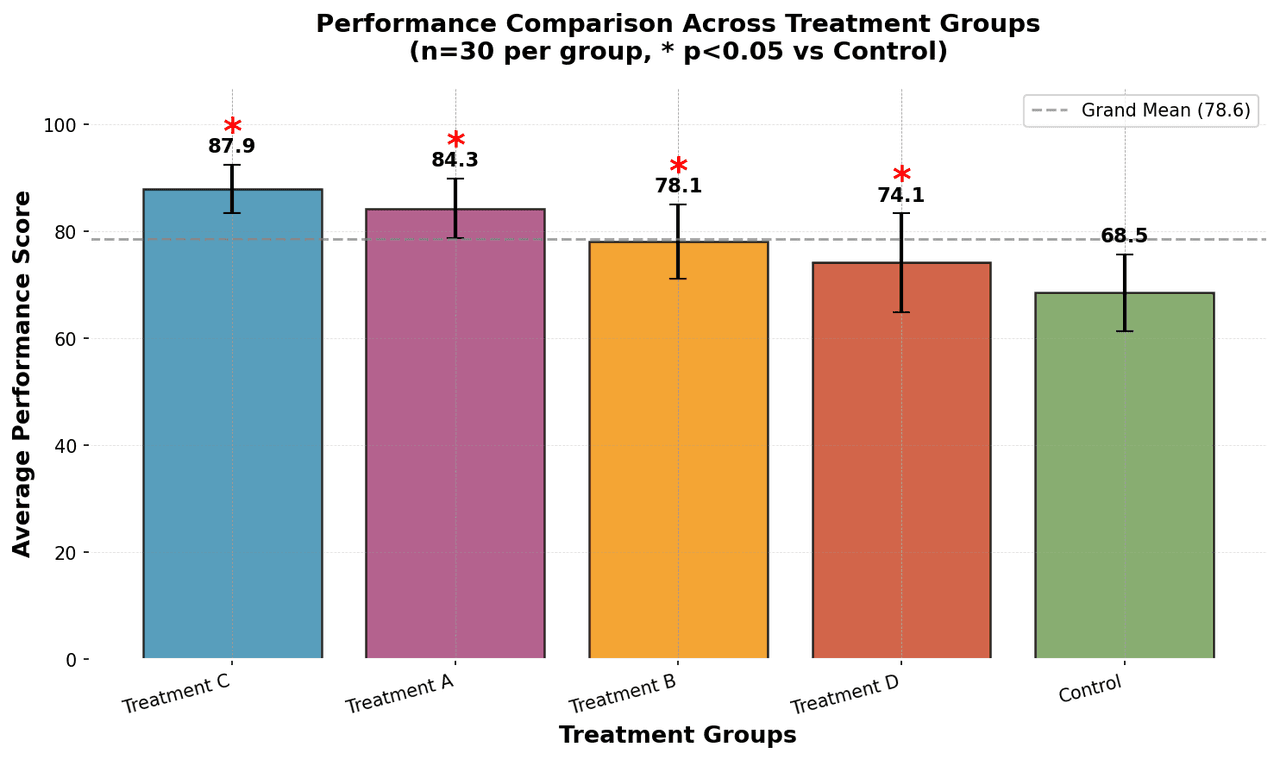
Bar chart comparing average scores across 5 groups with error bars
Comparison•matplotlib, seaborn
From the chart gallery•Comparing performance across categories

Bar Chart

Compares categorical data using rectangular bars with heights proportional to values.

Sample code / prompt

import numpy as np
import pandas as pd
import matplotlib.pyplot as plt
import seaborn as sns
from scipy import stats

# Generate performance scores for 5 treatment groups
np.random.seed(42)
groups = ['Control', 'Treatment A', 'Treatment B', 'Treatment C', 'Treatment D']
n_samples = 30

Ready to Visualize Your Reliability Data?

Upload your CSV, describe the plot you need, and get publication-ready figures with full Python code in seconds.

Start Free - No Sign-Up