Menu

Astronomy & Astrophysics

Astronomy Visualizations

From HR diagrams and light curves to sky maps and spectral classifications - generate publication-quality astronomy figures with AI-assisted Python code, fully reproducible and export-ready.

Essential Astronomy Visualizations

Astronomical data spans photometric light curves, spectroscopic observations, astrometric catalogs, and radio interferometry outputs. Each analysis type demands specific visualization conventions - from inverted magnitude axes and logarithmic luminosity scales to equatorial coordinate projections.

HR Diagrams

Hertzsprung-Russell diagrams mapping stellar populations by temperature and luminosity with spectral class annotations.

Light Curves

Time-series photometry for variable stars, exoplanet transits, and AGN variability with Lomb-Scargle period analysis.

Sky Maps

Mollweide or Aitoff projections of equatorial / galactic coordinates with HEALPix density maps.

Spectral Analysis

Absorption line identification, radial velocity measurement, and spectral classification from flux vs wavelength data.

Galaxy Morphology

Surface brightness profiles, elliptical isophote fitting, and S0/Sb/Sc Hubble-type classification plots.

CMB Power Spectra

Angular power spectrum plots (C_l vs multipole l) with LCDM theoretical curves fitted to Planck-like data.

Why Astronomers Use Plotivy

Photometric Standards

Magnitude axes automatically inverted, HJD/BJD time formats supported, and band filters handled correctly.

Coordinate Projections

RA/Dec, equatorial-to-galactic transforms, and HEALPix sky maps rendered with SkyCoord-compatible inputs.

Catalog Integration

Works with Gaia, 2MASS, SDSS, and custom ASCII catalogs. Columns are parsed automatically from headers.

Statistical Periodicite

Lomb-Scargle, phase-folding, and epoch-folding built into code generation for variable star analysis.

Hertzsprung-Russell Diagram

Simulated stellar catalog with 365 stars across main sequence, red giant, and white dwarf populations. The temperature axis is logarithmically inverted as per astronomical convention, and stars are colour-coded by surface temperature.

Live Code Editor
Code EditorPython
Loading editor...
Live Preview

Preparing preview

Running once automatically on first load

Learn by Experimenting

This is a safe playground for learning! Try changing:

  • • Colors: Modify color values to see different palettes
  • • Numbers: Adjust sizes, positions, or data ranges
  • • Labels: Update titles, axis names, or legends

Edit the code, run it, then open the full data visualization tool to continue with your own dataset.

Try with your own catalog

Variable Star Light Curve Analysis

Unevenly-sampled photometry for a simulated Cepheid variable. The three-panel figure shows the raw light curve, the Lomb-Scargle power spectrum used to extract the period, and the phase-folded curve confirming the periodicity.

Live Code Editor
Code EditorPython
Loading editor...
Live Preview

Preparing preview

Running once automatically on first load

Learn by Experimenting

This is a safe playground for learning! Try changing:

  • • Colors: Modify color values to see different palettes
  • • Numbers: Adjust sizes, positions, or data ranges
  • • Labels: Update titles, axis names, or legends

Edit the code, run it, then open the full data visualization tool to continue with your own dataset.

Chart gallery

Explore Astronomy Chart Types

Interactive examples with ready-to-run code

Browse all chart types →
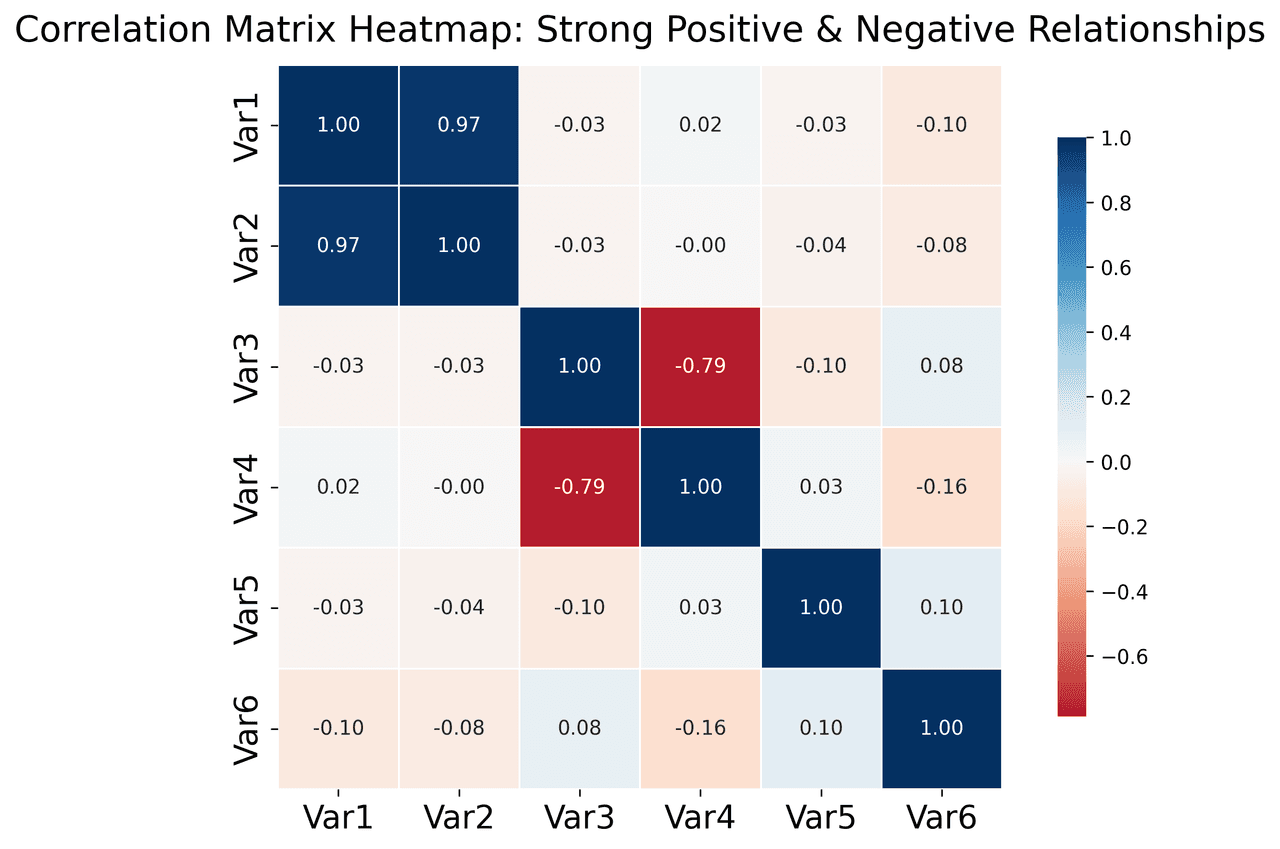
Correlation heatmap with diverging color scale and coefficient annotations
Statistical•seaborn, matplotlib
From the chart gallery•Correlation analysis between variables

Heatmap

Represents data values as colors in a two-dimensional matrix format.

Sample code / prompt

import matplotlib.pyplot as plt
import seaborn as sns
import pandas as pd
import numpy as np

# Create correlation matrix for financial metrics
metrics = ['Revenue', 'Profit', 'Expenses', 'ROI', 'Customers', 'AOV', 'Marketing', 'Employees']
correlation_data = np.array([
    [1.00, 0.85, -0.45, 0.72, 0.88, 0.65, 0.72, 0.55],
    [0.85, 1.00, -0.78, 0.92, 0.75, 0.58, 0.63, 0.48],
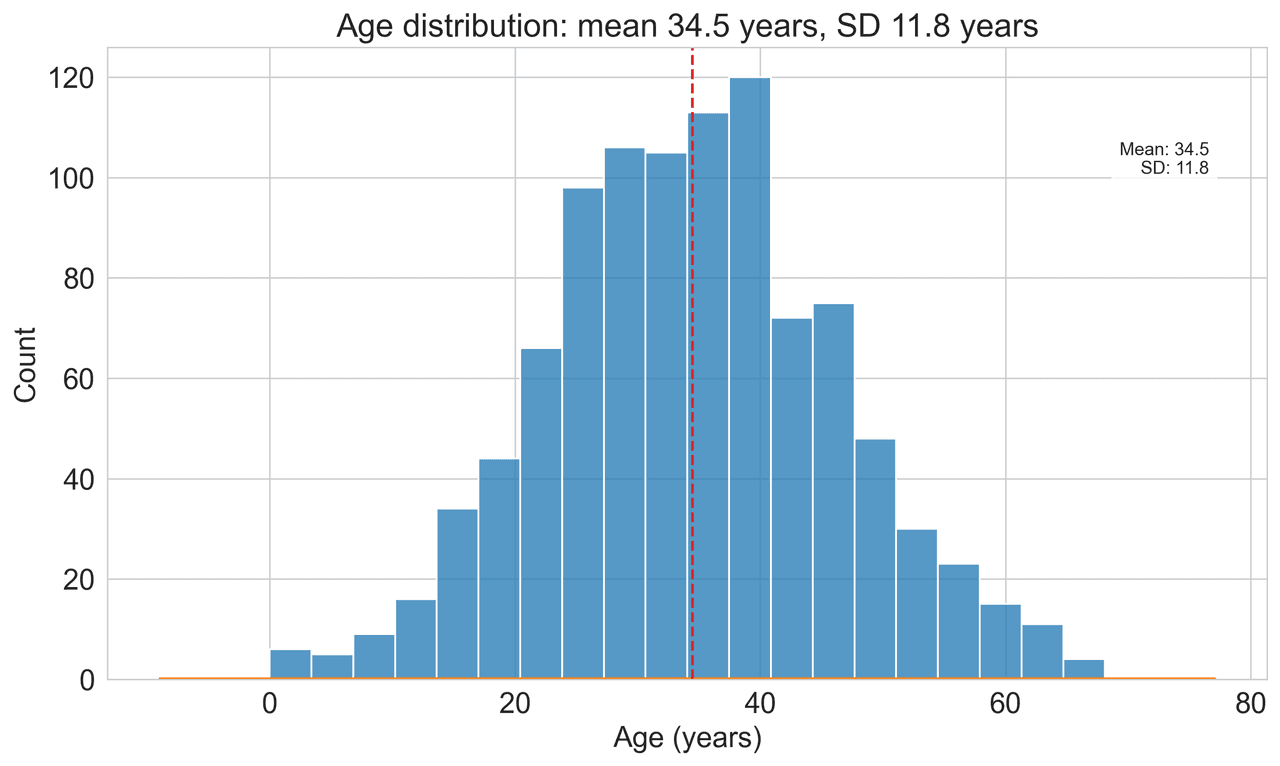
Histogram showing age distribution with 20 bins and KDE overlay
Distribution•matplotlib, seaborn
From the chart gallery•Analyzing age demographics

Histogram

Displays the distribution of numerical data by grouping values into bins.

Sample code / prompt

import matplotlib.pyplot as plt
import numpy as np
from scipy.stats import gaussian_kde, skewnorm

# Generate age data with slight right skew
np.random.seed(42)
ages = skewnorm.rvs(a=2, loc=42, scale=15, size=500)
ages = np.clip(ages, 18, 80)  # Clip to realistic range

fig, ax = plt.subplots(figsize=(12, 7))

Ready to Visualize Your Astronomy Data?

Upload your stellar catalog, photometric time series, or sky survey CSV and get publication-ready figures with full Python code in seconds.

Start Free - No Sign-Up