Menu

ECOLOGY & ENVIRONMENTAL

Ecology Visualizations

From species accumulation and rank-abundance curves to biodiversity indices and environmental monitoring - create publication-ready ecology figures with AI-generated Python code.

or browse all example datasets

Essential Ecology Visualizations

Ecological data spans species inventories, environmental sensor readings, population censuses, and long-term climate records. Each requires specialized chart types with proper statistical context to convey biodiversity patterns and environmental change.

Species Accumulation

Rarefaction curves showing expected richness vs sampling effort

Rank-Abundance

Whittaker plots comparing biodiversity evenness across communities

NMDS Ordination

Non-metric multidimensional scaling for community composition

Diversity Indices

Shannon, Simpson, and Chao1 diversity metrics across sites

Population Dynamics

Predator-prey, logistic growth, and Leslie matrix models

Climate Trend Analysis

Temperature anomaly time series and climate stripes

Why Ecologists Use Plotivy

Biodiversity Metrics

Rarefaction, Shannon/Simpson indices, and species accumulation calculated from raw abundance data.

Multivariate Analysis

NMDS, PCA, and CCA ordination plots for community composition analysis.

Publication Formats

Export to SVG/PDF sized for Ecology, Conservation Biology, or Oecologia journals.

Spatial Integration

Combine species distribution data with geographic context for habitat mapping.

Species Accumulation Curve

Rarefaction curves for three habitats showing expected species richness as a function of sampling effort. Shaded bands indicate standard deviation envelopes and dashed lines mark asymptotic richness estimates.

Live Code Editor
Code EditorPython
Loading editor...
Live Preview

Preparing preview

Running once automatically on first load

Learn by Experimenting

This is a safe playground for learning! Try changing:

  • • Colors: Modify color values to see different palettes
  • • Numbers: Adjust sizes, positions, or data ranges
  • • Labels: Update titles, axis names, or legends

Edit the code, run it, then open the full data visualization tool to continue with your own dataset.

Rank-Abundance (Whittaker) Plot

Compares biodiversity profiles across three habitat types. Steep curves indicate high dominance and low evenness, while flatter curves reflect more equitable species distributions.

Live Code Editor
Code EditorPython
Loading editor...
Live Preview

Preparing preview

Running once automatically on first load

Learn by Experimenting

This is a safe playground for learning! Try changing:

  • • Colors: Modify color values to see different palettes
  • • Numbers: Adjust sizes, positions, or data ranges
  • • Labels: Update titles, axis names, or legends

Edit the code, run it, then open the full data visualization tool to continue with your own dataset.

Chart gallery

Explore Ecology Chart Types

Interactive examples with ready-to-run code

Browse all chart types →
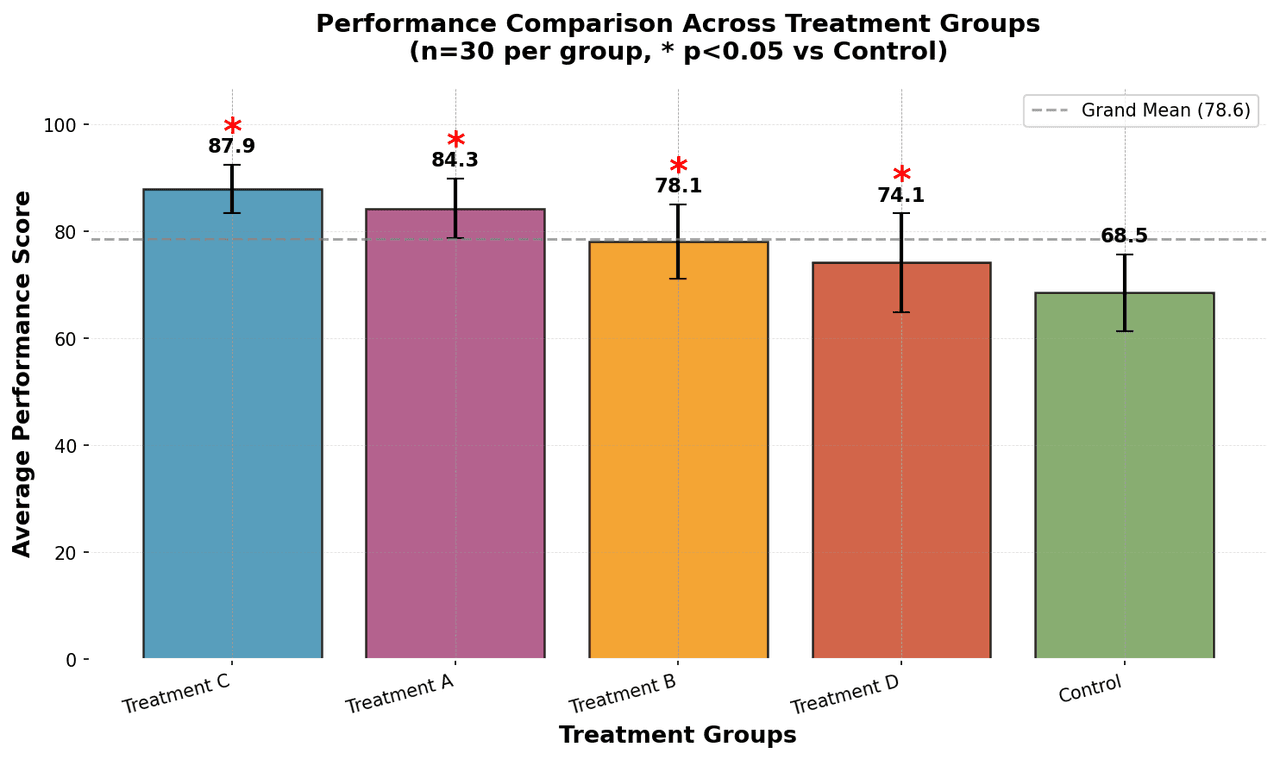
Bar chart comparing average scores across 5 groups with error bars
Comparison•matplotlib, seaborn
From the chart gallery•Comparing performance across categories

Bar Chart

Compares categorical data using rectangular bars with heights proportional to values.

Sample code / prompt

import numpy as np
import pandas as pd
import matplotlib.pyplot as plt
import seaborn as sns
from scipy import stats

# Generate performance scores for 5 treatment groups
np.random.seed(42)
groups = ['Control', 'Treatment A', 'Treatment B', 'Treatment C', 'Treatment D']
n_samples = 30
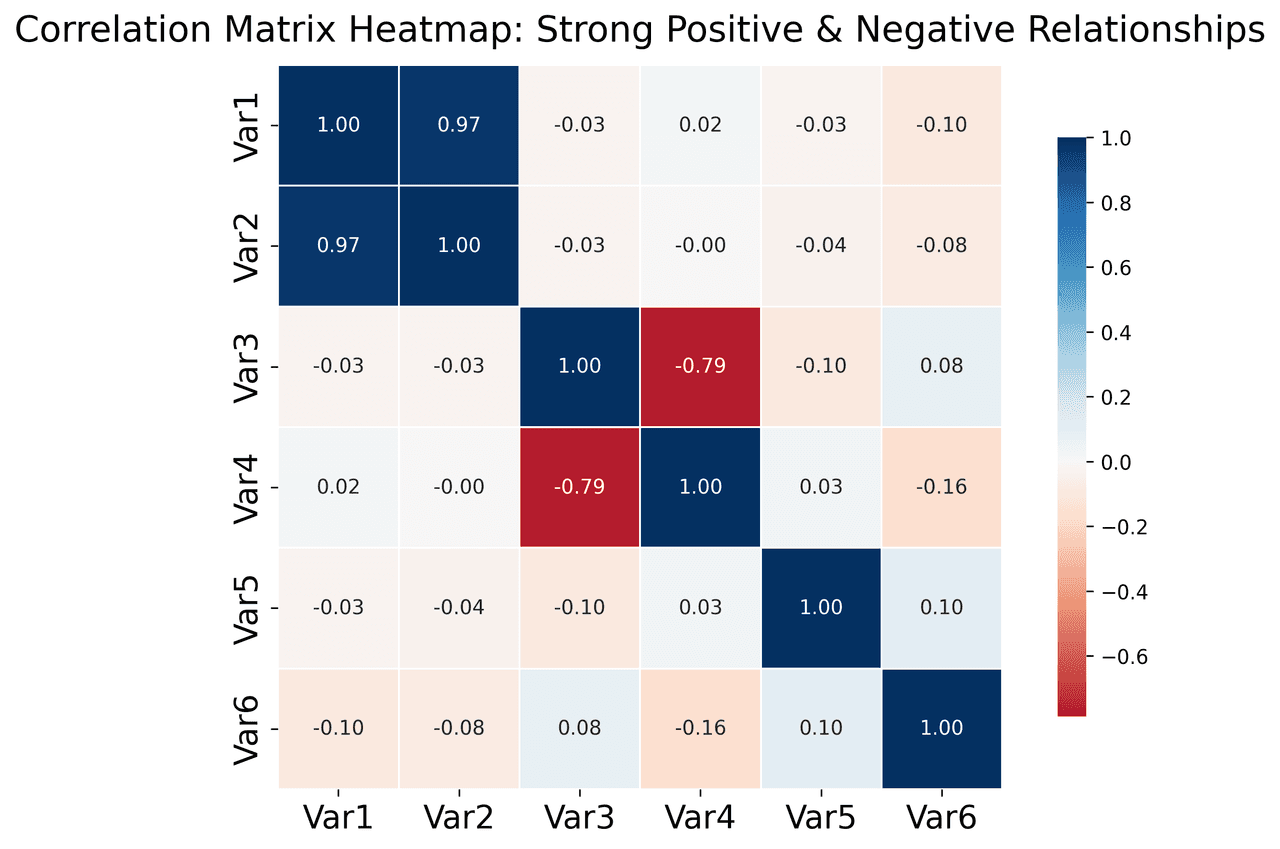
Correlation heatmap with diverging color scale and coefficient annotations
Statistical•seaborn, matplotlib
From the chart gallery•Correlation analysis between variables

Heatmap

Represents data values as colors in a two-dimensional matrix format.

Sample code / prompt

import matplotlib.pyplot as plt
import seaborn as sns
import pandas as pd
import numpy as np

# Create correlation matrix for financial metrics
metrics = ['Revenue', 'Profit', 'Expenses', 'ROI', 'Customers', 'AOV', 'Marketing', 'Employees']
correlation_data = np.array([
    [1.00, 0.85, -0.45, 0.72, 0.88, 0.65, 0.72, 0.55],
    [0.85, 1.00, -0.78, 0.92, 0.75, 0.58, 0.63, 0.48],

Ready to Visualize Your Ecology Data?

Upload your CSV, describe the plot you need, and get publication-ready figures with full Python code in seconds.

Start Free - No Sign-Up