Menu

Agreement and Measurement Validation

Bland-Altman Plot Generator for Method Comparison and Agreement Analysis

Correlation does not prove agreement. Bland-Altman plots show the bias between two measurement methods, the spread of differences, and the limits of agreement that matter in clinical and laboratory validation studies.

When Bland-Altman Is Better Than Correlation

If you need to validate a new assay, compare two instruments, or check whether a revised workflow produces the same result as an established method, Bland-Altman analysis is the right plot. It makes systematic bias and outlier spread visible in a way a simple scatter plot cannot.

Instrument comparison

Compare legacy and updated devices on the same measurement scale.

Assay validation

Check whether two lab methods agree within an acceptable tolerance.

Clinical calibration

Show bias, spread, and repeatability for biomarker measurements.

Decision support

Identify whether a method is consistently higher or lower than the reference.

Bias made explicit

Plot the mean difference directly so readers can see whether one method systematically runs high or low.

Limits of agreement

Draw the standard 95% bounds to reveal whether the observed spread is acceptable for the use case.

Validation-ready output

Use a clean manuscript layout for instrument qualification and method comparison documents.

Repeatable Python figures

Keep the code editable so reruns on new validation batches produce the same visual standard.

Live Code Lab: Bland-Altman Plot

This example compares two methods across paired observations, computes the mean bias and 95% limits of agreement, and fills the agreement band for a cleaner publication figure.

Live Code Editor
Code EditorPython
Loading editor...
Live Preview

Preparing preview

Running once automatically on first load

Learn by Experimenting

This is a safe playground for learning! Try changing:

  • • Colors: Modify color values to see different palettes
  • • Numbers: Adjust sizes, positions, or data ranges
  • • Labels: Update titles, axis names, or legends

Edit the code, run it, then open the full data visualization tool to continue with your own dataset.

Chart gallery

Related Chart Types

Complementary chart templates for validation and method comparison

Browse all chart types →
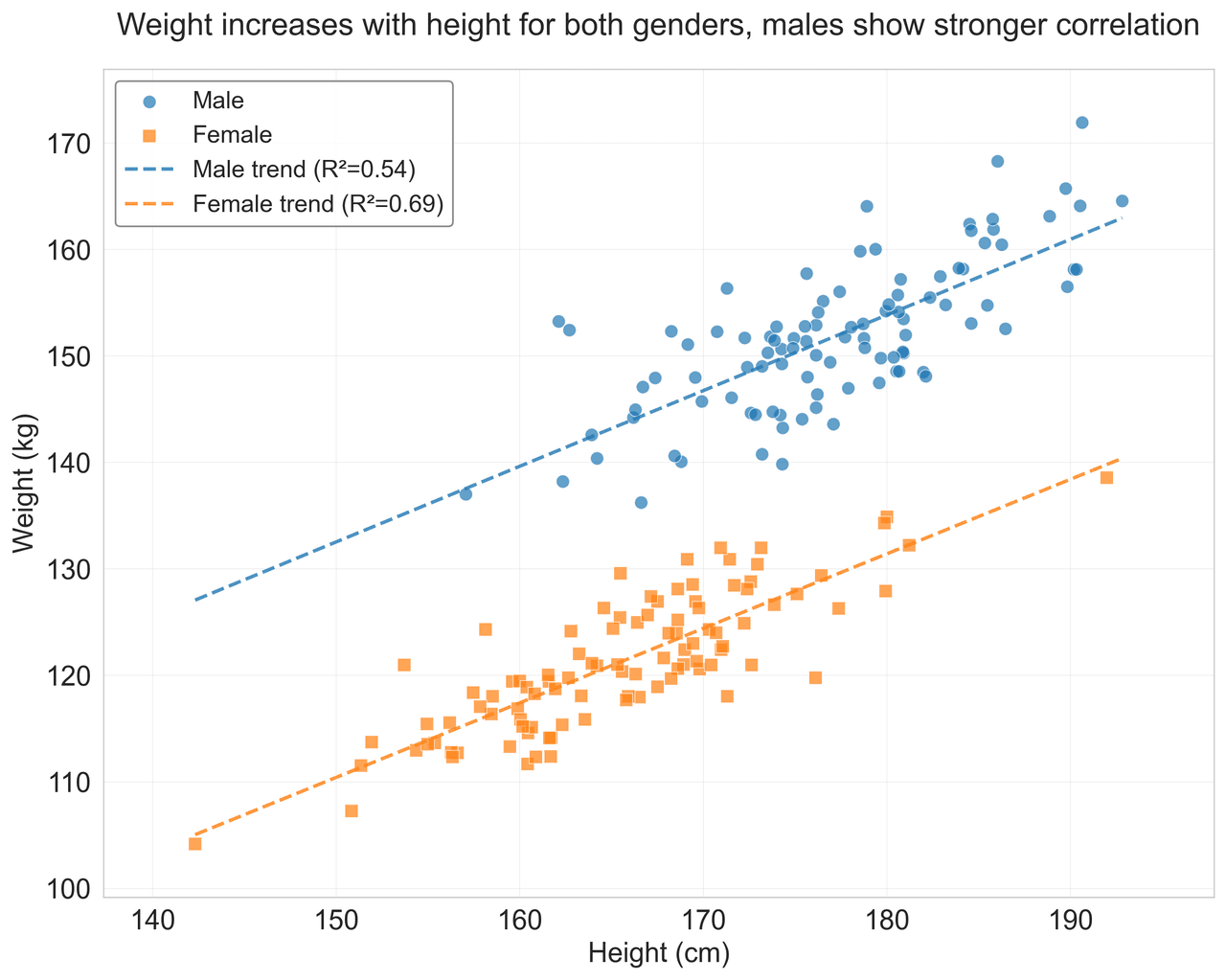
Scatter plot of height vs weight colored by gender with regression line
Statistical•matplotlib, seaborn
From the chart gallery•Correlation analysis between metrics

Scatterplot

Displays values for two variables as points on a Cartesian coordinate system.

Sample code / prompt

import matplotlib.pyplot as plt
import numpy as np
from scipy import stats
import pandas as pd

# Generate sample data
np.random.seed(42)
n_samples = 200
height = np.random.normal(170, 8, n_samples)
weight = height * 0.6 + np.random.normal(0, 8, n_samples) - 50
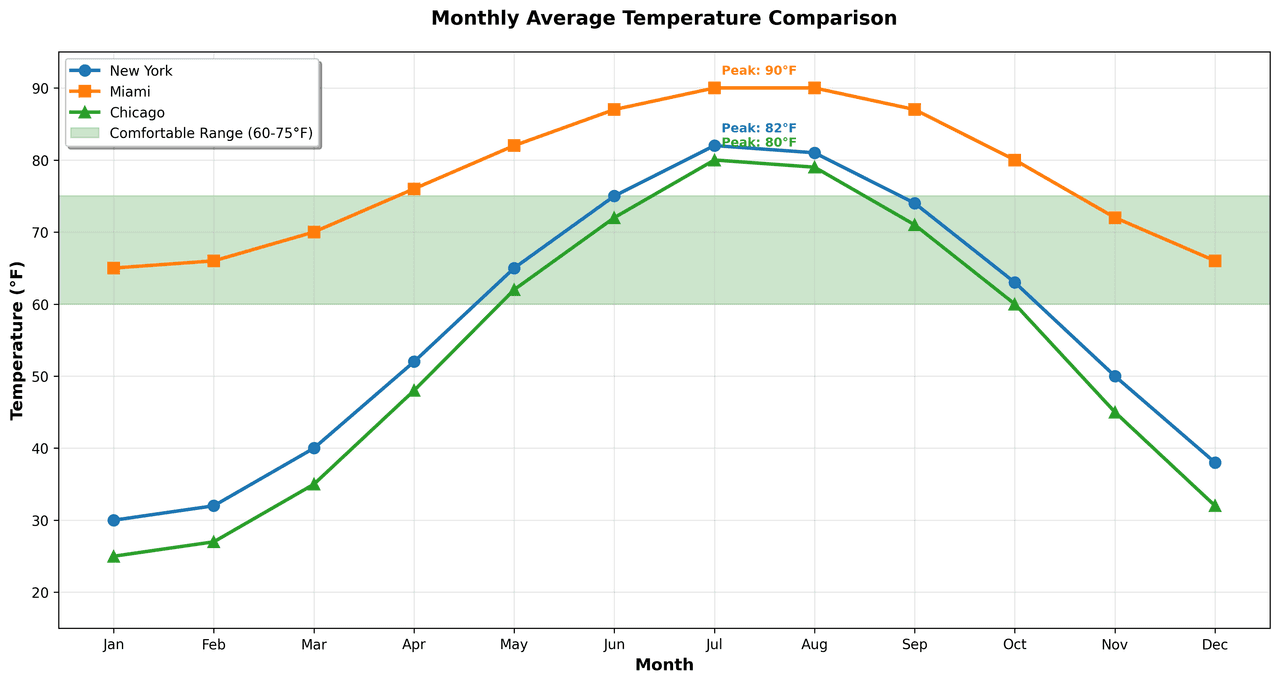
Multi-line graph showing temperature trends for 3 cities over a year
Time Series•matplotlib, seaborn
From the chart gallery•Stock price tracking over time

Line Graph

Displays data points connected by straight line segments to show trends over time.

Sample code / prompt

import matplotlib.pyplot as plt
import numpy as np

# Generate temperature data for 3 major US cities over 12 months
months = ['Jan', 'Feb', 'Mar', 'Apr', 'May', 'Jun', 'Jul', 'Aug', 'Sep', 'Oct', 'Nov', 'Dec']
nyc = [30, 32, 40, 52, 65, 75, 82, 81, 74, 63, 50, 38]
miami = [65, 66, 70, 76, 82, 87, 90, 90, 87, 80, 72, 66]
chicago = [25, 27, 35, 48, 62, 72, 80, 79, 71, 60, 45, 32]

# Create figure with enhanced styling
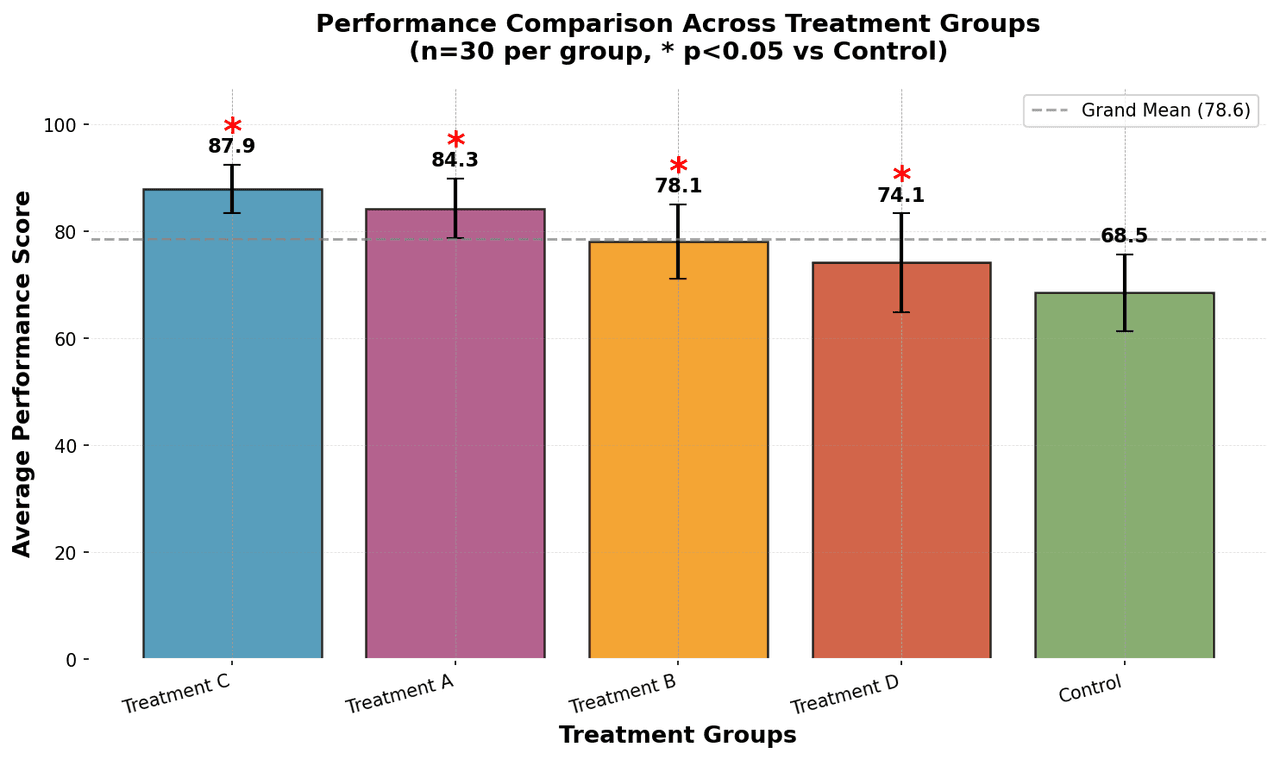
Bar chart comparing average scores across 5 groups with error bars
Comparison•matplotlib, seaborn
From the chart gallery•Comparing performance across categories

Bar Chart

Compares categorical data using rectangular bars with heights proportional to values.

Sample code / prompt

import numpy as np
import pandas as pd
import matplotlib.pyplot as plt
import seaborn as sns
from scipy import stats

# Generate performance scores for 5 treatment groups
np.random.seed(42)
groups = ['Control', 'Treatment A', 'Treatment B', 'Treatment C', 'Treatment D']
n_samples = 30
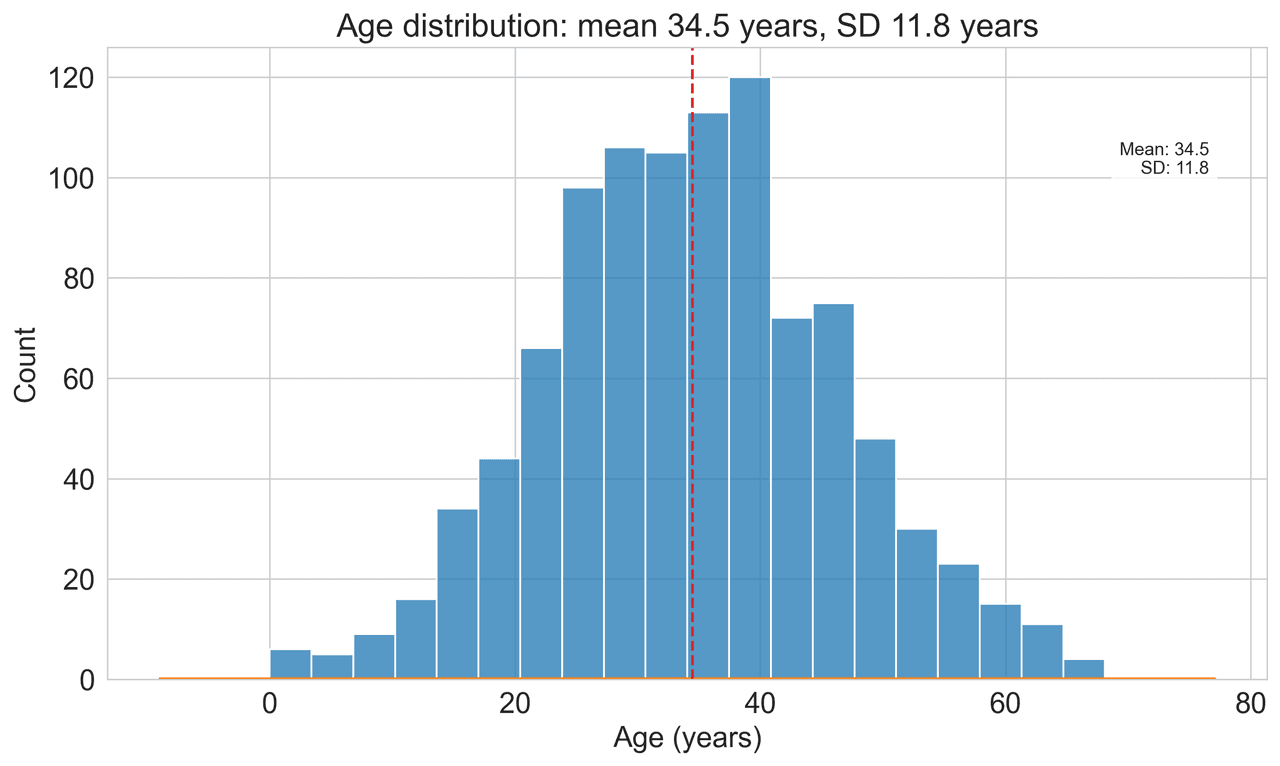
Histogram showing age distribution with 20 bins and KDE overlay
Distribution•matplotlib, seaborn
From the chart gallery•Analyzing age demographics

Histogram

Displays the distribution of numerical data by grouping values into bins.

Sample code / prompt

import matplotlib.pyplot as plt
import numpy as np
from scipy.stats import gaussian_kde, skewnorm

# Generate age data with slight right skew
np.random.seed(42)
ages = skewnorm.rvs(a=2, loc=42, scale=15, size=500)
ages = np.clip(ages, 18, 80)  # Clip to realistic range

fig, ax = plt.subplots(figsize=(12, 7))
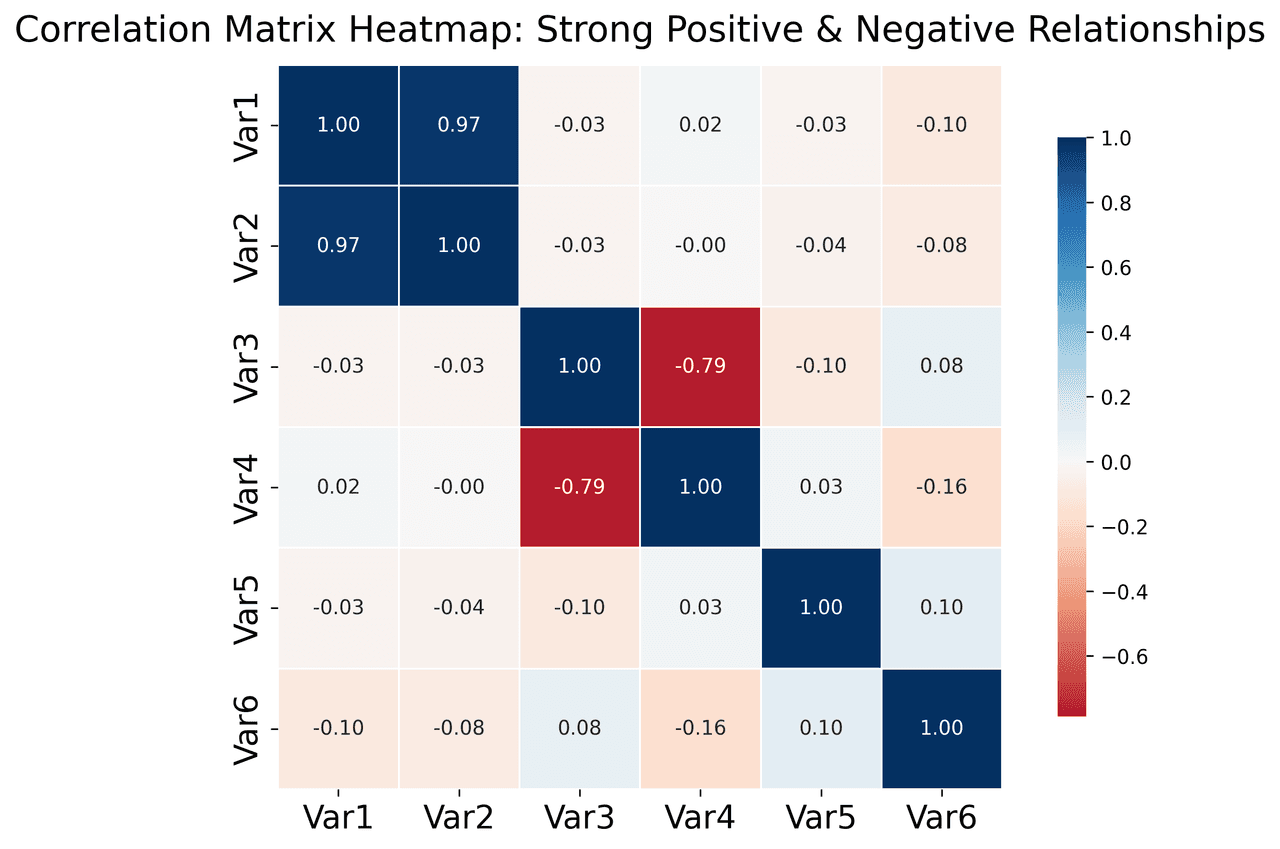
Correlation heatmap with diverging color scale and coefficient annotations
Statistical•seaborn, matplotlib
From the chart gallery•Correlation analysis between variables

Heatmap

Represents data values as colors in a two-dimensional matrix format.

Sample code / prompt

import matplotlib.pyplot as plt
import seaborn as sns
import pandas as pd
import numpy as np

# Create correlation matrix for financial metrics
metrics = ['Revenue', 'Profit', 'Expenses', 'ROI', 'Customers', 'AOV', 'Marketing', 'Employees']
correlation_data = np.array([
    [1.00, 0.85, -0.45, 0.72, 0.88, 0.65, 0.72, 0.55],
    [0.85, 1.00, -0.78, 0.92, 0.75, 0.58, 0.63, 0.48],

Show Agreement, Not Just Correlation

Turn paired measurements into a clear method-comparison figure that shows bias, spread, and whether your new method stays within the right tolerance.