Best Free OriginPro Alternatives for Publication-Quality Plots (2026)

OriginPro costs $1,070/year and only runs on Windows. Here are five free alternatives that produce the same publication-quality figures - with better reproducibility and cross-platform support.
If you want the broader landscape beyond OriginPro, use this alongside our best software for scientific plotting guide.
In This Article
0.Live Code: OriginPro-Quality Figure
1.Why People Leave OriginPro
2.Top 5 Free Alternatives
3.Feature Comparison Table
4.Migration Guide
0. Live Code: OriginPro-Quality Figure
Three panels typical of OriginPro workflows: XRD pattern, I-V curve, and DSC thermogram. All in Python, all publication-ready. Edit the code below. You can also start from the dedicated XRD pattern and cyclic voltammogram chart pages.
1. Why People Leave OriginPro
$1,070/year
Per-seat license. A 5-person lab pays $5,350/year for plotting software.
Windows Only
No Mac, no Linux. Many researchers use macOS or compute on Linux clusters.
No Reproducibility
GUI workflows produce .opju files that cannot be version-controlled or reviewed.
Vendor Lock-in
Proprietary format. Collaborators need OriginPro to open your files.
Try it
Try it now: review your figure before submission
Upload your current plot and get an AI critique with concrete fixes for clarity, typography, color, and journal readiness.
Open AI Figure Reviewer →Newsletter
Get a weekly Python plotting tip
One concise tip each week for cleaner, faster scientific figures. Built for researchers who publish.
2. Top 5 Free Alternatives
Plotivy - AI + Python
Describe your figure in English, get editable Python code. Best for researchers who want quality without coding.
Python + Matplotlib - Full Control
Industry standard for reproducible scientific figures. Steeper learning curve but unlimited customization.
SciDAVis - Origin Clone
Open-source clone of OriginPro's GUI. Closest workflow match for Origin users.
Veusz - GUI + Script
Qt-based scientific plotting with both GUI and Python scripting. Good middle ground.
gnuplot - Command Line
Venerable command-line plotter. Fast for batch processing but dated aesthetics.
3. Feature Comparison Table
| Feature | OriginPro | Plotivy | Matplotlib | SciDAVis |
|---|---|---|---|---|
| Price | $1,070/yr | Free | Free | Free |
| Platform | Windows | Web (any) | Any | Win/Mac/Linux |
| GUI | Yes | Yes | Code only | Yes |
| Code Output | No | Python | Python | No |
| Curve Fitting | 100+ models | AI-assisted | scipy | Basic |
| XRD/DSC Tools | Built-in | Via code | Via code | Plugins |
| Batch Processing | GUI macros | AI + code | Scripts | Limited |
4. Migration Guide
Export your OriginPro data as CSV (File > Export > ASCII)
Upload CSV to Plotivy or load in Python with pd.read_csv()
Describe or code your figure (AI or manual)
Export at 600 DPI as TIFF/PDF
Save the Python script alongside your data for reproducibility
For Origin-style quantitative pipelines, combine peak detection, Gaussian fitting, and broader curve-fitting workflows.
Chart gallery
OriginPro-Style Charts
Chart templates commonly created in OriginPro.
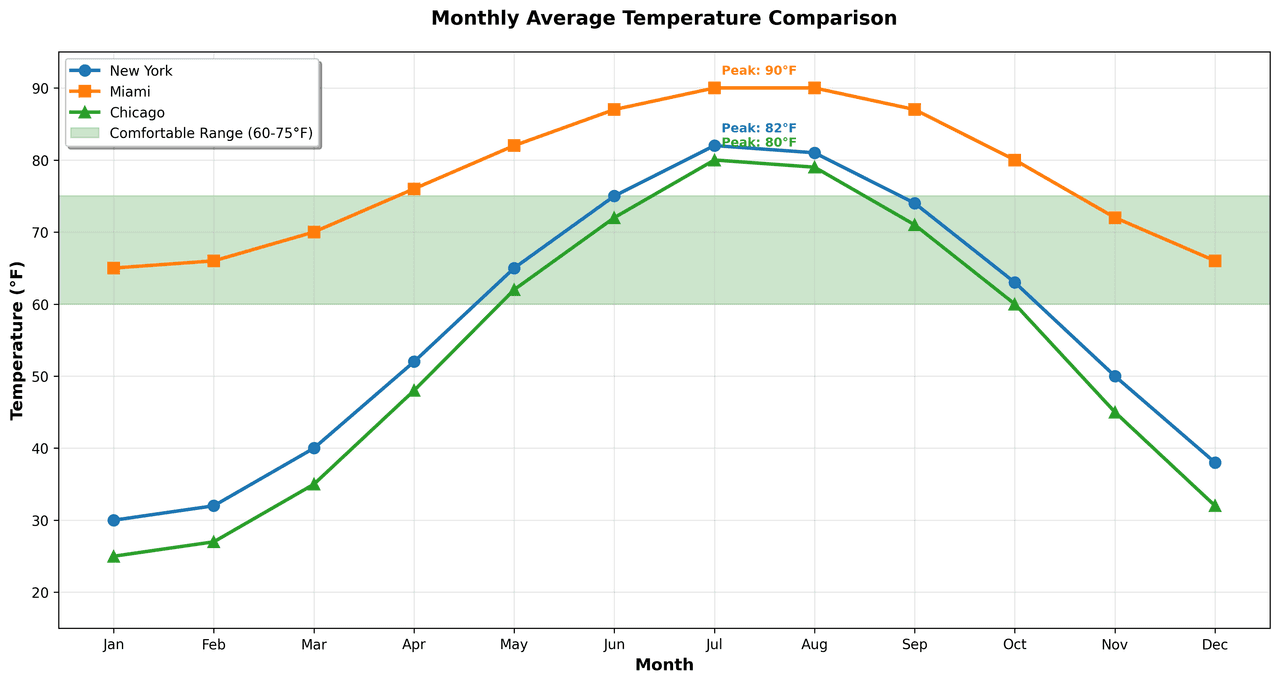
Line Graph
Create a line graph in Python to connect ordered data points, reveal time-series trends, and compare how multiple values change across a continuous scale.
Sample code / prompt
import matplotlib.pyplot as plt
import numpy as np

# Generate temperature data for 3 major US cities over 12 months
months = ['Jan', 'Feb', 'Mar', 'Apr', 'May', 'Jun', 'Jul', 'Aug', 'Sep', 'Oct', 'Nov', 'Dec']
nyc = [30, 32, 40, 52, 65, 75, 82, 81, 74, 63, 50, 38]
miami = [65, 66, 70, 76, 82, 87, 90, 90, 87, 80, 72, 66]
chicago = [25, 27, 35, 48, 62, 72, 80, 79, 71, 60, 45, 32]

# Create figure with enhanced styling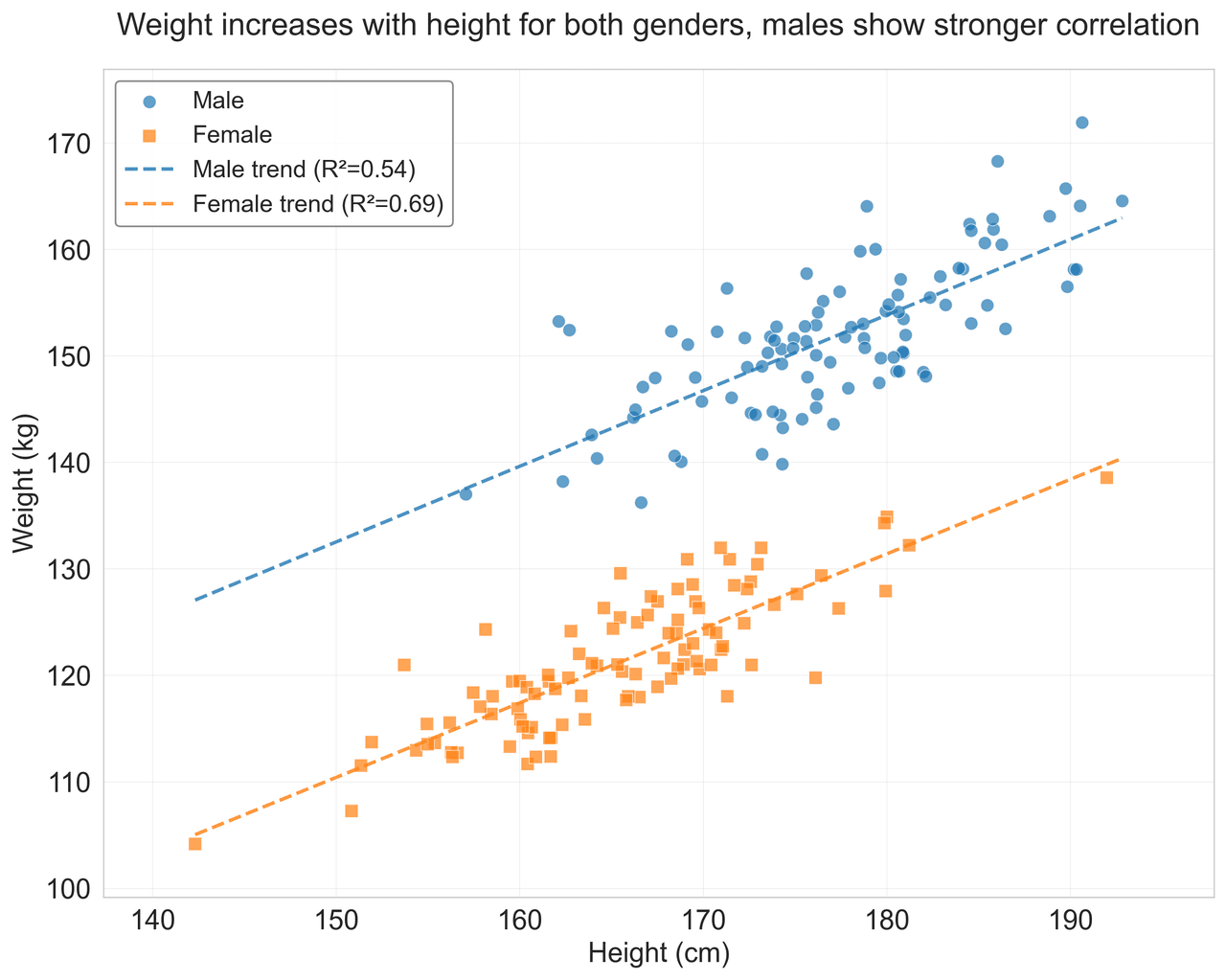
Scatterplot
A scatter plot displays two quantitative variables as points, helping you examine relationships, clusters, outliers, and regression trends.
Sample code / prompt
import matplotlib.pyplot as plt
import numpy as np
from scipy import stats
import pandas as pd

# Generate sample data
np.random.seed(42)
n_samples = 200
height = np.random.normal(170, 8, n_samples)
weight = height * 0.6 + np.random.normal(0, 8, n_samples) - 50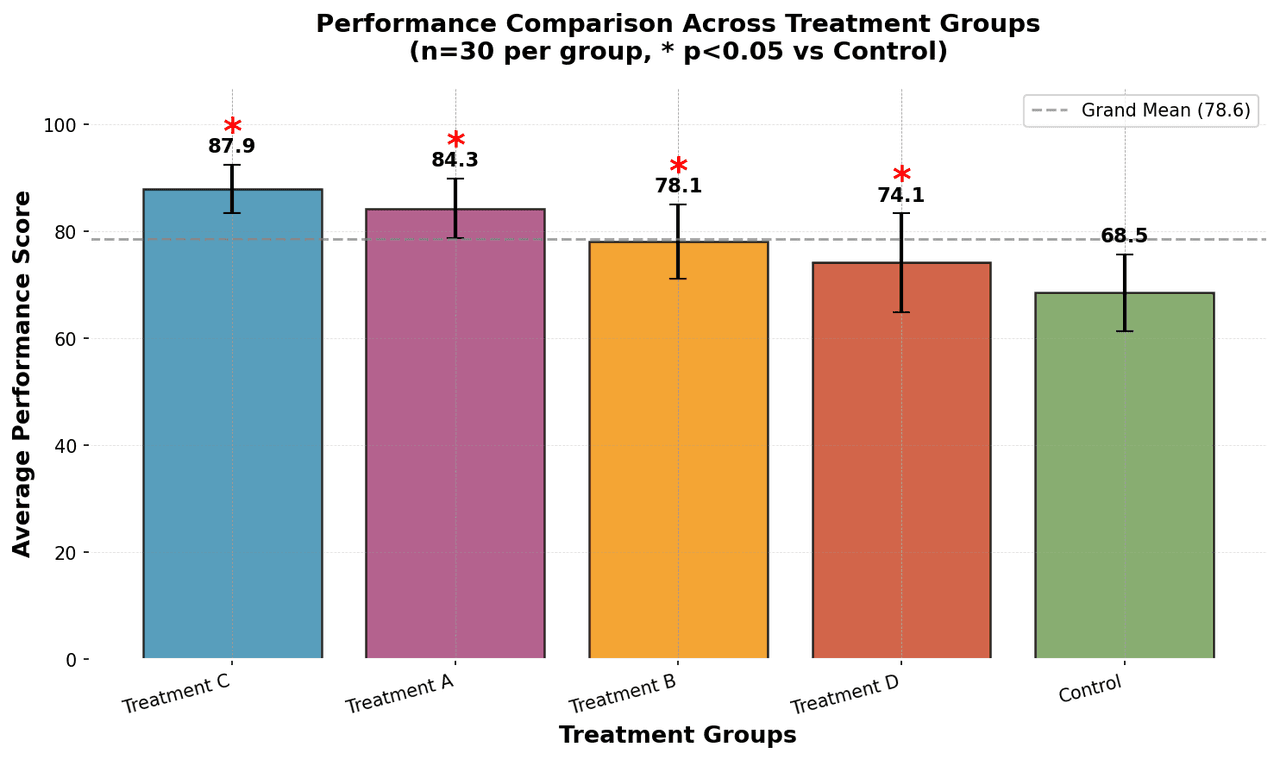
Bar Chart
Create a bar chart in Python to compare categorical values with proportional bars, error bars, clear labels, and grouped comparisons.
Sample code / prompt
import numpy as np
import pandas as pd
import matplotlib.pyplot as plt
import seaborn as sns
from scipy import stats

# Generate performance scores for 5 treatment groups
np.random.seed(42)
groups = ['Control', 'Treatment A', 'Treatment B', 'Treatment C', 'Treatment D']
n_samples = 30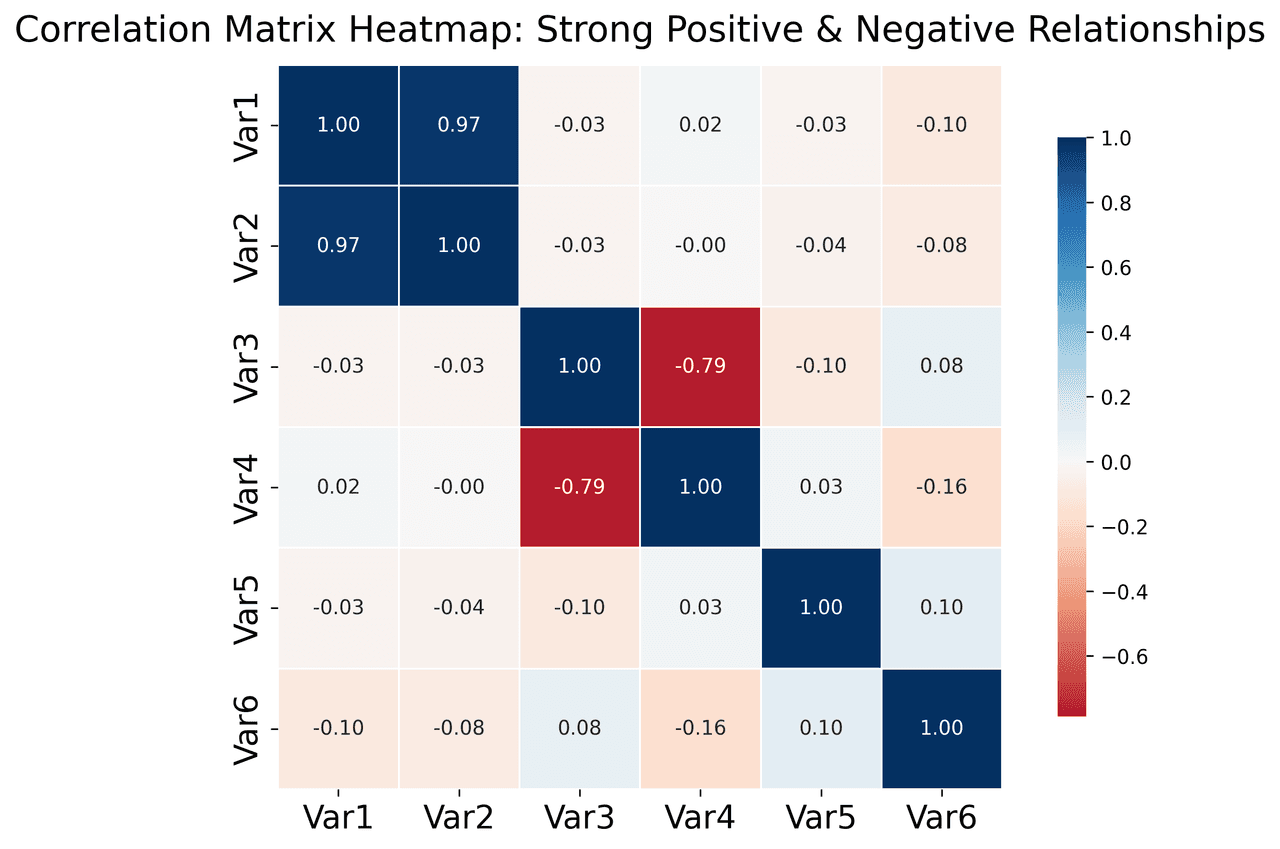
Heatmap
Represents data values as colors in a two-dimensional matrix format.
Sample code / prompt
import matplotlib.pyplot as plt
import seaborn as sns
import pandas as pd
import numpy as np

# Create correlation matrix for financial metrics
metrics = ['Revenue', 'Profit', 'Expenses', 'ROI', 'Customers', 'AOV', 'Marketing', 'Employees']
correlation_data = np.array([
    [1.00, 0.85, -0.45, 0.72, 0.88, 0.65, 0.72, 0.55],
    [0.85, 1.00, -0.78, 0.92, 0.75, 0.58, 0.63, 0.48],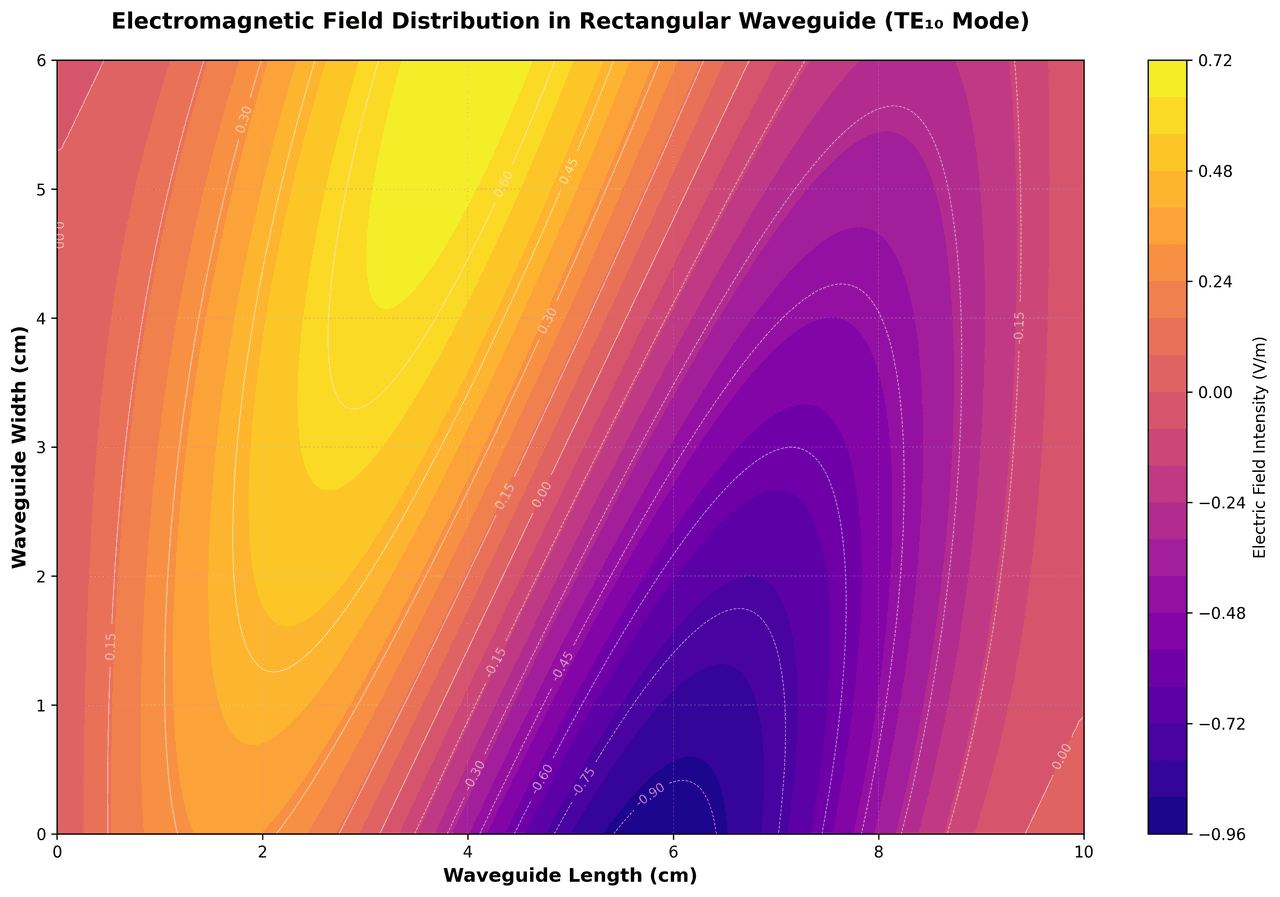
Contour Map
Displays three-dimensional data in two dimensions using contour lines connecting points of equal value.
Sample code / prompt
import matplotlib.pyplot as plt
import numpy as np

# Create electromagnetic field distribution in a rectangular waveguide
x = np.linspace(0, 10, 200)
y = np.linspace(0, 6, 120)
X, Y = np.meshgrid(x, y)

# TE10 mode in rectangular waveguide - dominant mode
# Electric field pattern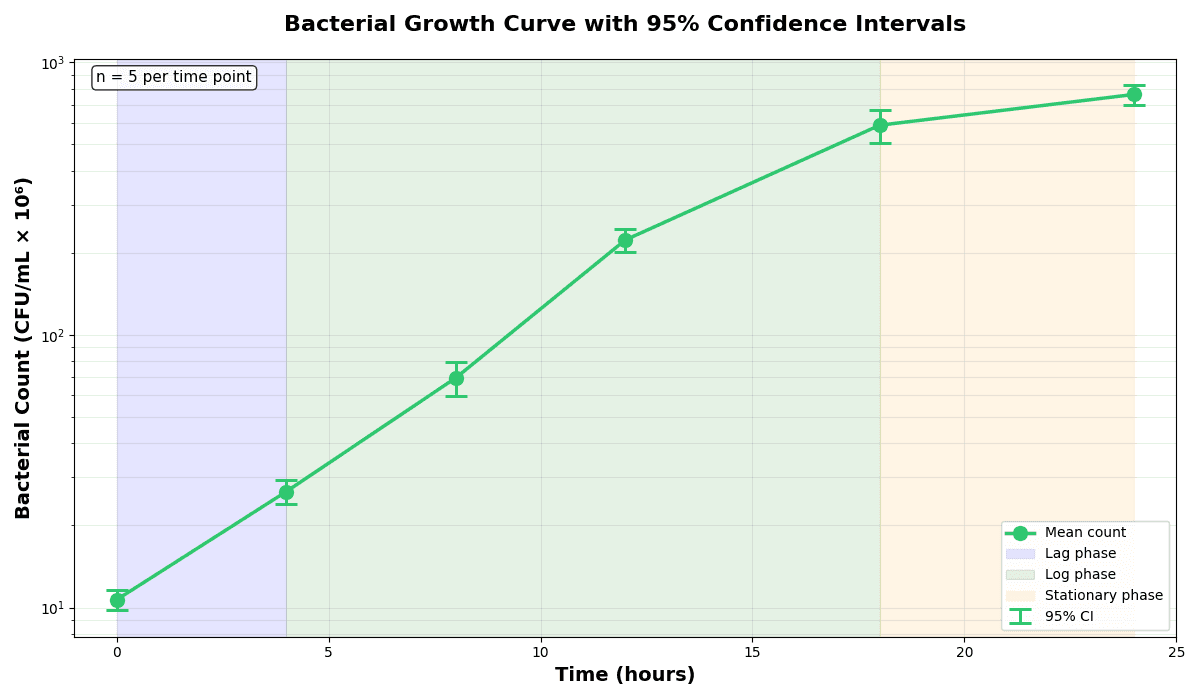
Error Bars
Create error bars in Python with Matplotlib to show standard deviation, standard error, confidence intervals, or other measurement uncertainty.
Sample code / prompt
import numpy as np
import matplotlib.pyplot as plt
from scipy import stats

# Generate bacterial growth data with replicates
np.random.seed(42)
time_points = np.array([0, 4, 8, 12, 18, 24])
mean_values = np.array([10, 25, 80, 250, 600, 800])

# Generate 5 replicates per time point with noiseReplace OriginPro for Free
Upload your CSV, describe the plot, export at journal quality. No $1,070/year license.
Free account required - export publication-ready figures instantly.
Technique guides scientists read next
scipy.signal.find_peaks guide
Tune prominence and width parameters for robust peak extraction.
Savitzky-Golay smoothing
Reduce noise while preserving peak shape and position.
PCA visualization workflow
Move from high-dimensional measurements to interpretable components.
ANOVA with post-hoc brackets
Add statistically correct pairwise significance annotations.
Found this helpful? Share it with your network.
Experimental Physicist & Photonics Researcher
Hands-on experience in silicon photonics, semiconductor fabrication (DRIE/ICP-RIE), optical simulation, and data-driven analysis. Built Plotivy to help researchers focus on discoveries instead of data struggles.
More about the authorVisualize your own data
Apply the techniques from this article to your own datasets. Upload CSV, Excel, or paste data directly.